How Chimney Cap and Crown Repair Works
The top of a chimney takes more weather than almost any other part of a house. It sits above the roof line, in full sun, wind, rain and hail. In Dallas, that means 100-degree summer days, sudden spring storms and the occasional hard freeze.
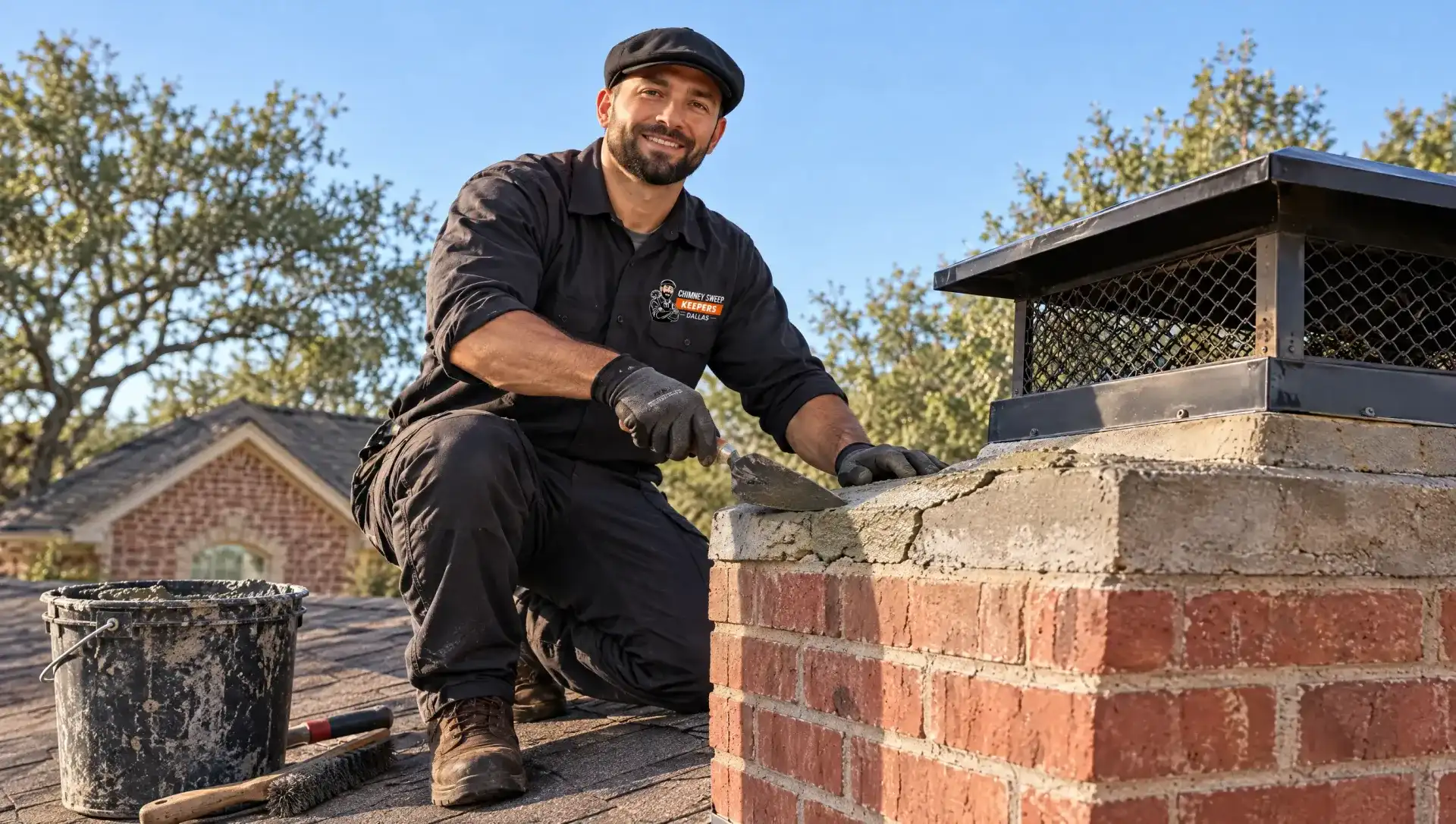
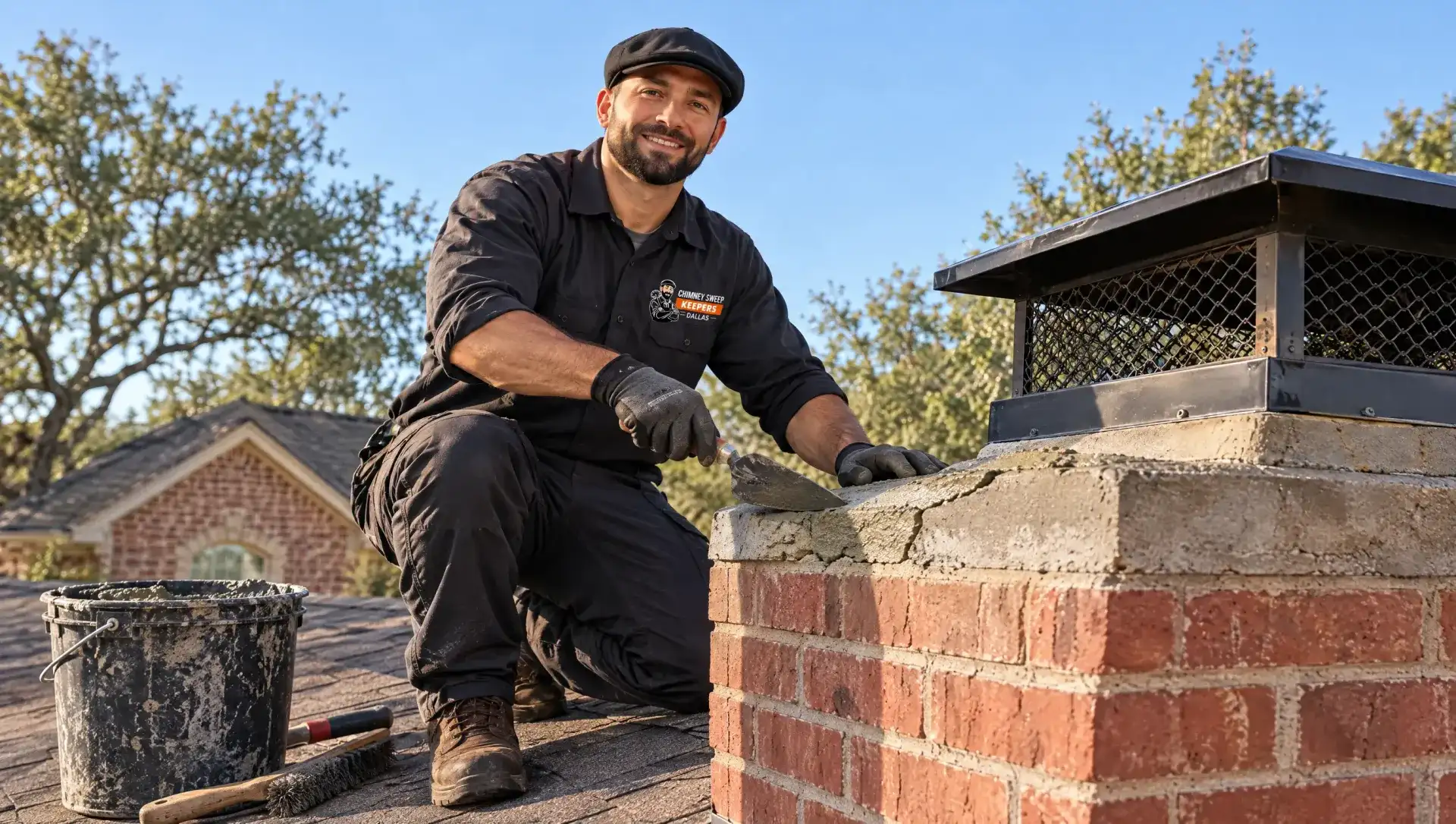
Two parts protect the top of the chimney: the crown and the cap. When either one fails, water gets into the brick and the flue. Below is how a professional handles each repair, step by step. Our chimney crown repair in Dallas follows the same process.
Cap vs. Crown: Two Different Parts
| Chimney crown | Chimney cap | |
|---|---|---|
| What it is | Concrete or mortar slab on top of the brick | Metal lid with mesh sides over the flue |
| Main job | Sheds water away from the brick | Keeps rain, animals and sparks out of the flue |
| Common damage | Cracks, crumbling, too thin, no overhang | Rust, dents, loose fasteners, torn mesh, missing |
| Usual repair | Seal small cracks, or rebuild | Replace with a new cap |
Factory-built chimneys with a wood or siding chase do not have a masonry crown. They have a metal chase cover that does the same job. Chase covers rust and pool water, and they get the same roof check.
Step 1: Inspect From the Roof
Every cap and crown repair starts with a close look from the roof. We check:
- The crown surface for cracks, chips, crumbling and low spots that hold water
- The crown edges for an overhang that drips water clear of the brick
- The gap around the flue tile, where the crown meets the flue
- The cap for rust, dents, torn mesh and loose or missing screws
- The brick and flashing below for signs that water has already gotten in
We take photos of every problem. You see what we see before any work is priced.
How Pros Repair a Chimney Crown
The repair depends on how bad the damage is.
Hairline cracks. If the crown is solid and the cracks are small, we clean the surface and apply a flexible crown coating. It bridges the cracks and moves with the crown as it heats and cools, instead of cracking again like a skim of new mortar would.
Wide cracks or crumbling. A crown that is broken through, crumbling or only a thin wash of mortar will not hold a sealant for long. The right fix is to remove it and form a new crown. A properly built crown is thick enough to resist cracking, slopes away from the flue, and overhangs the brick so water drips off instead of running down the face.
The flue gap. The crown should not be bonded tightly to the flue tile. The tile and the crown expand at different rates. A flexible seal at that joint lets them move without cracking each other.
How Pros Repair or Replace a Chimney Cap
Caps are rarely worth patching. A cap that is rusted, crushed or missing mesh is usually replaced.
- Material. Stainless steel lasts much longer than galvanized steel, which rusts in our humid weather.
- Size. The cap must fit the flue or the crown. A loose fit lets wind rattle it off.
- Mesh. Mesh sides keep out birds, squirrels and raccoons and act as a spark screen.
- Fastening. The cap is screwed or clamped down tight so storm winds do not lift it.
- Multi-flue chimneys. A single top-mount cap can cover several flues at once.
You can read more about cap styles on our chimney cap installation page.
Why Dallas Storms Are Hard on Caps and Crowns
North Texas gets frequent spring hailstorms. The National Weather Service office in Fort Worth issues severe thunderstorm warnings for the Dallas area most springs. A single storm can crack a crown or dent a cap.
Heat matters too. A crown can heat up well past the air temperature on a summer afternoon, then cool quickly in an evening storm. Those swings open small cracks over time. Older brick chimneys in Lakewood, the M Streets and Oak Cliff often have original crowns that were only a thin layer of mortar to begin with.
Flashing and Waterproofing After the Repair
A new crown and cap stop water from the top. Water can still get in where the chimney meets the roof. We check the flashing at the same time, and if it is loose or rusted, our chimney flashing repair seals that joint. For brick that is already soaking up water, a breathable chimney waterproofing treatment keeps rain out while letting moisture escape.
Signs Your Cap or Crown Needs Work
- Water in the firebox or on the damper after rain
- Rust flakes falling into the fireplace
- Stains on the ceiling or wall near the chimney
- Pieces of concrete on the roof or in the gutters
- A cap that is tilted, dented or missing
- Animals or nests in the chimney
Get a Free Estimate for Chimney Crown Repair in Dallas
Chimney Sweep Keepers Dallas is a veteran-owned, family-run company near White Rock Lake. Every cap and crown repair starts with a roof inspection, photos and a free written estimate. We answer 7 days a week from 7 AM to 11 PM. Call (469) 206-2085.