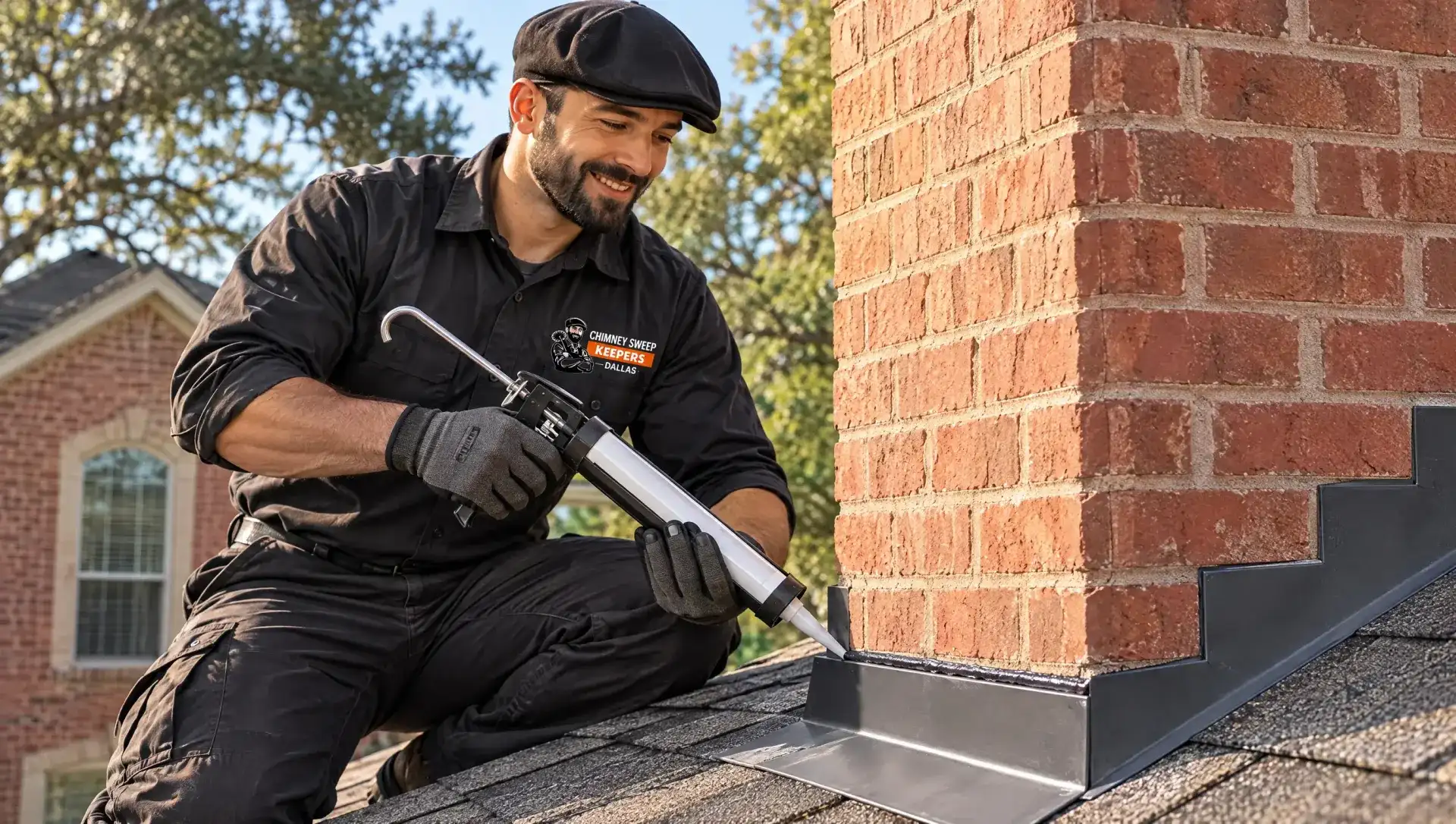
Chimney Leak Repair in Dallas Starts With the Source
A chimney leak is any water that gets into the chimney or the house around it. In Dallas, most leaks show up during spring storms, when heavy rain comes with strong wind. Water can enter at the top of the chimney, run down inside the brick and appear 10 feet away on a ceiling or wall.
That is why patching the stain does not work. We find where the water gets in, then fix that spot.
Where Chimney Leaks Come From
| Source | What you usually see | Usual fix |
|---|---|---|
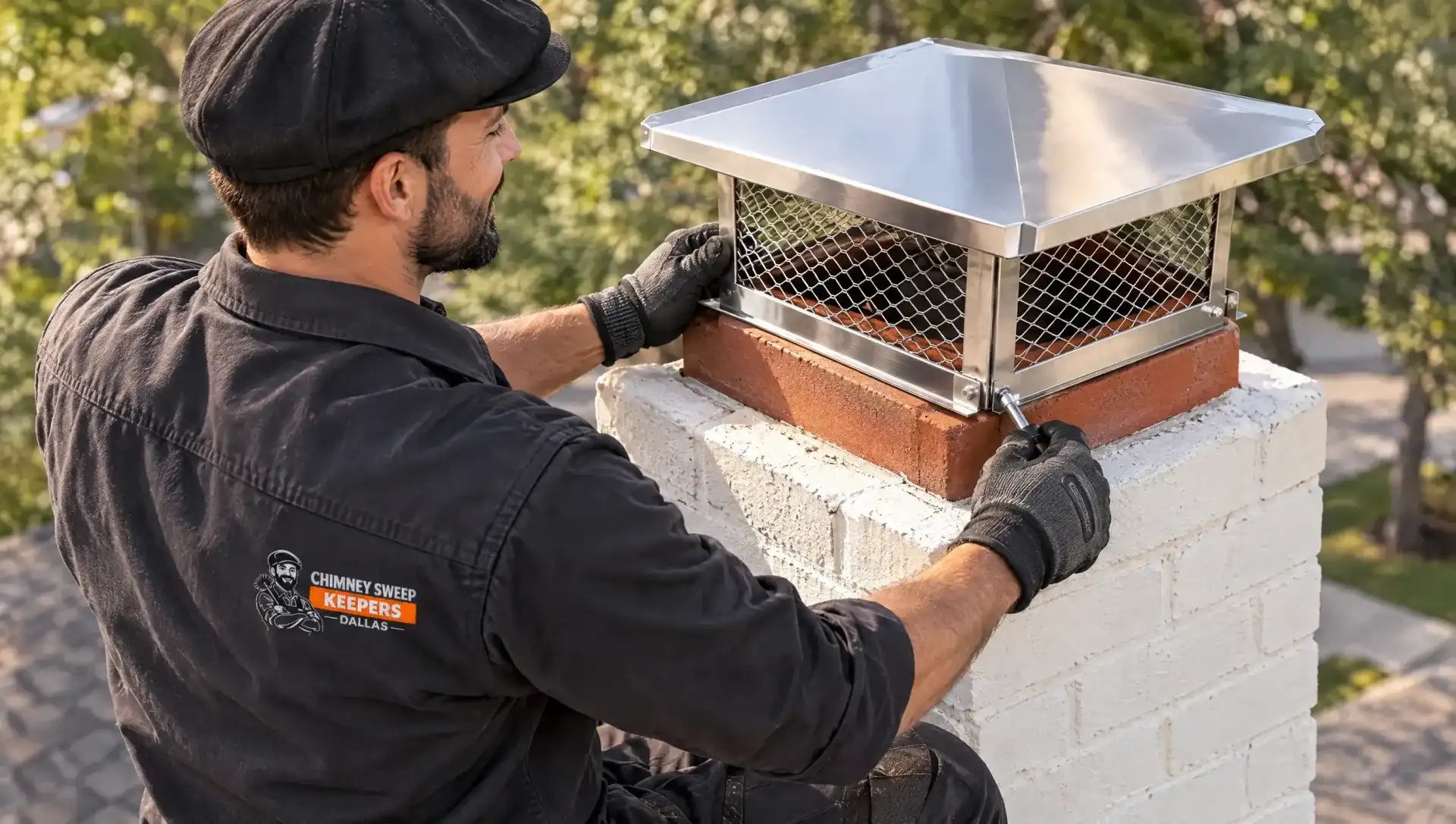
| Open flue, no cap | Water in the firebox, rusty damper | Chimney cap installation |
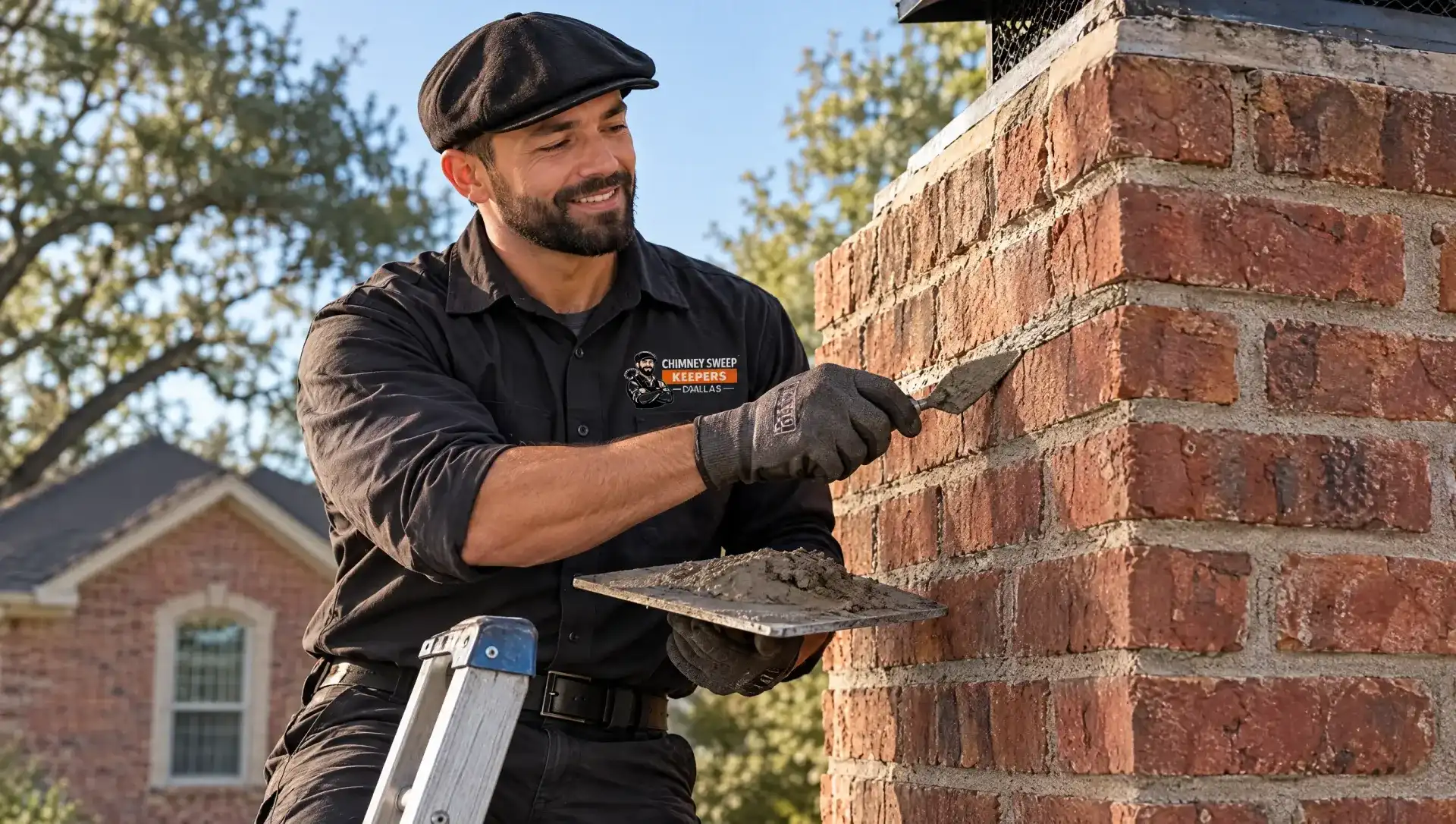
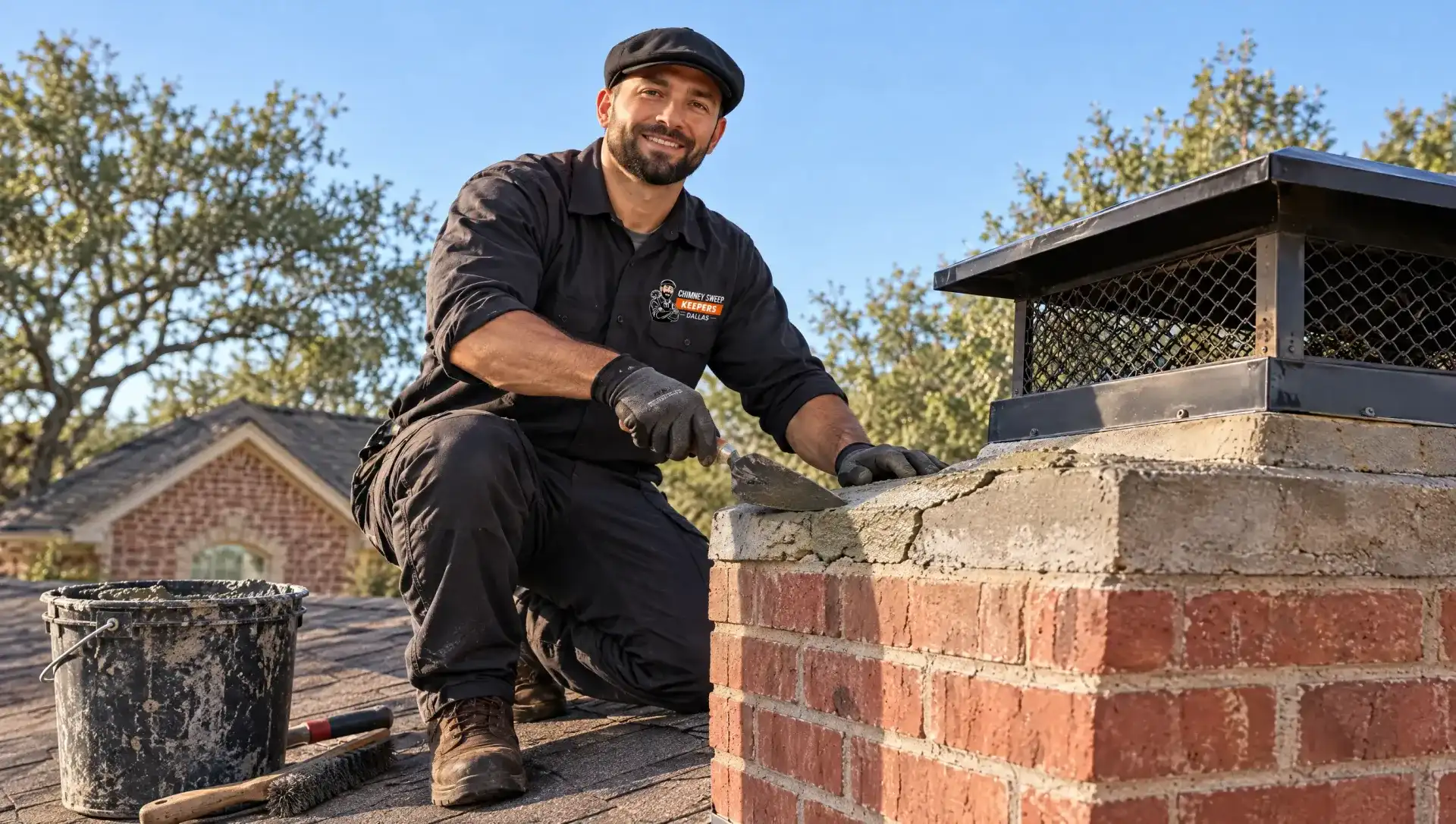
| Cracked crown or mortar wash | Stains near the chimney, wet upper brick | Crown sealing or a new crown |
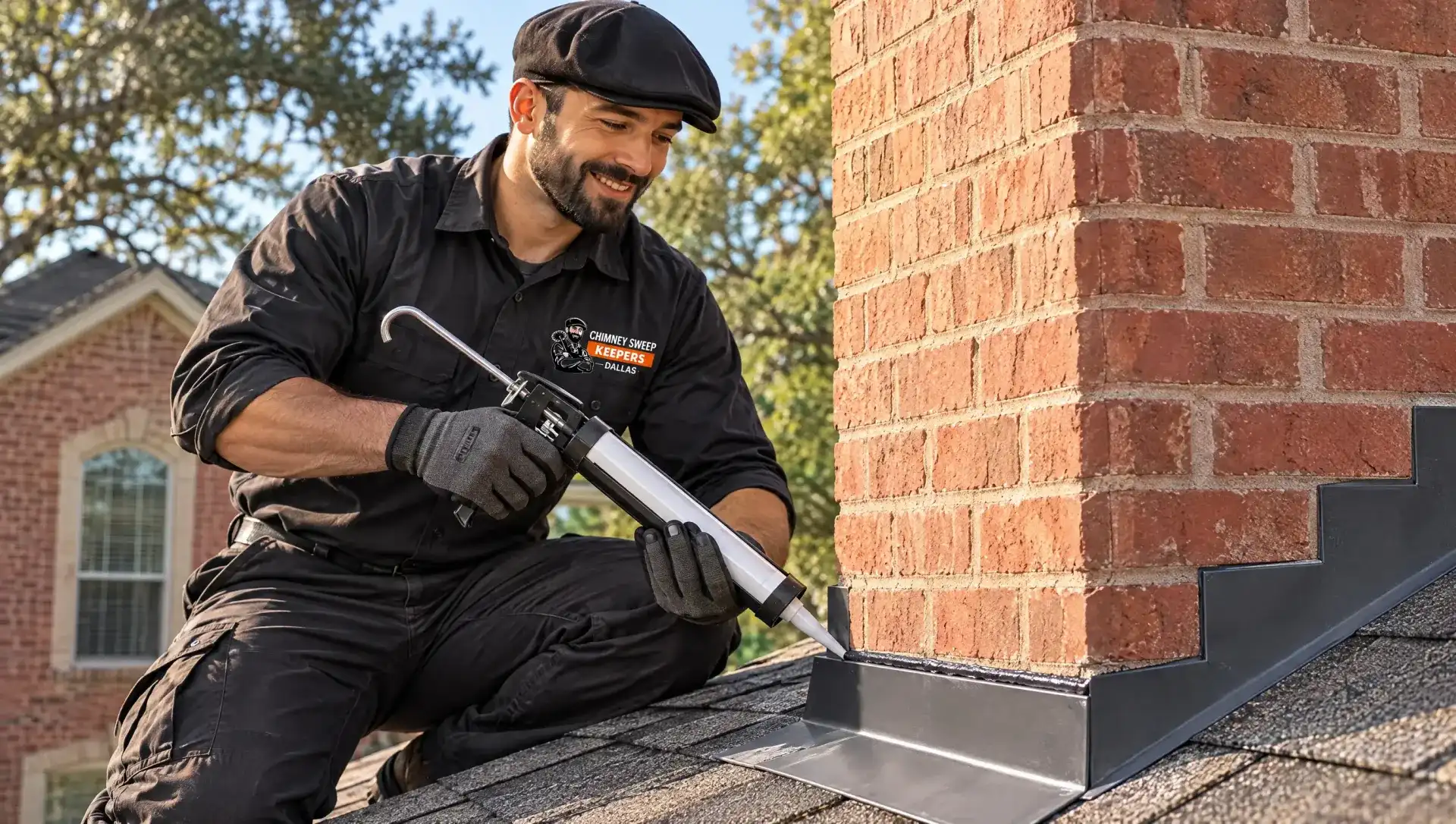
| Failed flashing | Stains on the ceiling beside the chimney, wet attic wood | Flashing reseal or replacement |
| Worn mortar or porous brick | White salt stains, damp wall, flaking brick | Tuckpointing, then waterproofing |
| Condensation in a gas flue | Stains and dampness even on dry days | Correctly sized liner |
Many chimneys have more than one source, so we check every item in this table on every leak call, even after we find the first problem. A 1960s brick chimney in Lake Highlands might have a cracked crown and tired flashing at the same time.
Chimney Leaking When It Rains
If your chimney leaks only when it rains, the water is coming from outside. Ask yourself a few questions before you call:
- Does it leak in every rain, or only with wind? Leaks only during wind-driven rain often point to flashing or the brick on the side the storm hits.
- Is the water inside the firebox? That usually means water coming down the flue through a missing cap or a cracked crown.
- Is the stain on the ceiling or wall beside the chimney? Flashing is the most likely source.
- Is the brick dark and damp after rain? The brick and mortar may be soaking up water.
Write down what you see and when. It helps us find the source faster.
Until we get there, put a bucket or towel under any drip, close the damper if it still works, and do not light a fire in a wet firebox. If the water is near a light fixture or outlet, turn off that circuit. Take a few photos of the stain so you can tell later whether it is growing. These steps limit the damage while you wait and give us better clues.
How We Find a Chimney Leak
- Roof check. We look at the cap, crown, flashing and brick up close and photograph each one.
- Camera check. We run a camera up the flue to look for water stains, cracked tiles and rust inside.
- Attic check. If we can reach it, we look for wet wood and water trails around the chimney.
- Water test. When the source is not clear, we run a hose on one part of the chimney at a time, starting low and working up, while someone watches inside. When the drip starts, we know which part is leaking.
- Written estimate. You get photos and a free written estimate for the repair, with each item priced.
Condensation in Gas Flues
Not every chimney leak is rain. Gas fireplaces and gas logs are common in Dallas, and burning gas makes water vapor. When a gas appliance vents into a large old clay flue built for wood, the gases cool before they reach the top. The vapor condenses on the flue walls, mixes with combustion byproducts and runs back down.
Signs include damp or stained walls near the chimney on dry days, a rusty damper and crumbling mortar inside the flue. The fix is usually a properly sized liner. Learn more about chimney relining.
Why Chimney Leaks Should Not Wait
Water does slow damage that gets more expensive every season. It breaks down mortar and flue tiles, rusts the damper and firebox, rots the wood framing around the chimney and can lead to mold. The EPA’s guide to mold and moisture says the key to mold control is moisture control, and that wet materials should be dried within 24 to 48 hours.
Signs you need chimney leak repair:
- Water stains on the ceiling or wall near the chimney
- Water or a musty smell in the fireplace after rain
- Rust on the damper, firebox or glass doors
- White salt stains (efflorescence) on the brick
- Peeling paint or wallpaper beside the chimney
- Crumbling mortar or flaking brick faces
Chimney Waterproofing After the Fix
Once the source is fixed, a breathable water repellent can help the brick shed rain. It is the last step, not the first. Sealing a chimney that still has a cracked crown or bad flashing just hides the problem. See our chimney waterproofing page for how it works.
Book Chimney Leak Repair in Dallas
Chimney Sweep Keepers Dallas is a veteran-owned, family-run company at 6041 Village Bend Dr, near White Rock Lake. We are licensed, bonded and insured, and we answer 7 days a week from 7 AM to 11 PM. Call (469) 206-2085 and we will find the leak and give you a free written estimate. For other chimney work, see our chimney repair services.