How Chimney Waterproofing in Dallas Works
Brick and mortar are porous. They soak up rain like a hard sponge. A brick chimney above the roof gets rain from every side, and in Dallas that rain often comes sideways in spring storms.
Chimney waterproofing adds a clear water repellent to the outside of the masonry. It soaks into the brick and mortar and makes the surface shed water, so rain beads up and runs off. Good products do this without sealing the pores shut.
Breathable Water Repellent vs. Paint and Sealers
Brick always has some moisture inside it. It comes from rain, humidity, and the warm, damp gases inside the flue. That moisture has to be able to leave. If it cannot, it collects behind the surface and pushes the brick face off. This is called spalling.
That is why the type of product matters more than anything else.
| Product type | What it does | Effect on brick |
|---|---|---|
| Siloxane or silane water repellent | Soaks in, repels liquid water, lets vapor out | Brick sheds rain and still dries |
| Paint or elastomeric wall coating | Forms a film on the surface | Traps moisture, peels, can cause spalling |
| Glossy or acrylic film sealer | Forms a shiny coat | Traps moisture, changes the look |
| No treatment | Nothing | Fine on good brick, soaks up rain on worn brick |
The National Park Service’s guide to cleaning and water-repellent treatments for masonry warns that coatings which keep water vapor from leaving the brick can cause more damage than they prevent. We only use breathable, vapor-permeable repellents made for chimneys. Products of the ChimneySaver type are a common example.
Repairs Come Before Waterproofing
A water repellent is the last step, not the first. It cannot fix a leak that comes from a crack, a gap or an open flue. Applying it over damage only hides the problem for a while.
Before we waterproof, we check and fix:
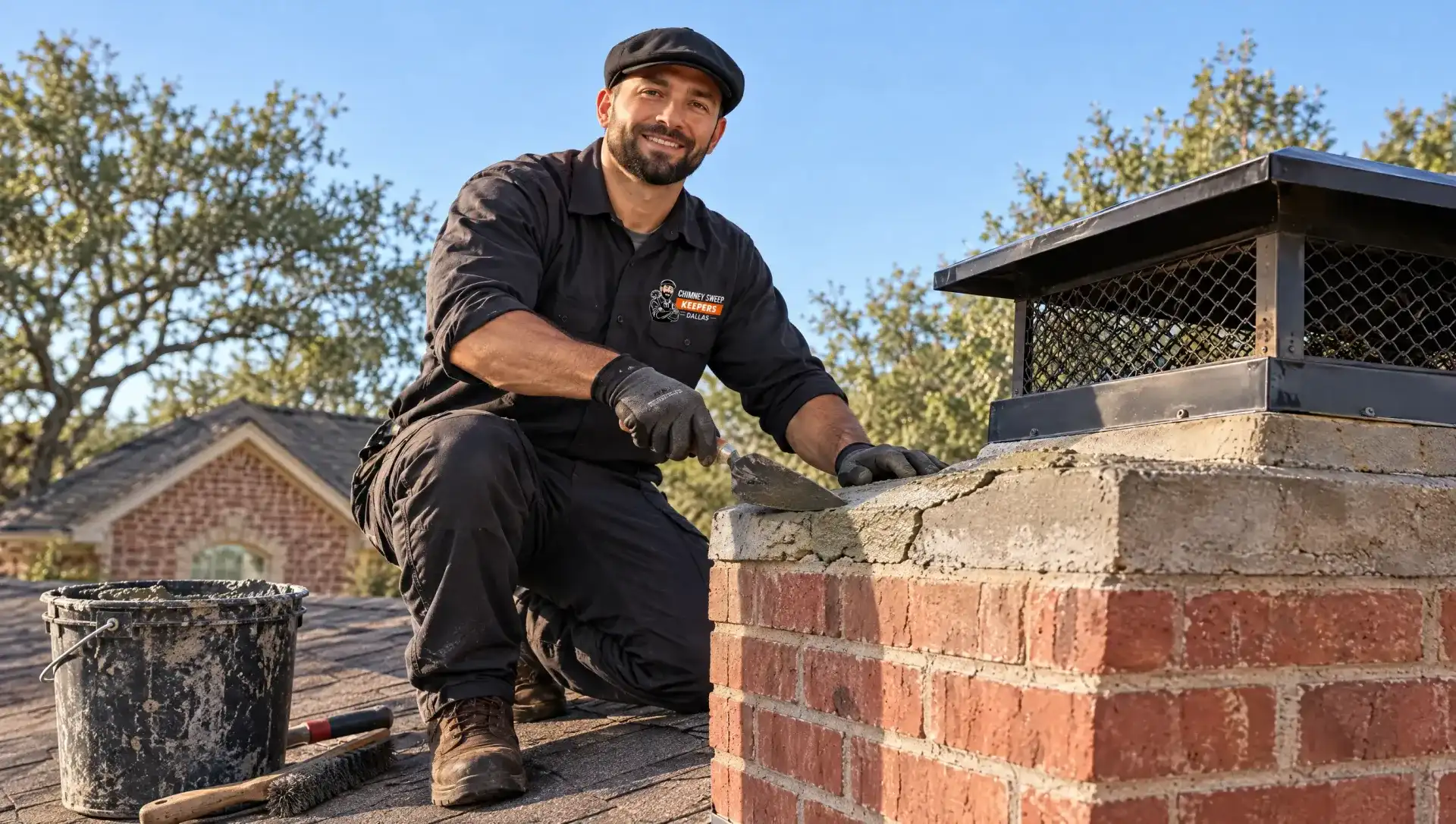
- The crown. Cracks are sealed or the crown is rebuilt. See chimney crown repair.
- The cap. An open flue lets rain fall straight down the chimney.
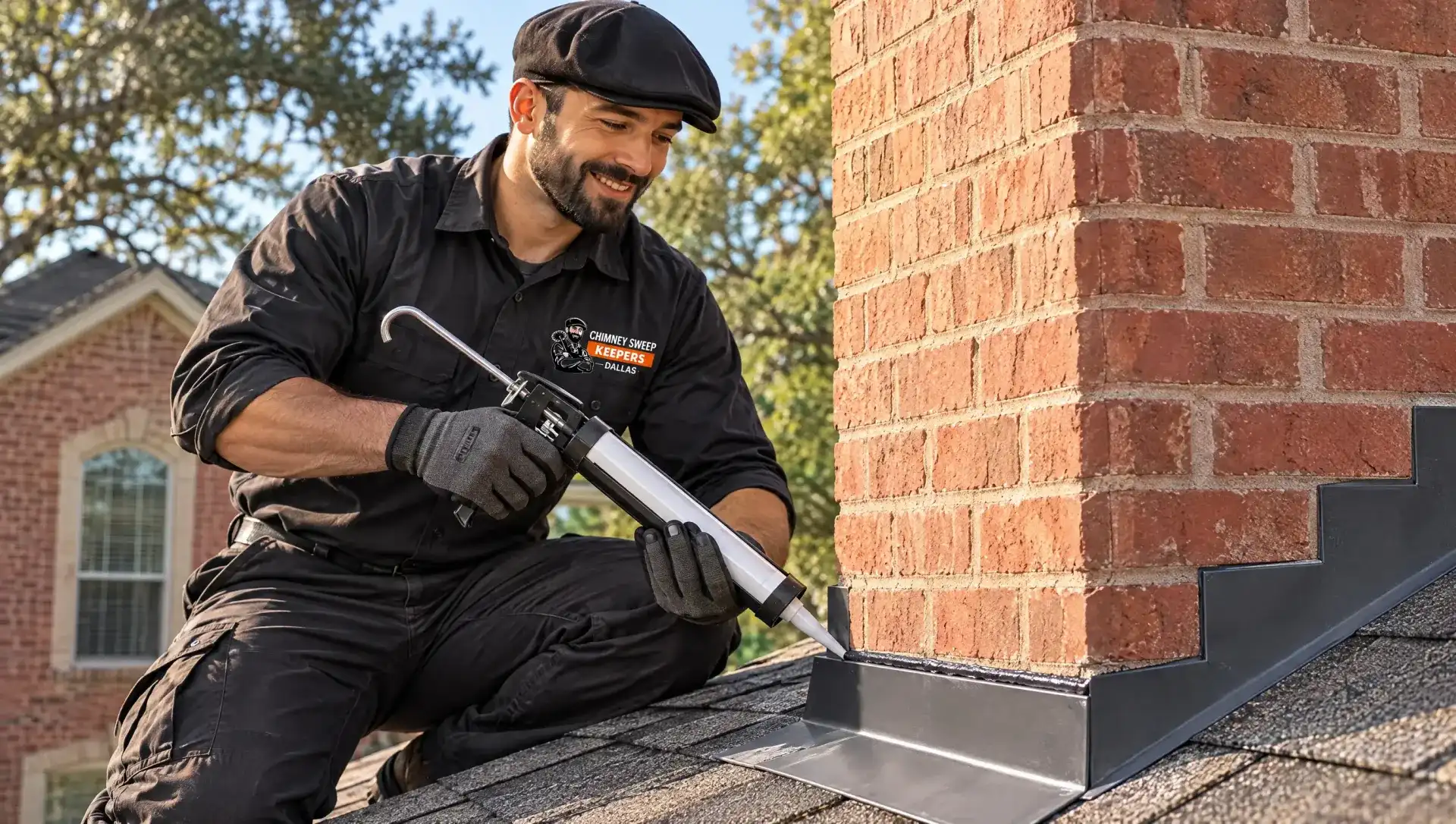
- The flashing. Gaps at the roof line are resealed or replaced. See chimney flashing repair.
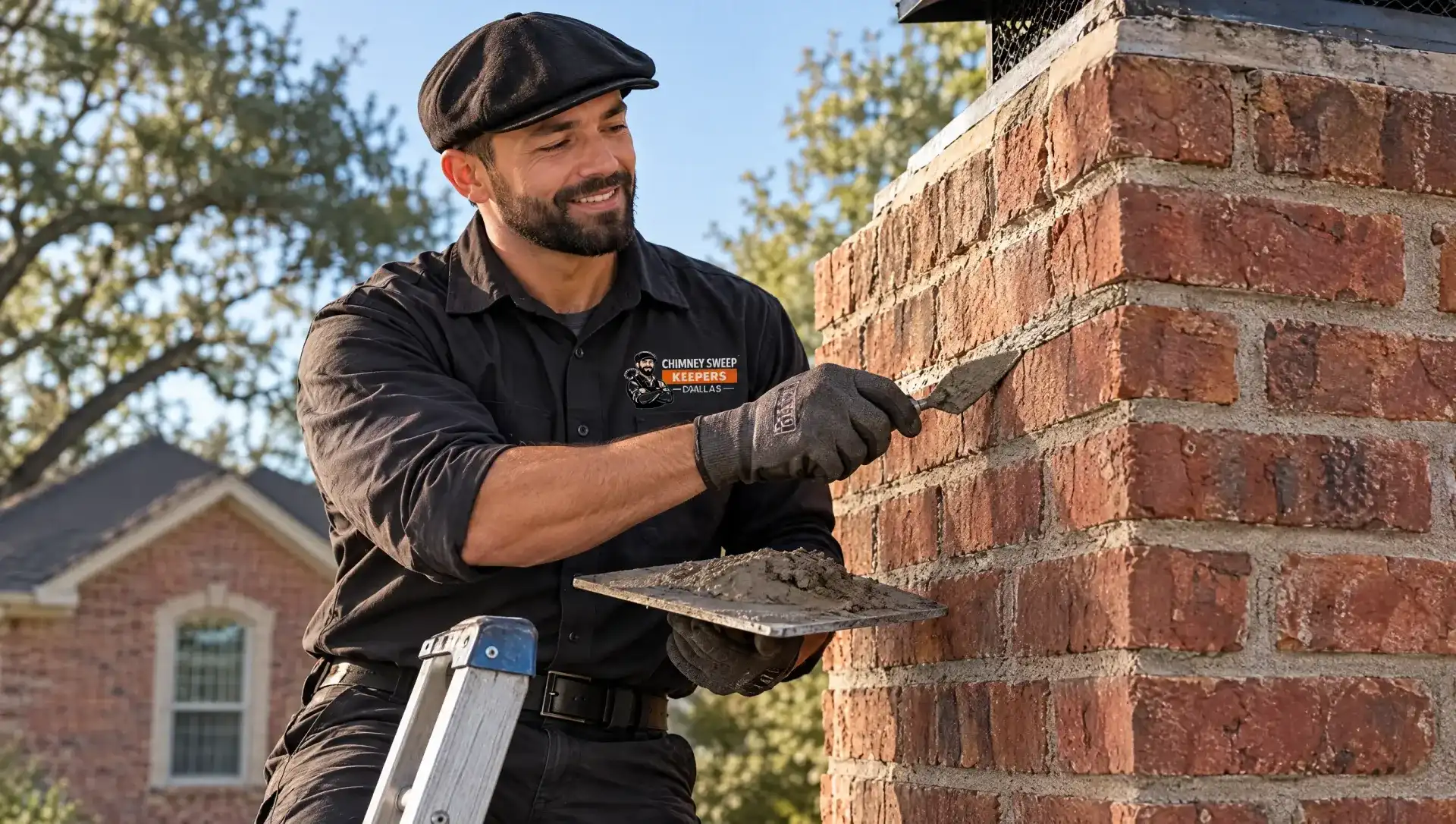
- The mortar. Cracked or missing joints are filled. See chimney tuckpointing.
- The brick. Badly spalled bricks are replaced.
Then we clean the brick, let it dry and apply the repellent in even coats from the top down.
Timing matters too. Fresh mortar and a new crown need to cure before they are treated, and the brick must be dry, so we do not apply repellent right after a rain. In Dallas that usually means a dry stretch of a few days in spring or fall. We also mask the roof, flashing and any glass nearby so overspray does not land where it should not.
| Step | Why it matters |
|---|---|
| Fix the source of the leak | Repellent cannot seal cracks or gaps |
| Let repairs cure | Fresh mortar and concrete need time to dry |
| Clean the brick | Dirt and growth block the repellent from soaking in |
| Wait for dry brick | Wet brick will not absorb the treatment |
| Apply top down in even coats | Full, even coverage with no runs |
Signs Your Chimney Needs Waterproofing
- Brick that stays dark and damp long after rain stops
- White, chalky salt stains (efflorescence) on the brick
- Flaking or popping brick faces
- Water no longer beads up on the brick
- Musty smell from the fireplace after storms
- Damp spots on the interior wall around the chimney
If you also see stains on the ceiling or water in the firebox, the problem is likely bigger than porous brick. Start with our chimney leak repair page.
Why Dallas Brick Chimneys Soak Up Water
Hard freezes are rare in Dallas, so freeze-thaw damage is not the main threat here. Our chimneys deal with other things:
- Heavy spring rain. Storms can drop inches of rain in an hour, often with wind that drives it into the brick.
- Humidity. Damp summer air slows drying, so wet brick stays wet longer.
- Heat cycles. Summer heat dries the surface fast and pulls moisture and salts through the brick, leaving efflorescence behind.
- Older, softer brick. Many 1940s to 1970s homes in Lakewood, Vickery Place and the M Streets have softer brick and mortar that absorb more water.
Chimney Waterproofing for Metal Chases
Factory-built chimneys in newer homes are boxed in a wood or siding chase, not brick. Brick repellent does not apply there. For these chimneys, keeping water out means a sound chase cover, good siding seals and good flashing. We check all of those as part of our chimney repair service.
A rusted or flat chase cover is the usual problem on these chimneys. Water pools on top, rusts through and drips down inside the chase, where you cannot see it until the drywall stains. A new cover with a slope and a drip edge sends that water off the sides instead.
Book Chimney Waterproofing in Dallas
Chimney Sweep Keepers Dallas is a veteran-owned, family-run company at 6041 Village Bend Dr, near White Rock Lake. We are licensed, bonded and insured, and we answer 7 days a week from 7 AM to 11 PM. Call (469) 206-2085 and we will check your chimney, fix what needs fixing and give you a free written estimate for waterproofing.