When Dallas Chimney Cleaning Means More Than a Sweep
Most chimneys only need a yearly chimney sweep. That visit brushes out the light soot and creosote from a fireplace that gets cleaned on a regular schedule.
Chimney cleaning is what we call the bigger job. It is for chimneys that have gone years without a cleaning, flues with hard, shiny creosote, and fireplaces in homes that were just bought and nobody knows when the chimney was last serviced. We see this often in older brick homes in Lakewood, Lake Highlands and the M Streets, where a fireplace may sit for years and then get used again.
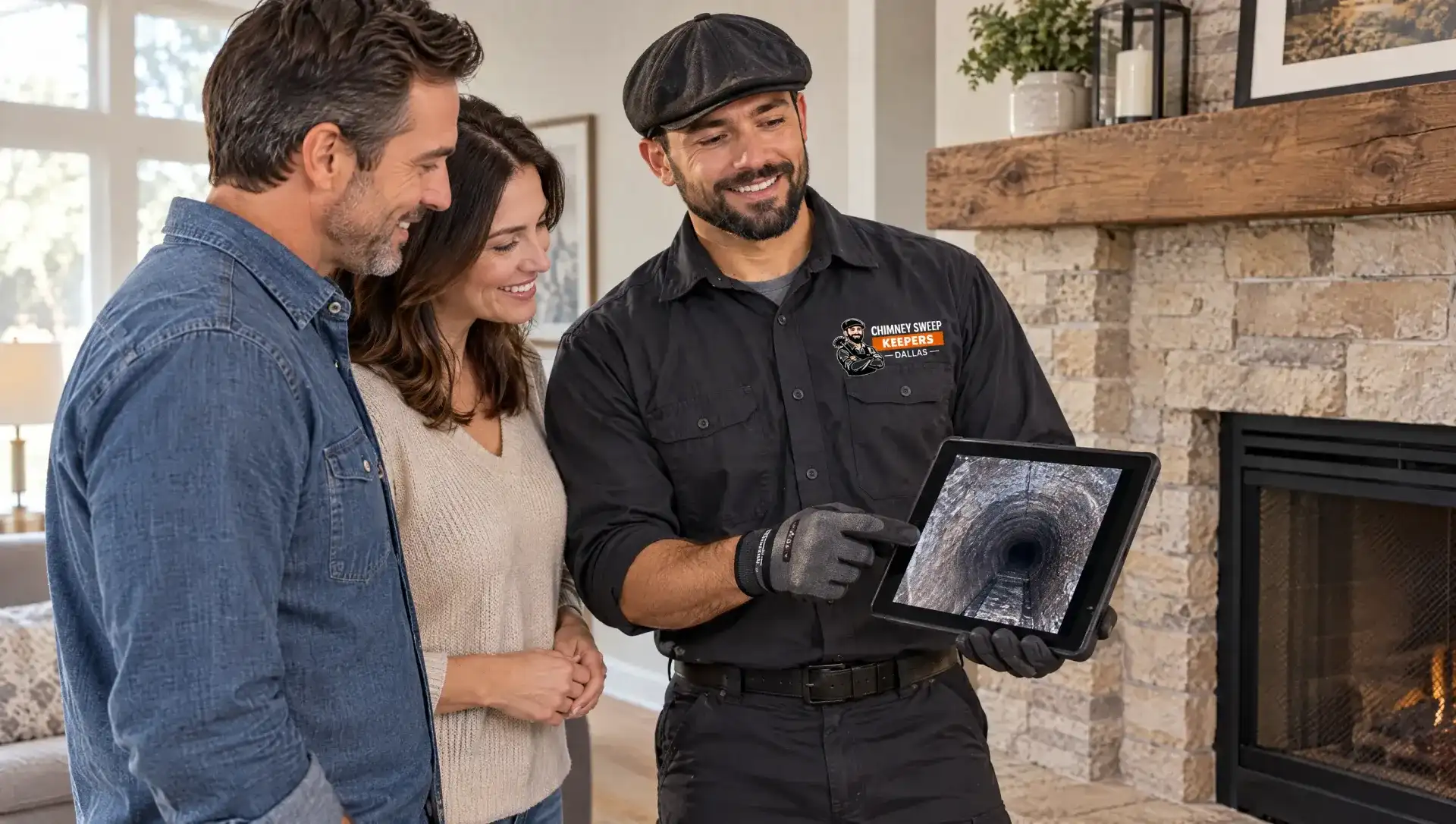
Every chimney cleaning visit starts the same way: our $99 sweep and Level 1 inspection for one flue. If the camera shows buildup that a brush cannot remove, we stop, show you the photos and give you a written price for the extra work.
The Three Stages of Creosote
Creosote is the black deposit wood smoke leaves inside the flue. Chimney sweeps sort it into three stages, and the stage decides how we clean it.
| Stage | What it looks like | How we remove it |
|---|---|---|
| Stage 1 | Dry, black soot that brushes off easily | Standard sweep with rotary brushes |
| Stage 2 | Crunchy, flaky black chunks, like puffed cereal | Stiffer brushes and rotary tools |
| Stage 3 (glazed) | Shiny, hard tar coating or drips on the flue walls | Rotary cutting tools or a chemical treatment, then brushing |
Stage 1 is normal. Stage 2 means it is past time to clean. Stage 3 is the one to worry about, because glazed creosote is dense fuel stuck to the flue walls, and it burns very hot if it catches fire.
Glazed Creosote Removal
Glazed creosote forms when smoke cools too fast inside the flue. Common causes are burning wet or unseasoned wood, slow smoldering fires, a damper that is only partly open, and a flue that is too large for the fireplace. The EPA’s Burn Wise program says firewood should have a moisture content under 20 percent and be seasoned for at least six months.
How we remove it depends on the flue:
- Clay tile flues. Rotary cutting tools can break up thin glaze. Thick glaze often needs a chemical creosote remover first, which turns the coating into a dry, flaky ash we can brush out.
- Stainless steel liners. We use poly brushes and chemical treatments only. Metal chains and wire tools can scratch a liner and shorten its life.
- Factory-built metal chimneys. These are common in newer North Dallas homes. We follow the maker’s cleaning rules and avoid tools that could damage the pipe.
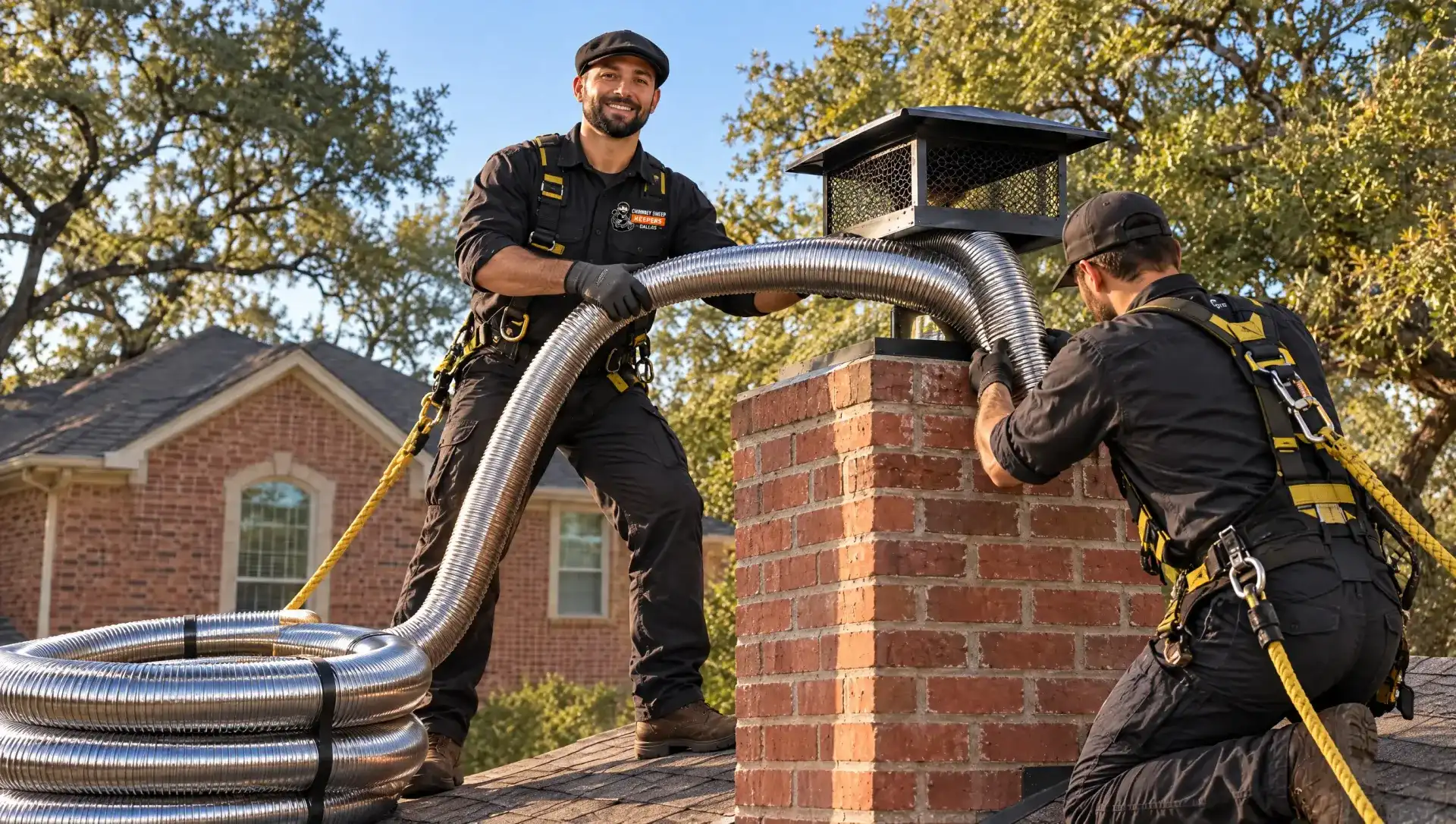
Heavy glaze sometimes takes two visits: one to apply the treatment and one to brush it out. We tell you the plan and the price up front. If the cleaning shows cracked tiles or gaps under the creosote, we explain your options, including chimney relining.
Chimney Flue Cleaning
The flue is the open channel that carries smoke and gases out of your home. Chimney flue cleaning means brushing that channel from the smoke chamber all the way to the cap, with a brush sized and shaped to match it. A round brush in a square flue misses the corners, which is where creosote hides.
We run a camera up the flue before and after the cleaning. You see what was there and what is left. If you have more than one flue, such as a fireplace and a furnace or water heater flue, each one is cleaned and priced on its own.
Gas fireplace flues get cleaned too. They make less creosote, but they collect soot, nests and leaves. A blocked gas flue can push carbon monoxide back into the house.
How Our Chimney Cleaning Works
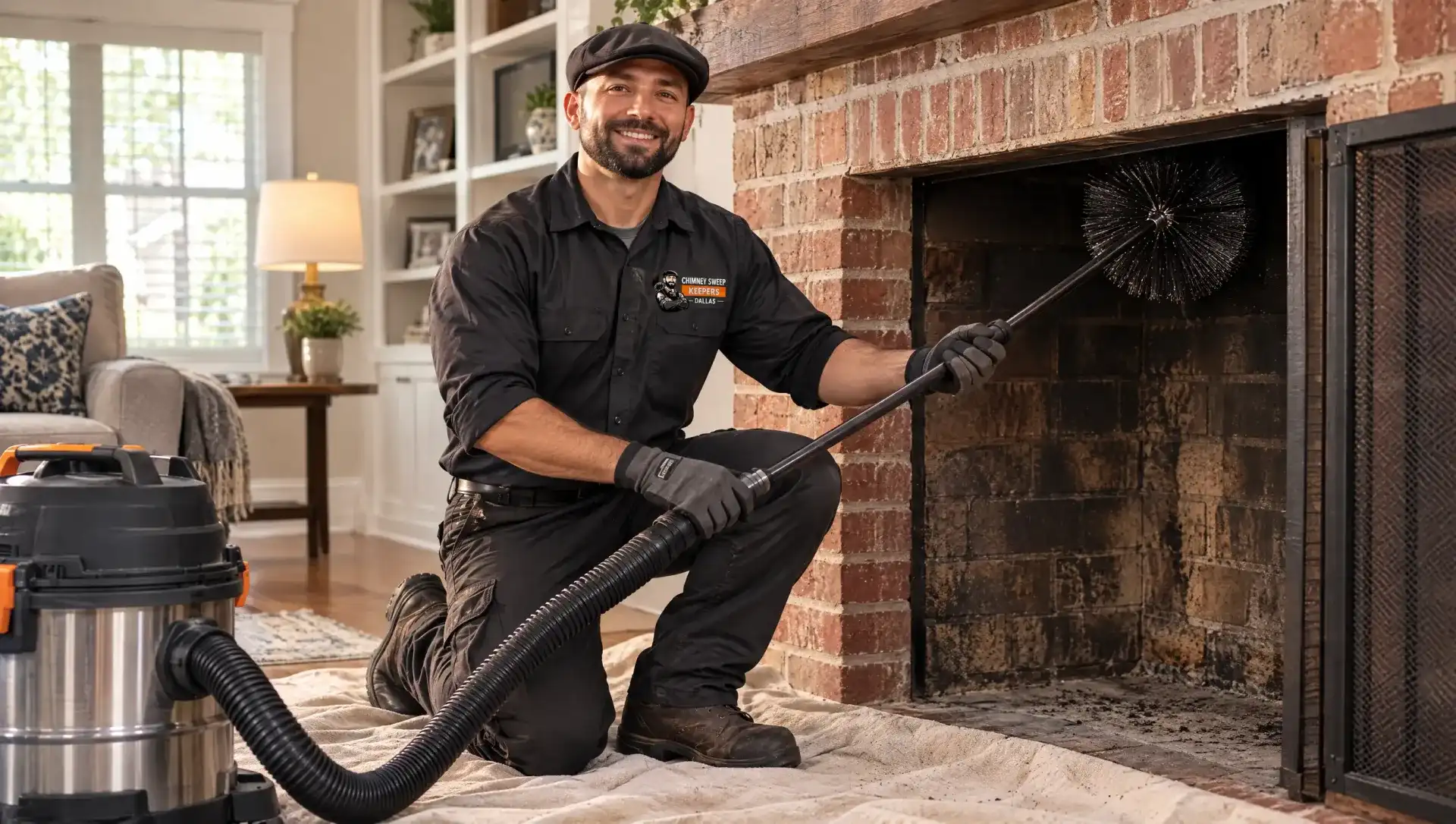
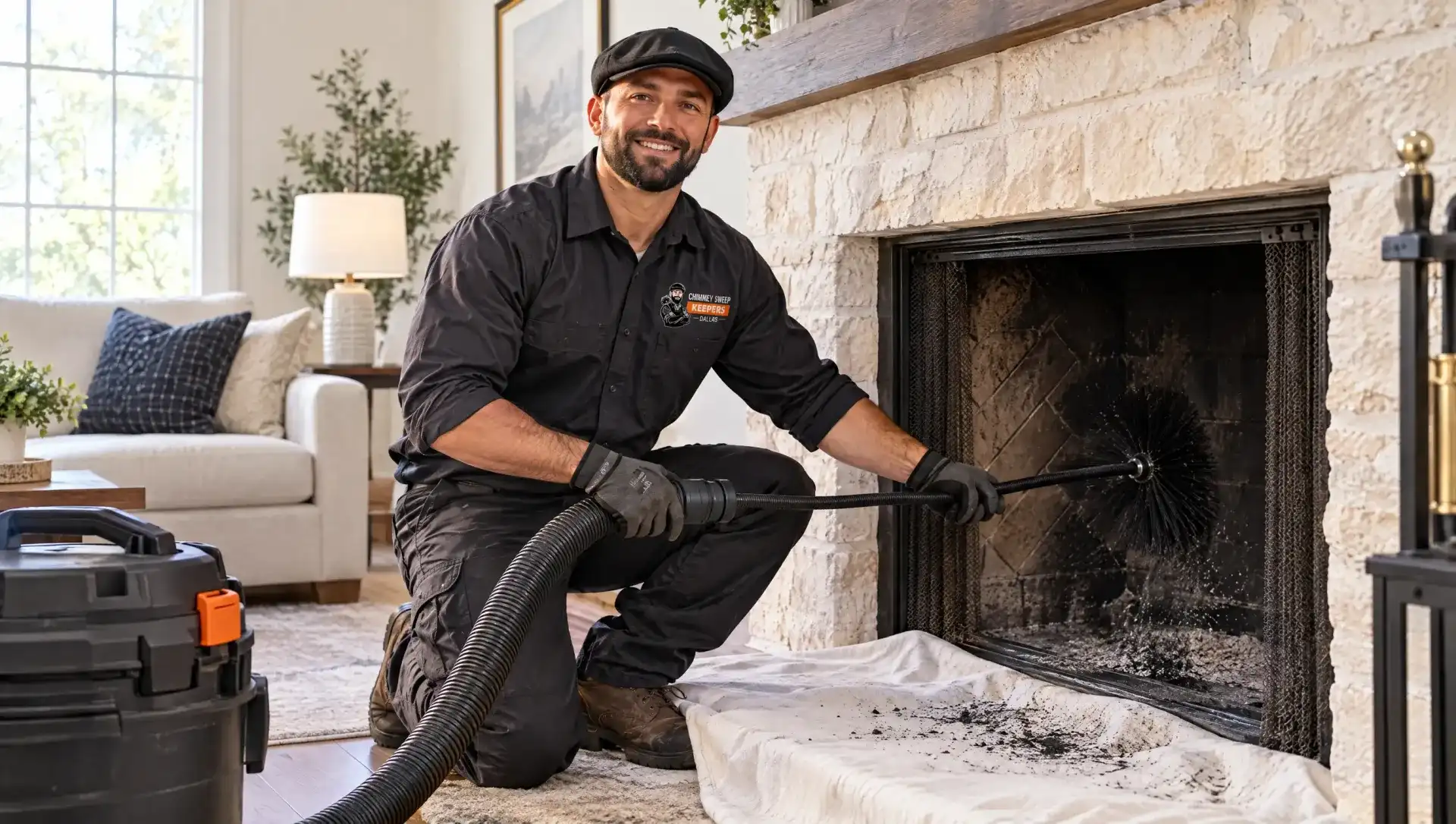
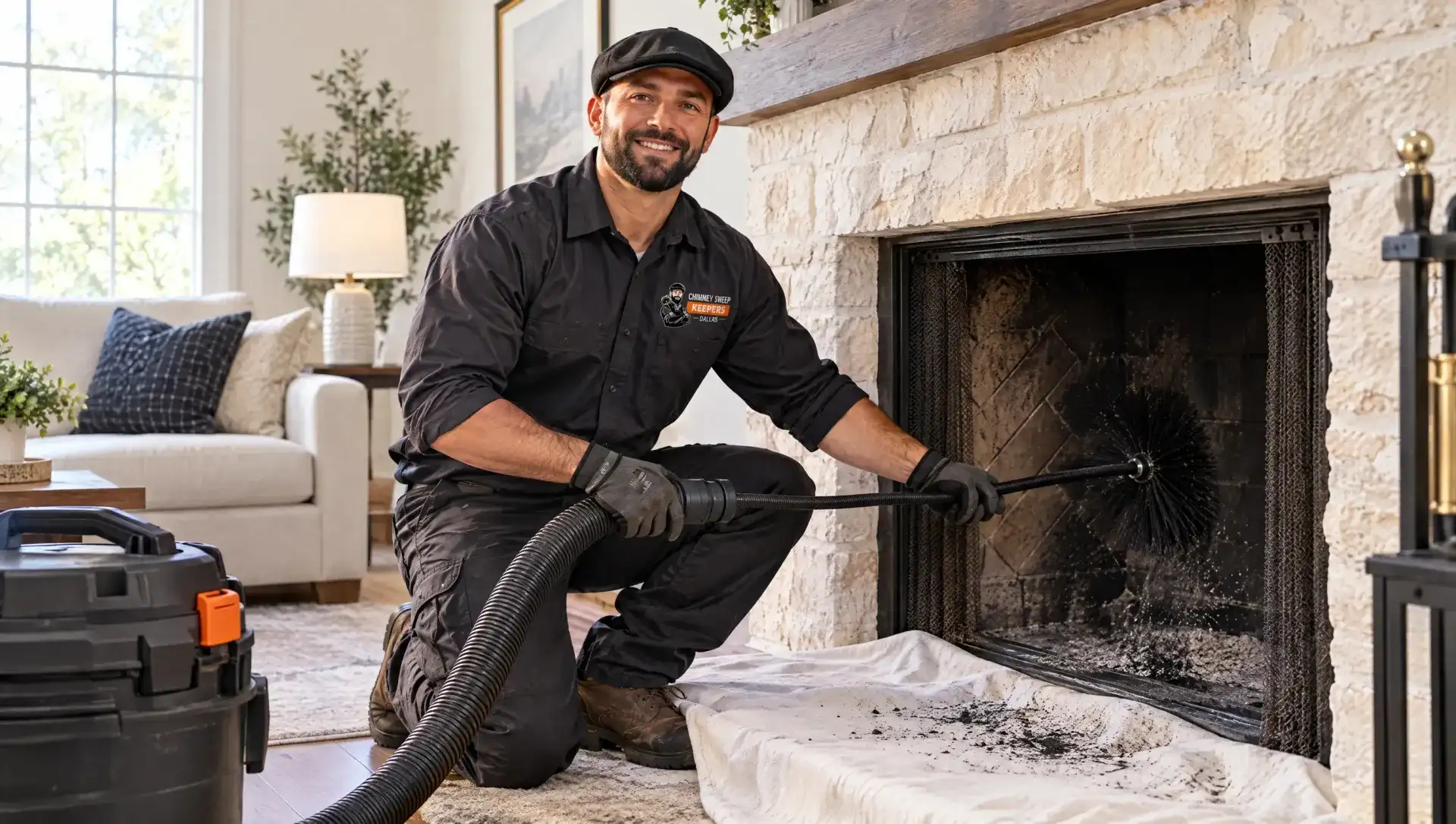
- Protect the room. Drop cloths from the door to the hearth, the fireplace opening sealed, a HEPA vacuum running.
- Camera check first. We look at the flue to see the stage of creosote and any damage.
- Sweep the system. Firebox, damper, smoke shelf, smoke chamber and flue, up to the cap.
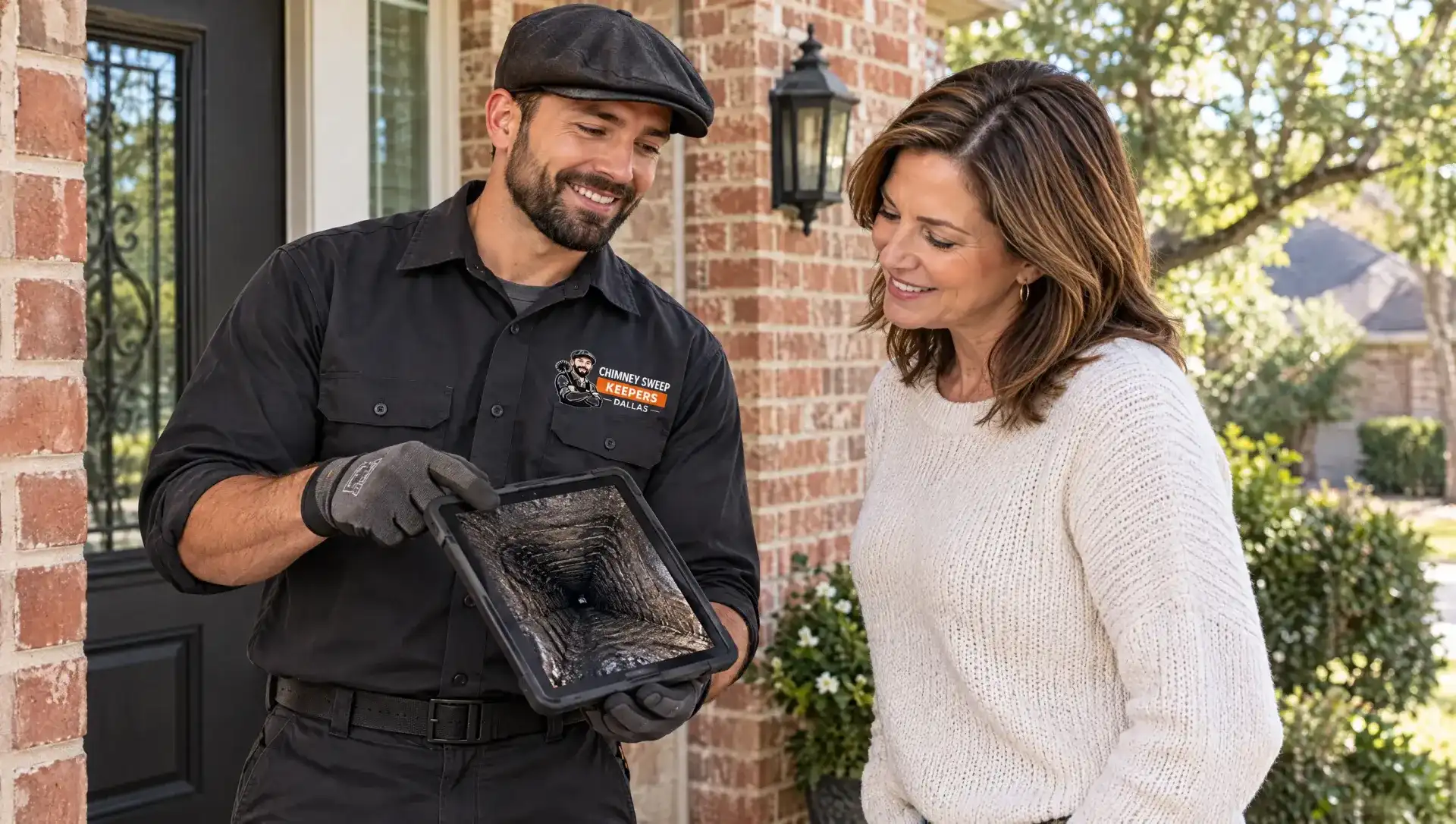
- Show you what is left. If glazed creosote or debris remains, you get photos and a written price for removing it. No pressure.
- Finish and report. A second camera pass and a before-and-after photo report.
Signs Your Chimney Needs a Deep Cleaning
- Shiny black deposits on the damper or the top of the firebox
- A strong tar or campfire smell, worse on hot, humid days
- Black flakes or crunchy chunks falling into the fireplace
- Smoke that rolls into the room even with the damper open
- Three or more years since the last cleaning, or you do not know
- You burned wet wood, pallets or wood from a fresh-cut tree
Smoke Chamber Cleaning
The smoke chamber is the slanted space above the damper. It is where the thickest creosote collects, and it is often skipped by a quick top-down sweep. Our chimney cleaning includes it. If the walls are rough stepped brick, creosote builds up faster, and we may suggest smoke chamber cleaning and parging to smooth the surface.
Fireplace Cleaning
Chimney cleaning covers the flue. Fireplace cleaning covers what you see in the room: the firebox, grate, glass doors and gas logs. Many Dallas homeowners book both in one visit.
Book Chimney Cleaning in Dallas
Chimney Sweep Keepers Dallas is a veteran-owned, family-run company at 6041 Village Bend Dr, near White Rock Lake. We answer 7 days a week from 7 AM to 11 PM and often have same-day visits. Call (469) 206-2085 or send the form. Not sure what you need? See what a chimney sweep costs in Dallas first, or book the $99 sweep and inspection and we will tell you what we find.