How Chimney Cleaning Improves Draft
A fireplace works because hot air rises. The fire heats the air in the flue, that air rises and pulls fresh air into the firebox, and the fresh air feeds the fire. This pull is called draft. A strong draft means an easy-to-light, steady fire with no smoke in the room.
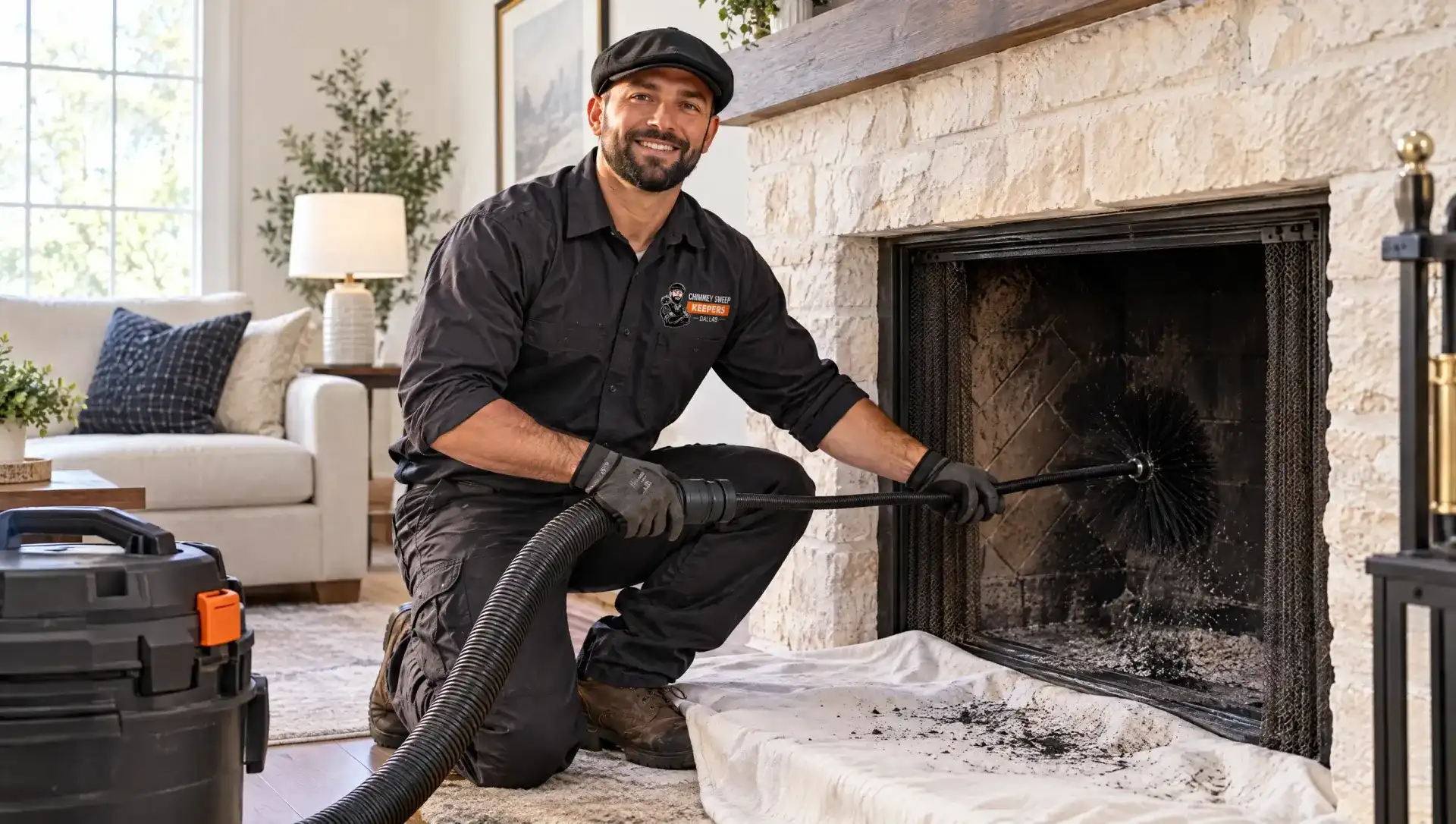
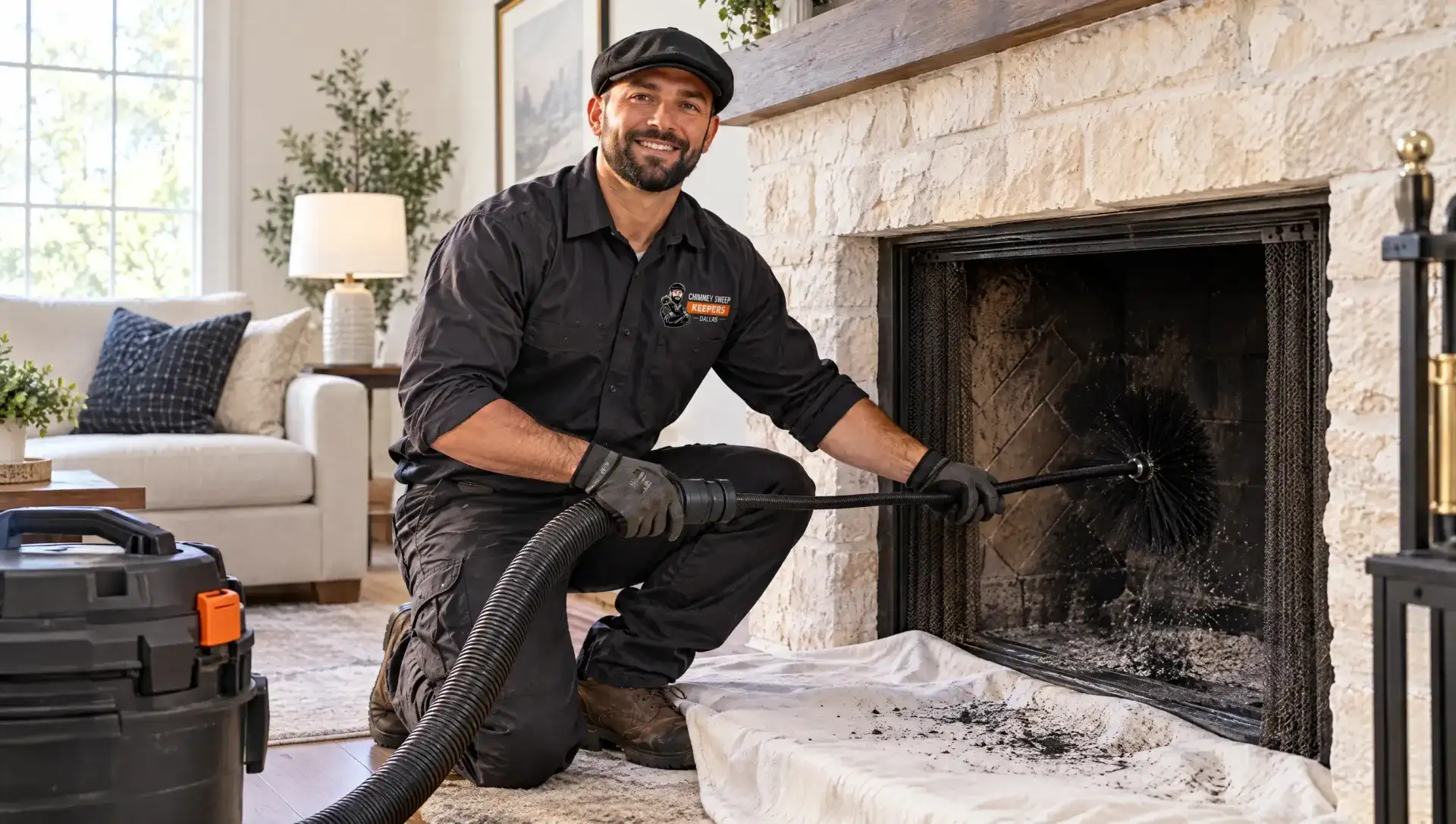
Soot and creosote get in the way of that. They narrow the flue, roughen its walls, and cool the rising smoke. Even a thin coat changes how the fireplace behaves. Professional chimney cleaning in Dallas brushes the whole system back to bare tile or metal, so the smoke has a clear, smooth path up.
Why a Dirty Flue Means Smoky, Lazy Fires
Think of the flue as a straw. Coat the inside, and you have to work harder to pull air through it. In a chimney, that extra resistance shows up as:
- Slow starts. The fire smolders before it catches.
- Smoke spilling out. The draft cannot keep up, so some smoke rolls into the room, often right after you open the damper.
- Weak flames. The fire burns low and cool, which makes even more creosote. It is a loop.
- Odors. Creosote soaks up humidity. The CSIA notes chimney smells are usually worse in summer, when humidity is high and the air conditioner pulls air down the flue.
Dallas fireplaces often get used only on cold nights and holidays. That pattern of short, cooler fires tends to build creosote faster than a few long, hot fires would.
Cleaning the Smoke Chamber and Smoke Shelf
Right above the damper is the smoke chamber, the slanted space that funnels smoke into the flue. Below it sits the smoke shelf, a ledge that catches falling debris. These two spots collect the thickest buildup in most fireplaces.
A quick brushing from the roof can miss them. Our cleaning includes both. If the smoke chamber walls are rough or stepped brick, creosote sticks to them fast. In that case we may recommend smoke chamber cleaning and parging, which coats the walls smooth so smoke flows better and buildup slows down.
What Changes After a Chimney Cleaning
| Before cleaning | After cleaning |
|---|---|
| Fire smolders for several minutes before catching | Lights faster with less kindling |
| Smoke spills into the room when the fire starts | Smoke goes up once the flue warms |
| Low, orange flame | Brighter, steadier flame |
| Campfire or tar smell, worse on humid days | Much less odor (some may remain in old brick) |
| Black flakes falling into the firebox | Clean firebox and smoke shelf |
We take photos before and after, so you can see the difference in the flue yourself.
Better Fires Start With Better Wood
Cleaning resets the chimney. The wood you burn decides how fast it gets dirty again. The EPA’s wood-burning guidance gives a few simple rules:
- Burn dry, seasoned wood. Season it at least six months. Wood burns well at a moisture content under 20 percent.
- Store it right. Keep it outdoors, off the ground, with only the top covered.
- Build hot fires. The EPA notes that a smoldering fire is neither safe nor efficient.
- Do not burn trash. Cardboard, wrapping paper, painted or treated wood and plastics can release harmful chemicals and damage the chimney.
- Handle ashes safely. Put them in a covered metal container stored outdoors on a surface that will not burn.
Dallas humidity makes firewood slow to dry. Wood bought green in November is often still wet at Christmas. Buy early, or buy from a seller who can tell you how long it has been seasoned.
Performance Problems Cleaning Will Not Fix
Cleaning solves buildup and blockages. It does not change how the fireplace was built. If your flue is clean and the fire still smokes, the cause may be:
- A fireplace opening that is too large for the flue
- A chimney that is too short, or shorter than nearby roof lines or trees
- A tight, modern house that pulls air down the chimney when exhaust fans or the dryer run
- A damper that does not open fully
Our smoke problem correction service tests for each of these and explains the fix, with a free written estimate.
Gas Logs and the Firebox Need Cleaning Too
Gas fireplaces do not build much creosote, but the logs, burner and glass collect soot over time. Sooty logs make a yellow, lazy flame and can leave black marks on the brick above the opening. A fireplace cleaning takes care of the firebox, glass doors and gas logs, while the chimney cleaning handles the flue.
Book a Chimney Cleaning in Dallas
Chimney Sweep Keepers Dallas is a veteran-owned, family-run company near White Rock Lake. Our standard sweep with a Level 1 inspection is $99 for one flue (regular $229), with drop cloths, a HEPA vacuum and a before-and-after photo report. Heavier cleanings are priced before we start. Call (469) 206-2085, 7 days a week from 7 AM to 11 PM.