What Chimney Fan Installation Fixes
A chimney works because hot air rises. The fire heats the air in the flue, and that warm air pulls smoke up and out. That pull is called draft. When draft is weak, smoke takes the easy way out, into your living room.
A draft-inducing chimney fan mounts on top of the flue. Its motor pulls air up the chimney, so the fireplace gets a strong, steady draft no matter how short the chimney is or which way the wind blows. You control the speed from a switch inside the house.
A fan is a good fix when:
- The chimney is too short for the fireplace opening
- The fireplace opening is too big for the size of the flue
- Nearby trees, a taller roof line or a second story cause downdrafts
- The flue is clean and the damper works, but the fireplace still smokes
Fireplace Smoking Problems: Find the Cause First
A fan is not the first answer. Many smoking fireplaces have a simpler cause, and a fan would cover it up instead of fixing it. Before we quote a fan, we check the common causes on our fireplace smoking problems page.
| Cause of smoke | Better fix than a fan |
|---|---|
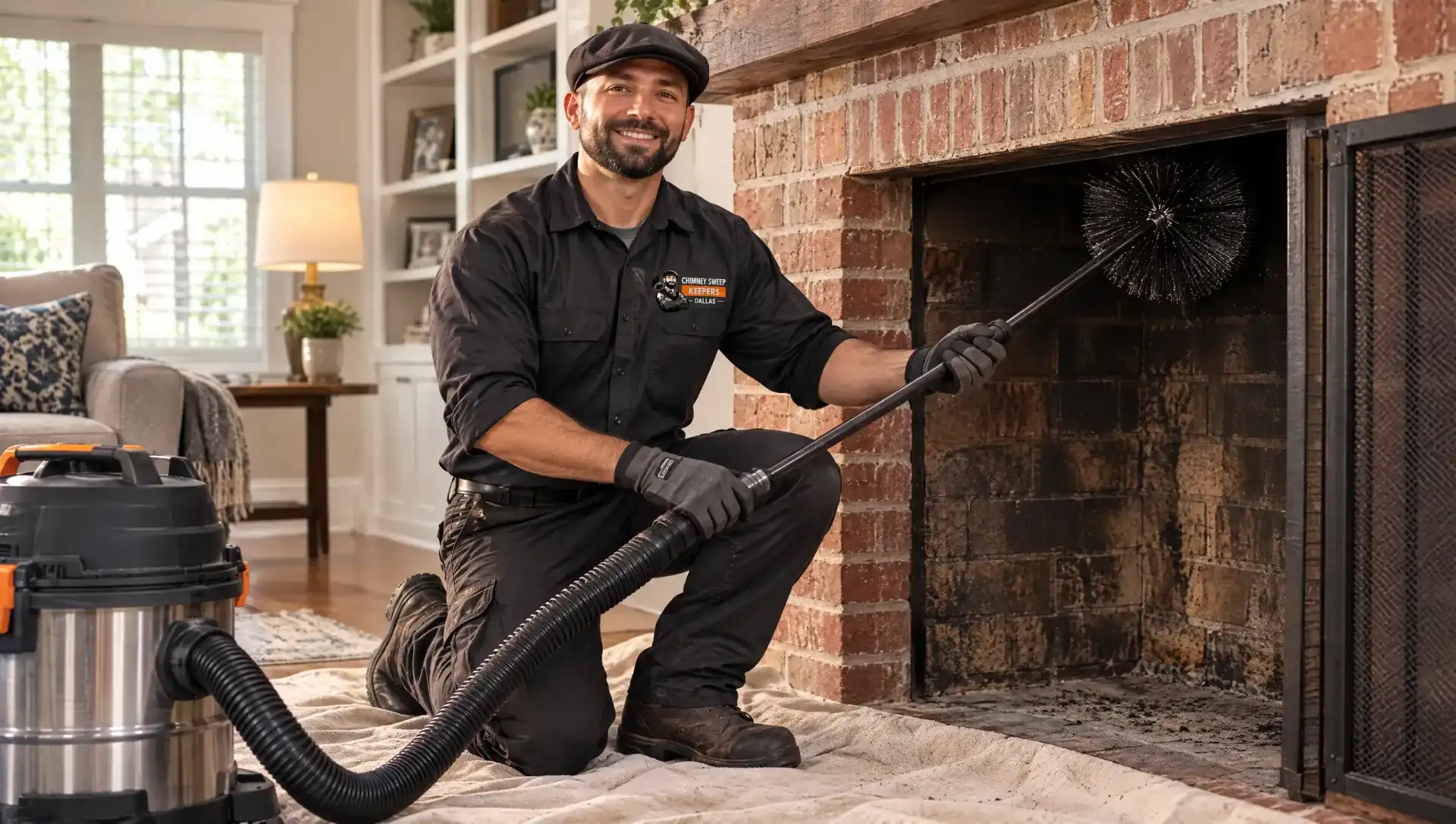
| Creosote or a nest blocking the flue | A chimney sweep and nest removal |
| Damper stuck partly closed or broken | Chimney damper repair |
| Wet or green firewood | Dry wood under 20 percent moisture |
| Wind pushing smoke back down | A wind-directional chimney cap |
| Tight house with exhaust fans running | Crack a window near the fireplace while it burns |
| Chimney too short, flue too small for the opening | A chimney fan |
The EPA’s best wood-burning practices say wood burns best at a moisture content of less than 20 percent and should be seasoned for at least six months. Wet wood makes more smoke and less heat, and no fan will change that.
Flue Size, Height and Draft
Building codes set rules for both chimney height and flue size. The height rule is often called the 3-2-10 rule. A masonry chimney must rise at least 3 feet above where it leaves the roof and at least 2 feet above anything within 10 feet.
The flue also has to be large enough for the fireplace opening. A common rule of thumb is a flue area of about one-tenth of the opening. Many older Dallas fireplaces were built with wide, open fronts and small clay flues, and some newer homes added a taller second story that now sits above the chimney.
New and remodeled homes add another cause. Tight windows, spray foam and strong kitchen and bath exhaust fans can pull more air out of the house than leaks back in. The house then pulls air down the chimney. Cracking a window near the fireplace is a quick test. If the smoke stops, the fix is more fresh air, not a fan.
You can make a chimney taller or rebuild the flue, but that is major masonry work. A fan often solves the same problem for less, with no change to how your chimney looks from the street.
How Chimney Fan Installation Works
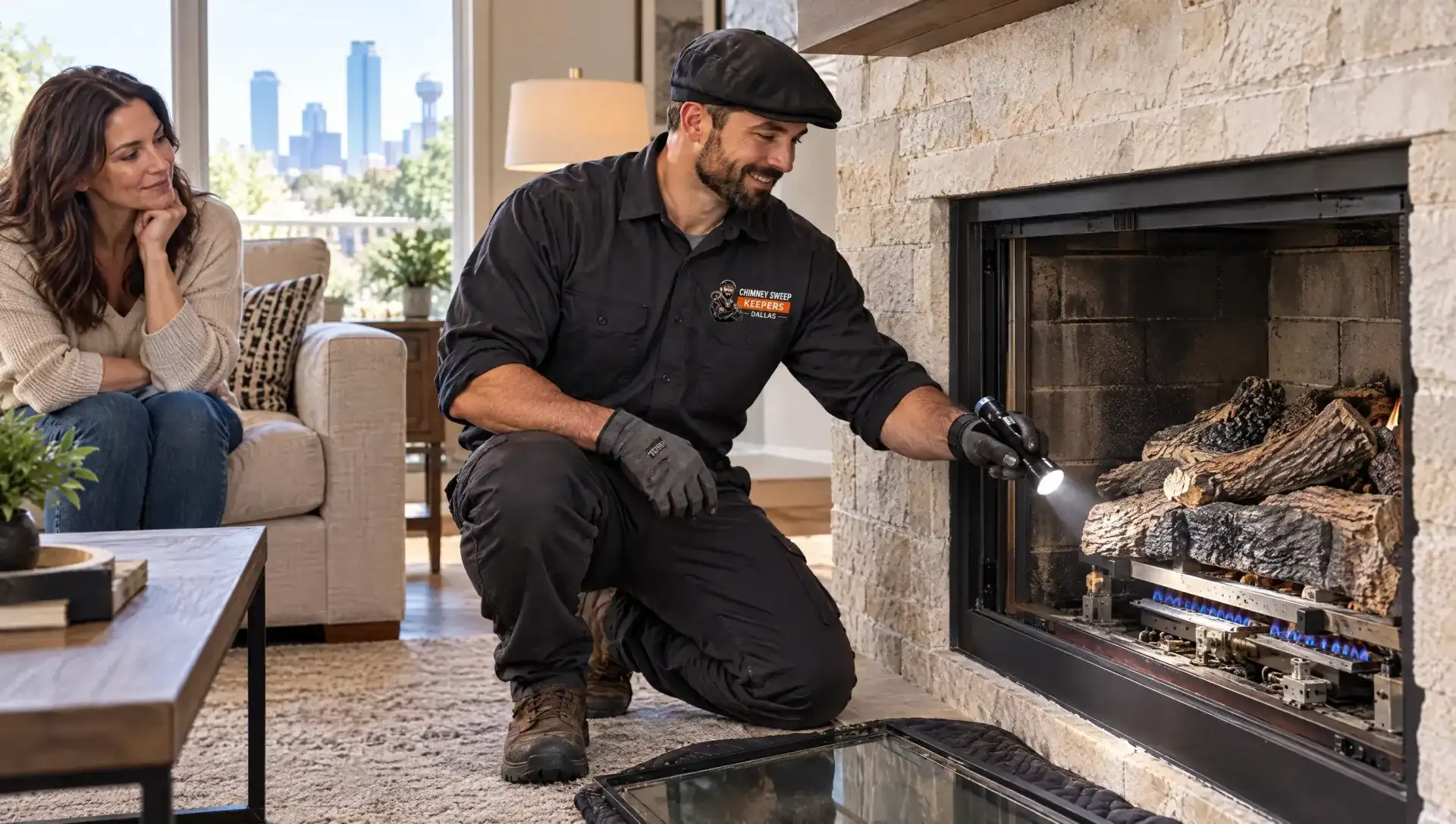
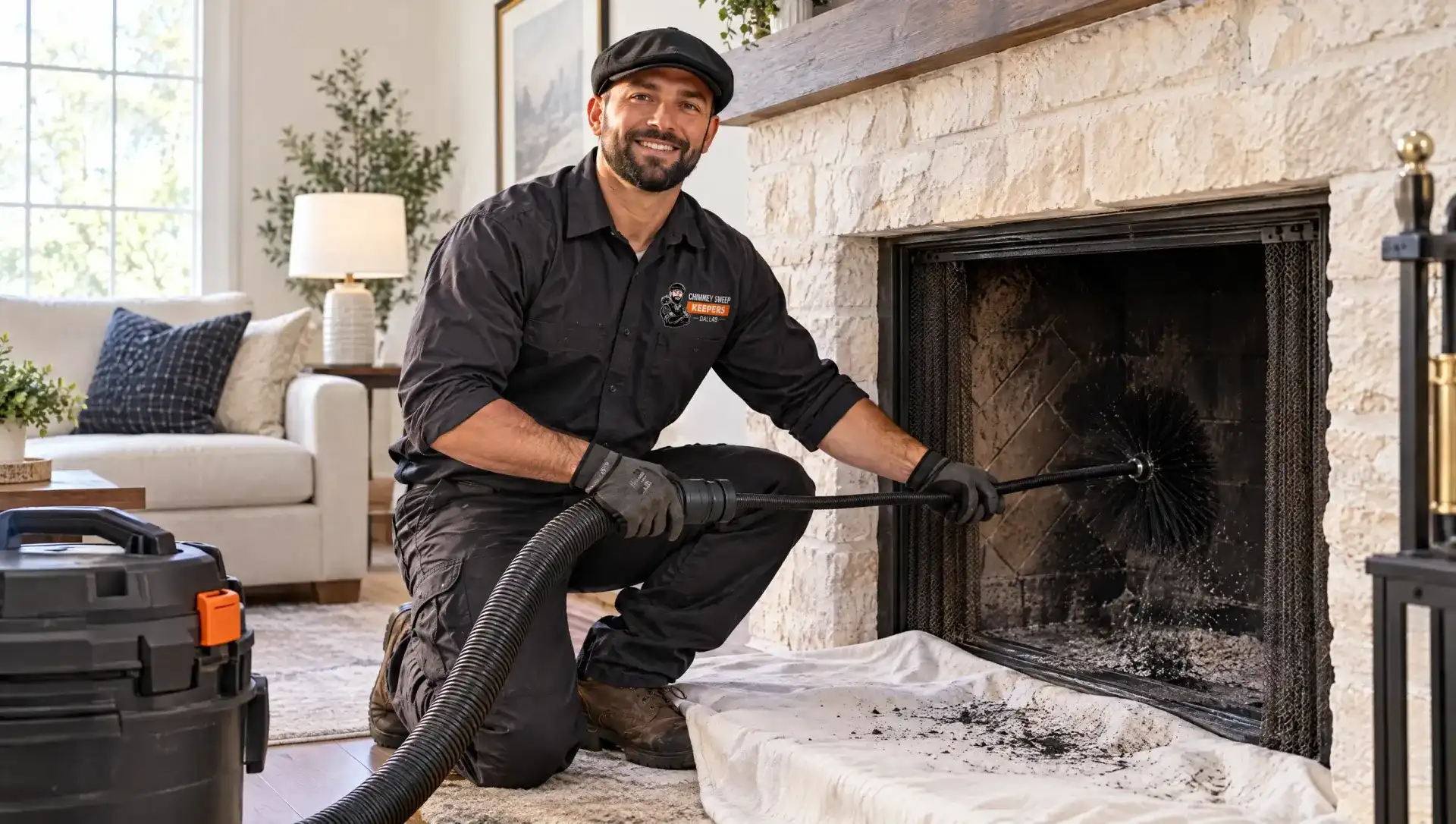
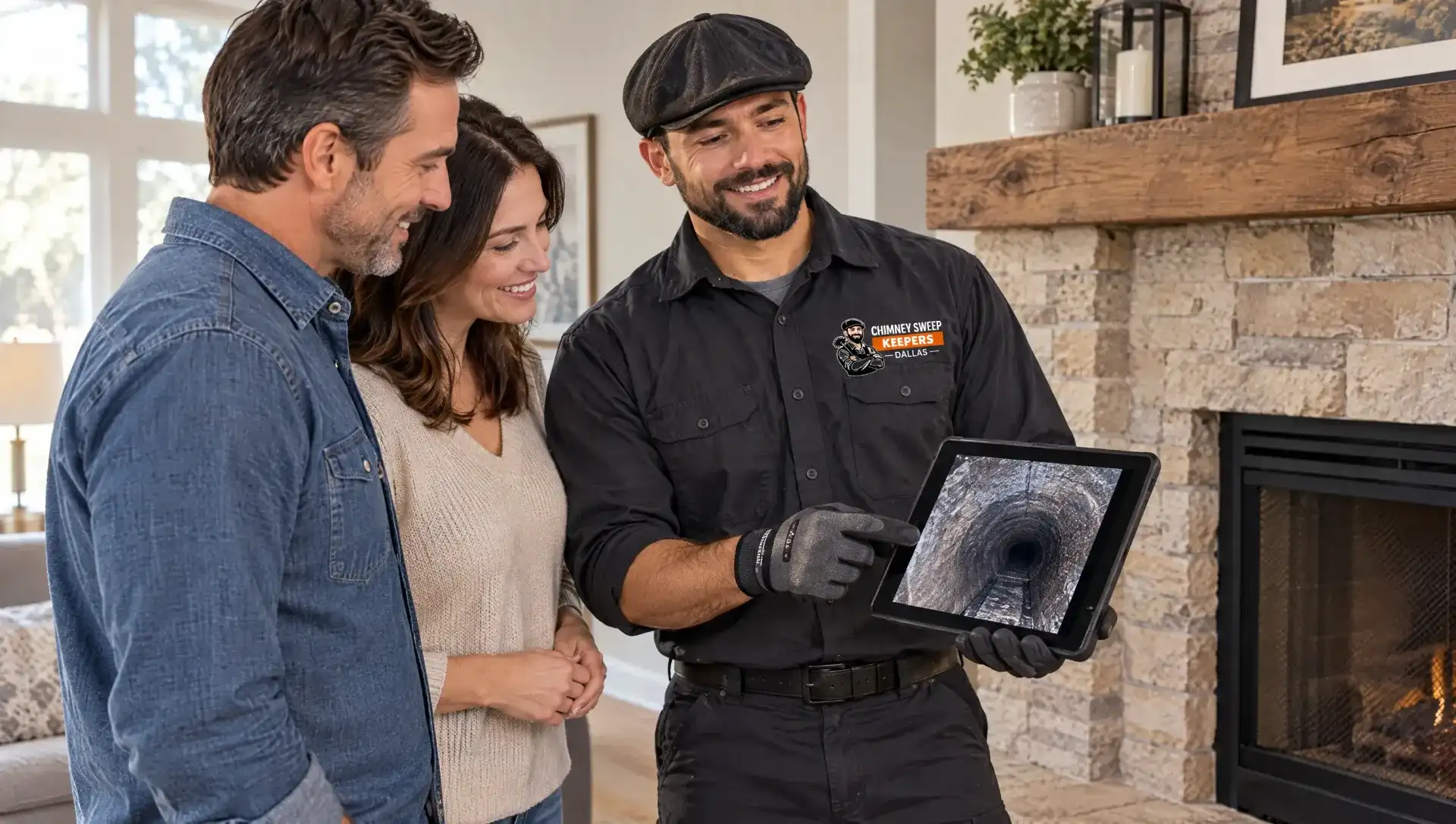
- Diagnose. We sweep or inspect the flue, test the damper and watch how the fireplace drafts.
- Match the fan. We pick a fan model listed for your fireplace type and sized to your flue.
- Plan the power. The fan needs electricity at the top of the chimney and a control inside. We tell you if an electrician needs to run a circuit.
- Install. The fan is mounted and sealed to the top of the flue or crown.
- Test it. We light a test fire with you and set the speed control, so you know how to use it.
Signs You Might Need a Chimney Fan
- Smoke rolls out the front of the fireplace even with a clean flue
- The fireplace smokes most on windy days or when doors open
- Smoke stains on the face of the fireplace above the opening
- The chimney looks short next to the roof line or a second story
- You have tried dry wood, an open damper and a cracked window, and it still smokes
Noise, Power and Everyday Use
Most people worry the fan will be loud. The motor sits on top of the chimney, outside the house, so most of the sound stays outside. At the low speed used for a normal fire, most fans give off a soft hum. You can turn the speed up when lighting the fire and turn it down once it is burning.
The fan only runs when you switch it on. When the fireplace is cold, it stays off.
Chimney Cap Installation
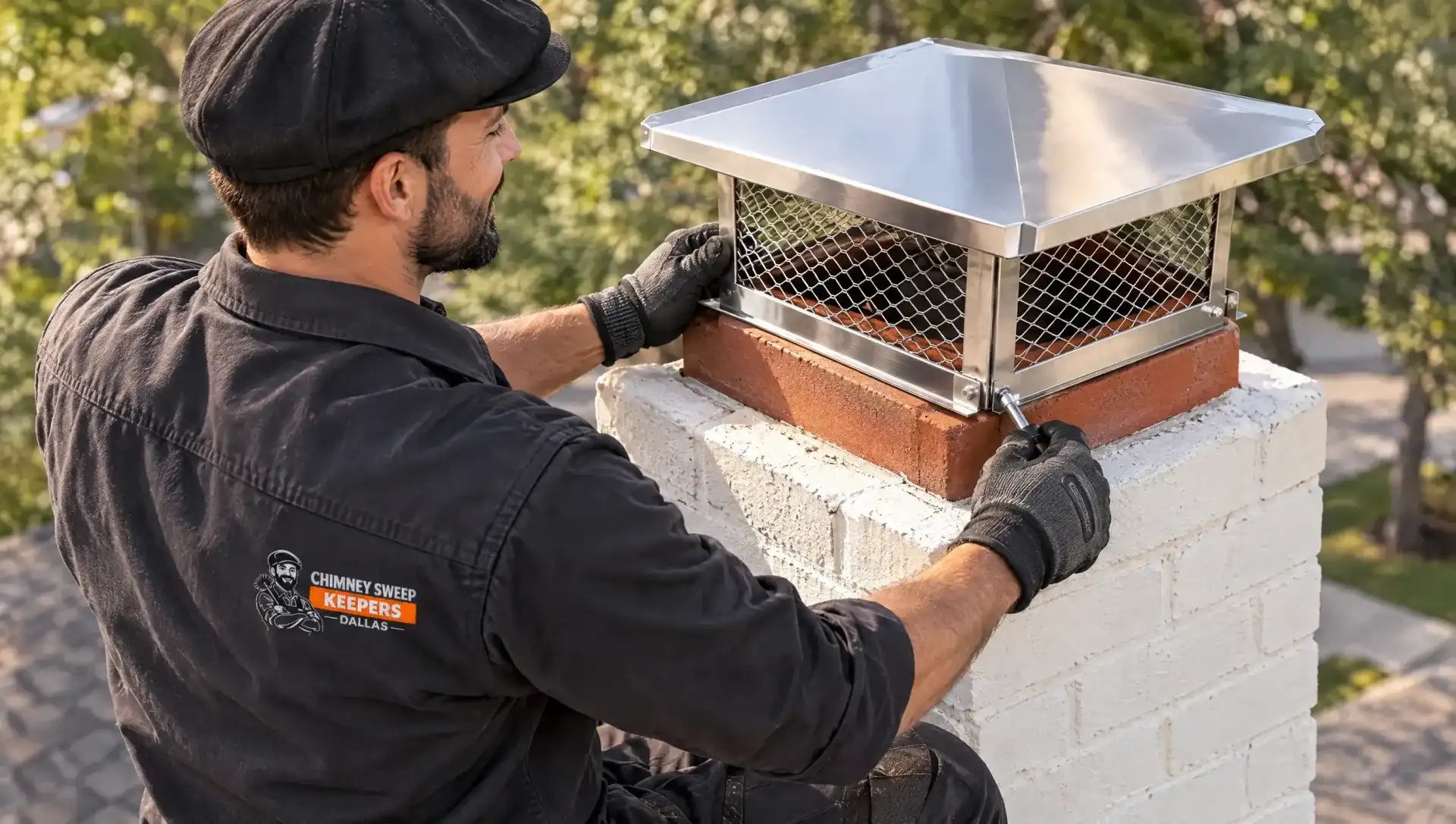
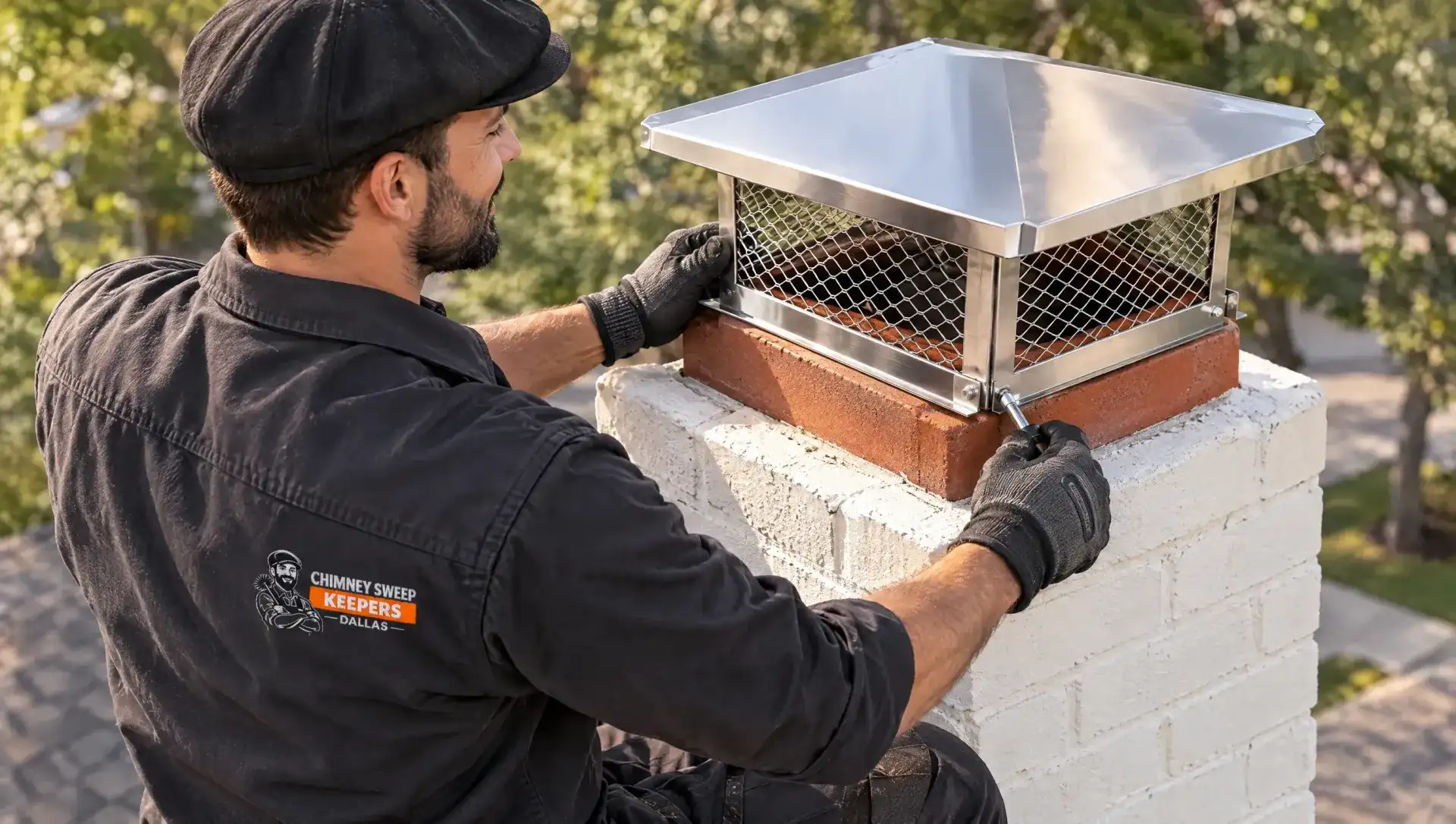
On a single-flue chimney, the fan usually takes the place of the cap and has its own screen to keep out animals. If your chimney has more than one flue, the other flues still need caps. If wind is your only problem, a wind-directional cap may be enough. Learn more on our chimney cap installation page, or see all of our chimney repair services.
Book Chimney Fan Installation in Dallas
Chimney Sweep Keepers Dallas is a veteran-owned, family-run company at 6041 Village Bend Dr, near White Rock Lake. We are CSIA certified, licensed, bonded and insured. We answer 7 days a week from 7 AM to 11 PM. Call (469) 206-2085 and we will find out why your fireplace smokes, then give you a free written estimate.