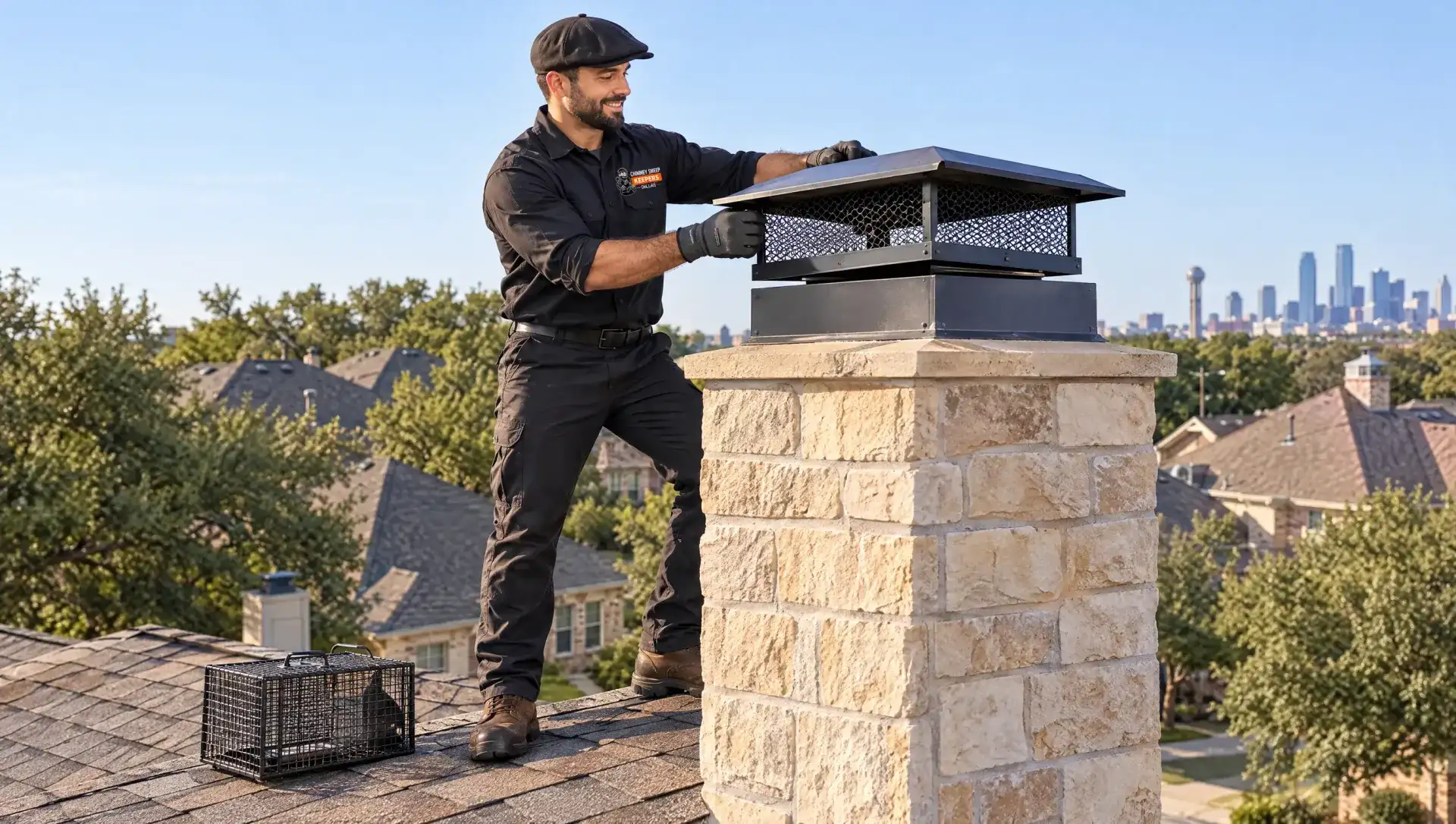
Chimney Animal Removal in Dallas: How It Works
An open chimney looks like a hollow tree to a raccoon, a squirrel or a bird. It is dark, dry and safe from predators. In Dallas, where live oaks and pecans grow close to many roofs, animals can reach the chimney with one jump.
Our removal process is the same for every job:
- Find out what is there. We listen, look from the hearth and the roof and use a camera if needed.
- Remove the animal humanely. We use one-way exits, gentle handling or live removal. No poison and no smoke.
- Clear the nest. Nesting material, droppings and debris come out of the flue and smoke shelf.
- Clean up. We clean the flue and firebox so the fireplace is safe to use again.
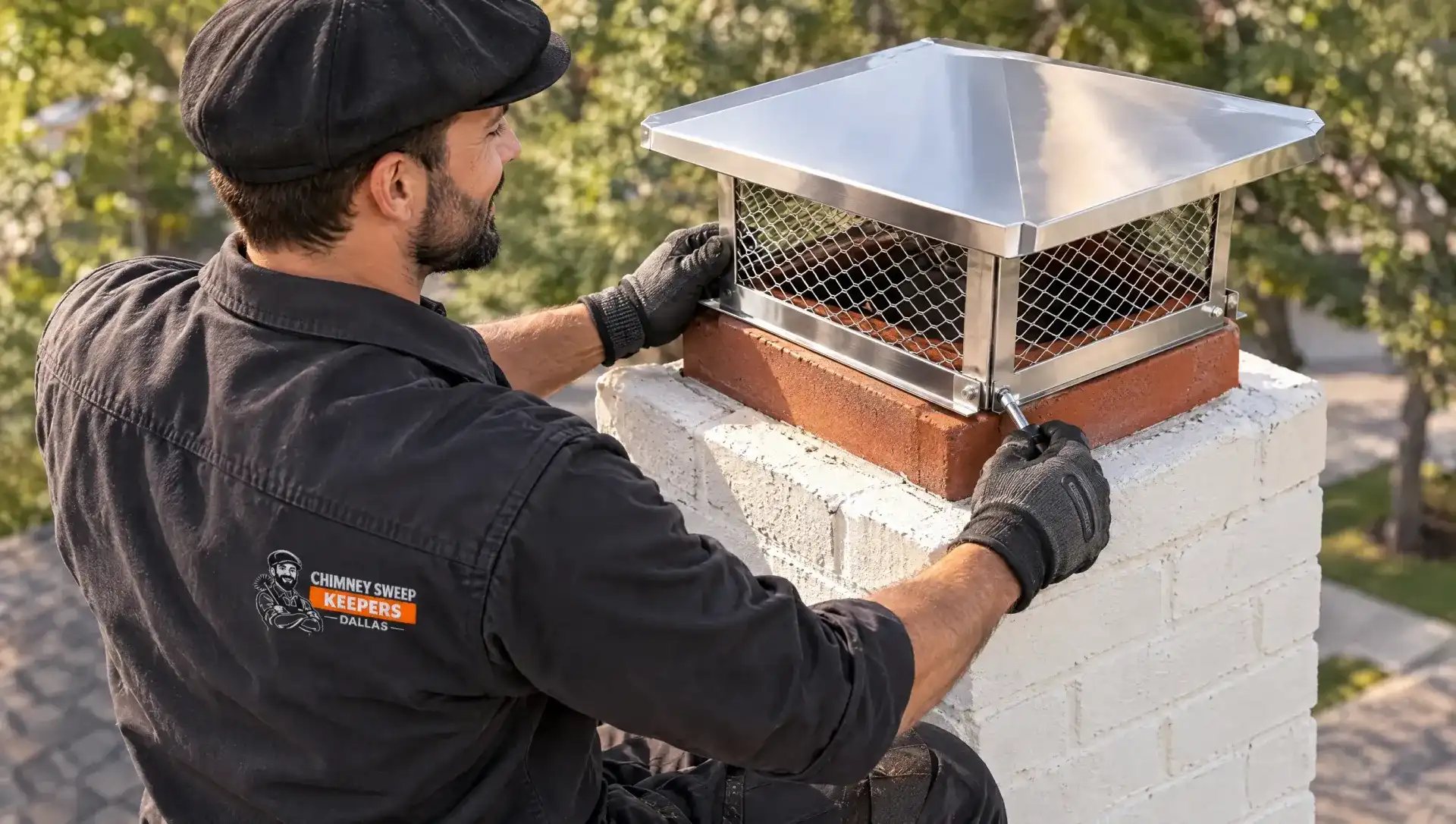
- Cap the chimney. A chimney cap with a mesh screen keeps the next animal out.
Raccoons in the Chimney
Raccoons are strong climbers and often use chimneys as dens in spring, when they have their young. Signs include heavy thumping, chattering and a strong musky smell. A mother raccoon will often move her young out on her own if she is given a reason and a way out. We work with that, then close the chimney once they are gone.
Do not try to trap or grab a raccoon yourself. They bite and scratch, and they can carry disease.
Also do not light a fire or set off a smoke bomb to drive an animal out. Young animals cannot climb, so they stay behind and die in the flue. Smoke can also set a nest on fire. A dead animal in a chimney leaves a strong odor and draws flies, and it is a much harder job to clean up than a live removal.
Squirrels, Birds and Bats
Squirrels fall into chimneys more often than they nest in them. A squirrel stuck on the smoke shelf will scratch for hours. We get it out through the damper or the top, depending on where it is.
Birds like starlings and grackles build nests from twigs and grass right on the damper. That nest can block the flue and catch fire the next time you light the fireplace.
Bats roost in chimneys in the warm months. They are removed by exclusion, which means a one-way exit lets them leave but not return. Bats should never be killed, and we explain the right timing when you call.
Chimney Swifts Are Federally Protected
Chimney swifts are small, dark birds that cling to the inside walls of chimneys. They cannot perch on branches like other birds. Before people built chimneys, they nested in hollow trees.
Chimney swifts are protected by the Migratory Bird Treaty Act, enforced by the U.S. Fish and Wildlife Service. That means it is against federal law to remove or disturb an active nest, its eggs or its young without a permit.
What this means for your Dallas home:
| Time of year | What we can do |
|---|---|
| About May to September (nesting) | Leave them alone. Keep the damper closed to block noise and odor |
| After they migrate south | Sweep the flue, remove the old nest, install a cap |
| Before they return next spring | Cap the chimney so they nest somewhere else |
The chirping of young swifts can be loud for a few weeks, but it ends once they fly. Keep the damper closed until then. When they are gone, we sweep and cap the chimney.
Signs You Have an Animal in Your Chimney
- Scratching, thumping or chirping from inside the fireplace or the wall
- Twigs, leaves or nesting material falling into the firebox
- A strong musky or rotten smell, worse on hot days
- Droppings on the hearth or the damper
- Animals seen on the roof near the chimney at dusk
- No cap on top of the chimney
- A rusted, bent or torn cap with gaps an animal can squeeze through
Chimney Cap Installation After Removal
Removing an animal without capping the chimney leaves the same open door for the next one. The cap is what makes the job last. We install stainless steel caps with mesh that stops raccoons, squirrels and birds while letting smoke out. See our chimney cap installation page for materials and sizes, including multi-flue caps for older homes.
Chimney Cleaning After Animals
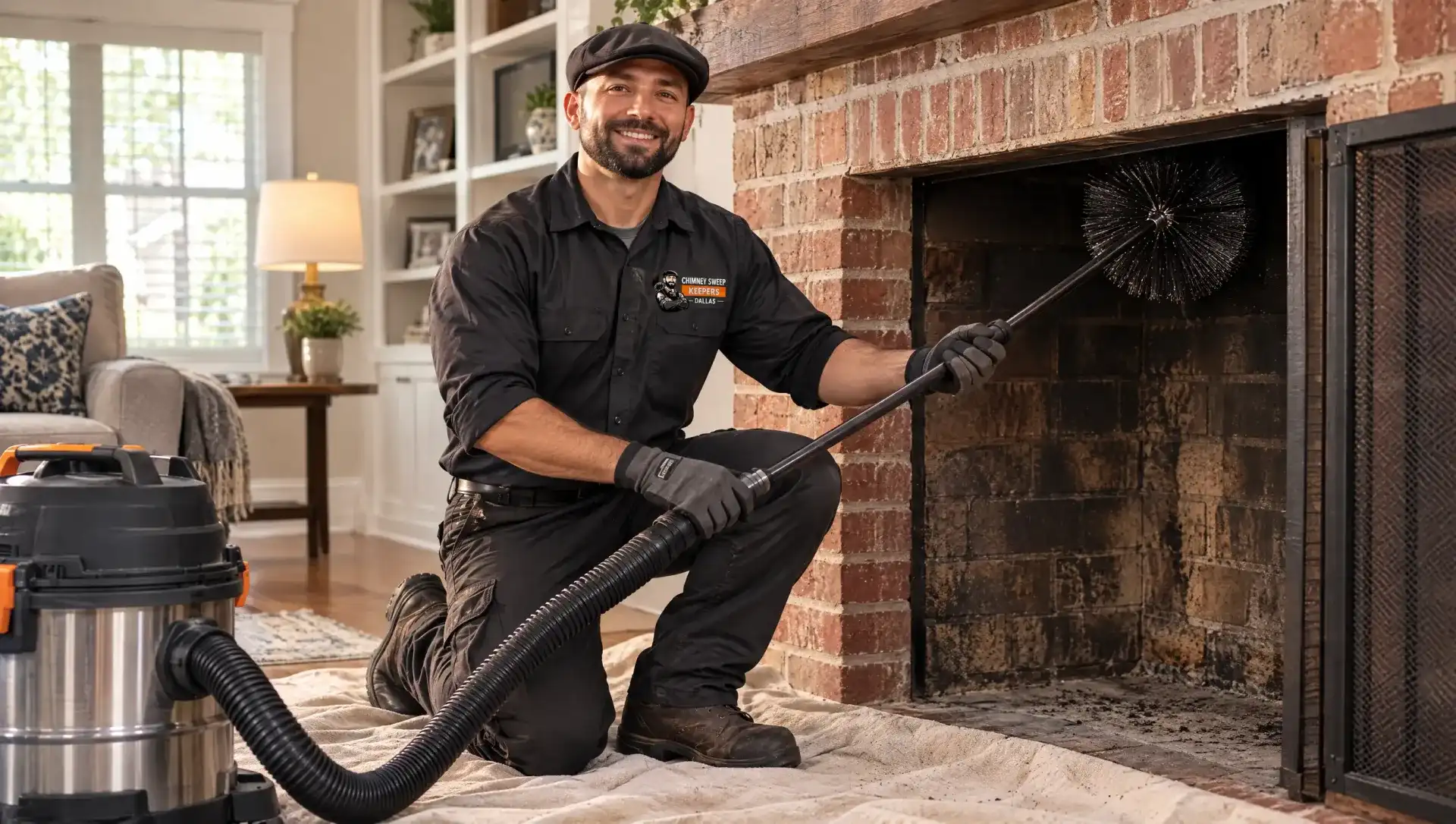
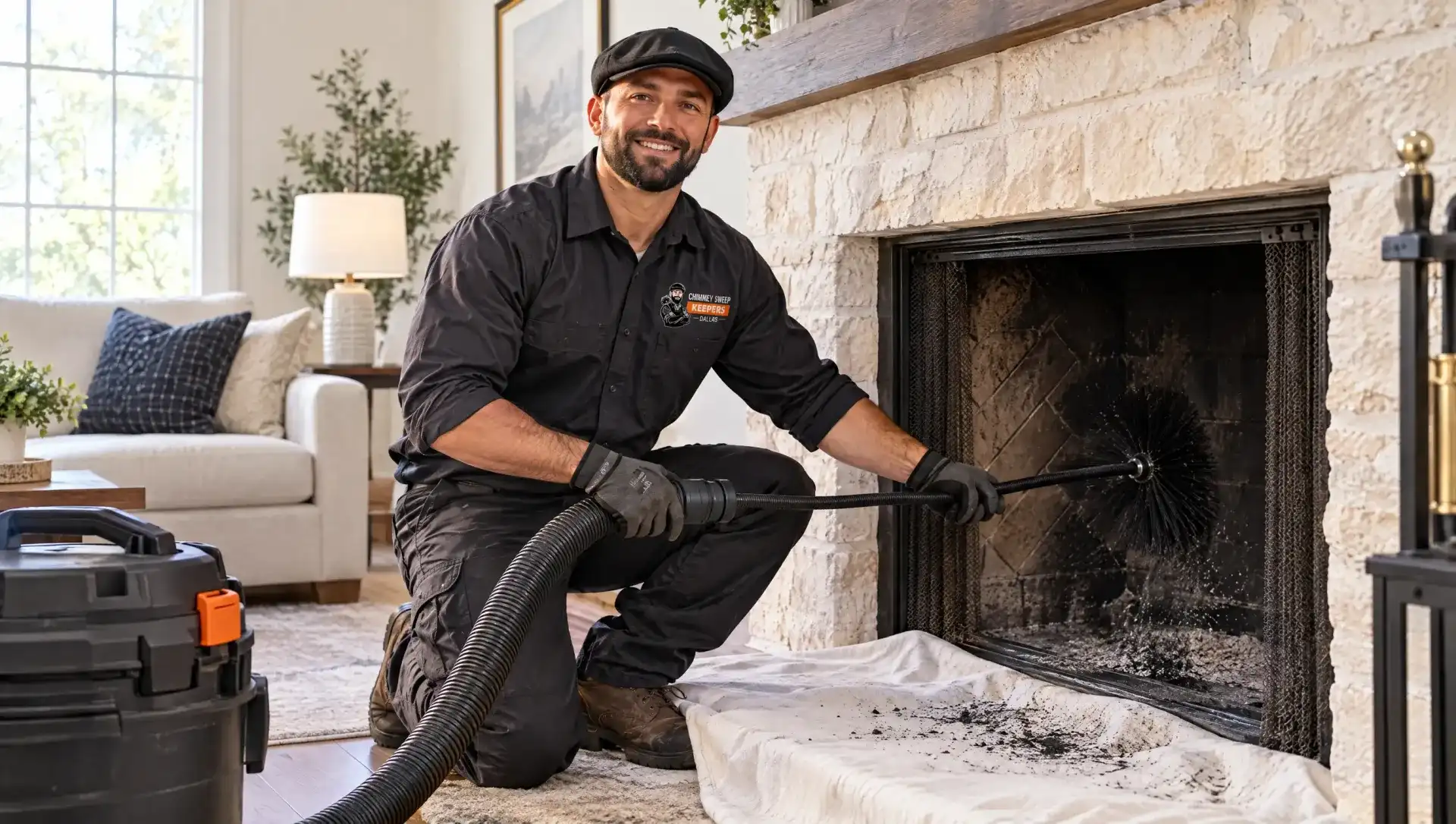
Nests, droppings and debris left behind can block the flue, smell for months and carry germs. After removal we clean the flue, smoke shelf and firebox with drop cloths and a HEPA vacuum. If the flue also has creosote buildup, our chimney sweep clears it at the same visit. For years of buildup or a very dirty flue, we use chimney cleaning tools made for heavy jobs.
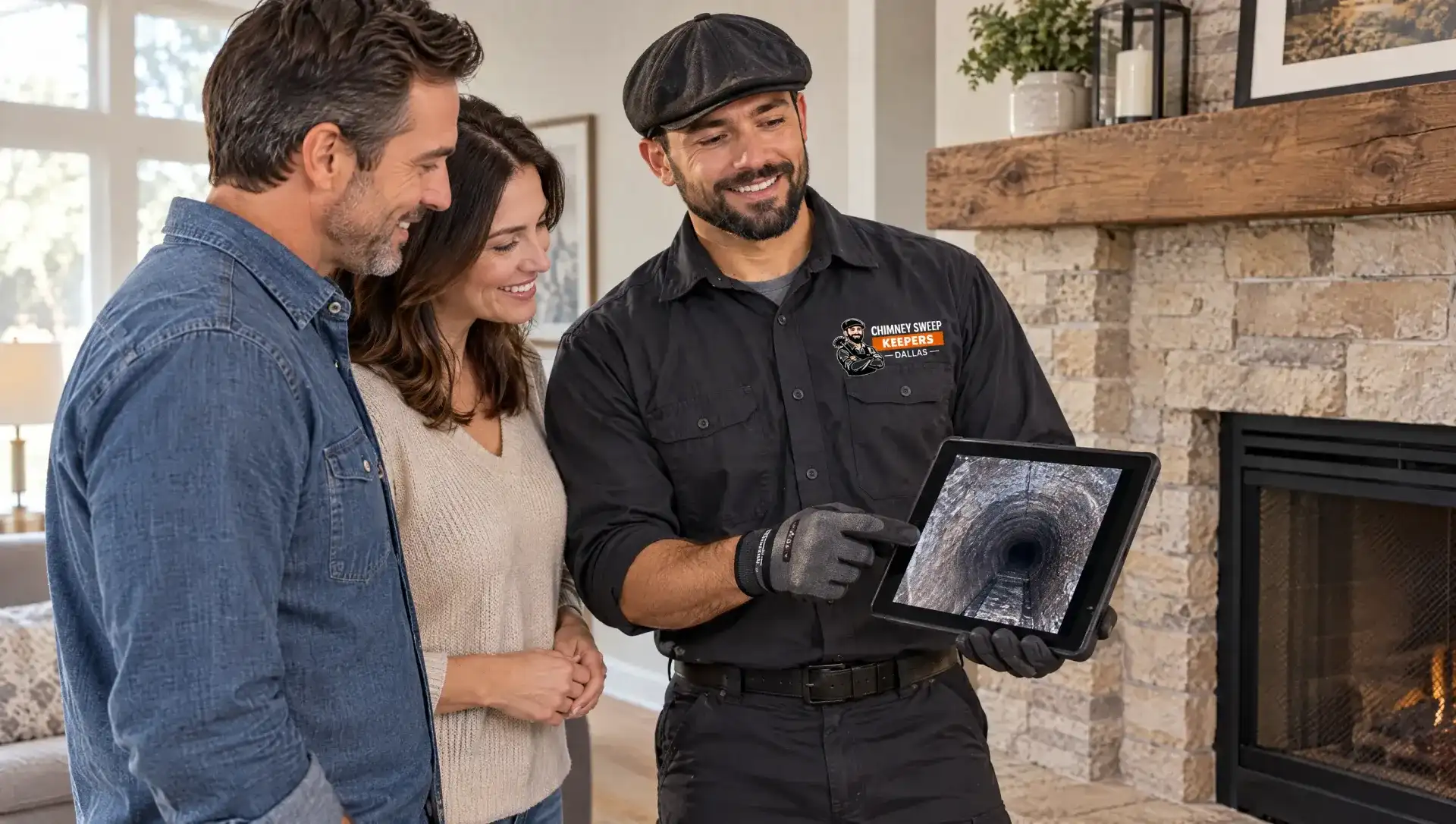
Animals can also damage the damper or tear apart the flue liner. If we see damage, we show you photos and may recommend a chimney inspection or chimney damper repair, with a free written estimate.
Book Chimney Animal Removal in Dallas
Chimney Sweep Keepers Dallas is a veteran-owned, family-run company at 6041 Village Bend Dr, near White Rock Lake. We serve all of Dallas, from Lakewood and Lake Highlands to Oak Cliff and Preston Hollow, plus Richardson, Garland, Plano and nearby cities. We answer 7 days a week from 7 AM to 11 PM. Call (469) 206-2085 for a free estimate.