Firebox Repair for Dallas Fireplaces
The firebox is the part of the fireplace where the fire burns. In a brick fireplace it is lined with firebrick, a dense brick made to take high heat. In a factory-built fireplace it is lined with molded refractory panels. Either way, the lining keeps the fire’s heat away from the walls, framing and metal around it.
When the lining cracks or the mortar falls out, that protection is gone. Heat can reach wood framing behind the fireplace, and that is how some house fires start. The national chimney standard, NFPA 211, calls for the firebox to be checked as part of every yearly inspection.
Signs You Need Firebox Repair
- Mortar joints that are missing, crumbling or hollow
- Cracks that go all the way through a firebrick
- Loose bricks that move when you press on them
- Gaps where you can see behind the brick
- Refractory panels with wide cracks, missing pieces or metal showing
- Pieces of brick or panel in the ashes
- Rust or water stains on the back wall of the firebox
Small surface cracks are common and do not always need work. We show you photos and explain which ones matter.
In Dallas, water is a big cause of firebox damage. Rain coming down an uncapped chimney soaks the firebrick and mortar, and the next fire heats that wet masonry fast. Over a few seasons the joints wash out and the back wall starts to crack. Gas fireplaces are not immune. Many older homes have gas logs sitting in a firebrick firebox, and that brick still takes heat and still wears out.
Firebrick Repair and Rebuilding
Older brick fireplaces in Dallas, like the 1950s through 1970s homes in Lakewood, Lake Highlands and Oak Cliff, usually have a firebrick firebox. How we fix it depends on the damage:
- Repointing. We grind out worn mortar joints and refill them with refractory mortar. This fixes most fireboxes with sound brick.
- Brick replacement. We cut out cracked or loose firebricks and set new ones.
- Full rebuild. If most of the brick or the back wall is failing, we take out the lining and rebuild the firebox.
The International Residential Code calls for firebrick at least 2 inches thick, set in medium-duty refractory mortar that meets ASTM C199. We follow that standard on every firebrick repair.
Refractory Mortar vs. Regular Mortar
A common firebox mistake is using the wrong mortar. Regular mortar, the kind used to lay bricks on the outside of a house, is not made for fire. In a firebox, it dries out, cracks and crumbles after a few seasons.
| Refractory mortar | Regular mortar | |
|---|---|---|
| Made for | High heat inside a firebox | Outside walls and chimneys |
| Holds up to fire | Yes | No, cracks and crumbles |
| Standard | ASTM C199 | Not rated for firebox use |
| Joint width | Thin joints | Wider joints |
If someone patched your firebox with regular mortar, we remove it and redo the joints with refractory mortar.
Refractory Panels in Factory-Built Fireplaces
Many newer homes in North Dallas, Plano and Richardson have factory-built fireplaces, also called prefab or zero-clearance fireplaces. Instead of firebrick, they use molded refractory panels on the back and sides.
These fireplaces are tested and listed as a complete system. That means the panels must be replaced with the manufacturer’s listed panels for that model. Firebrick, cement board or another brand’s panels can void the listing and make the unit unsafe. We find the model number on the rating plate and order the right set.
If the metal firebox behind the panels is rusted through or warped, panel replacement may not be enough. In that case we talk about fireplace remodeling options, such as an insert.
When It Is Unsafe to Burn
Stop using the fireplace and call for an inspection if you see:
- Gaps or missing mortar where you can see behind the brick
- A loose or bowed back wall
- Refractory panels with missing pieces or metal showing
- Signs of a chimney fire, like puffy creosote or cracked tiles
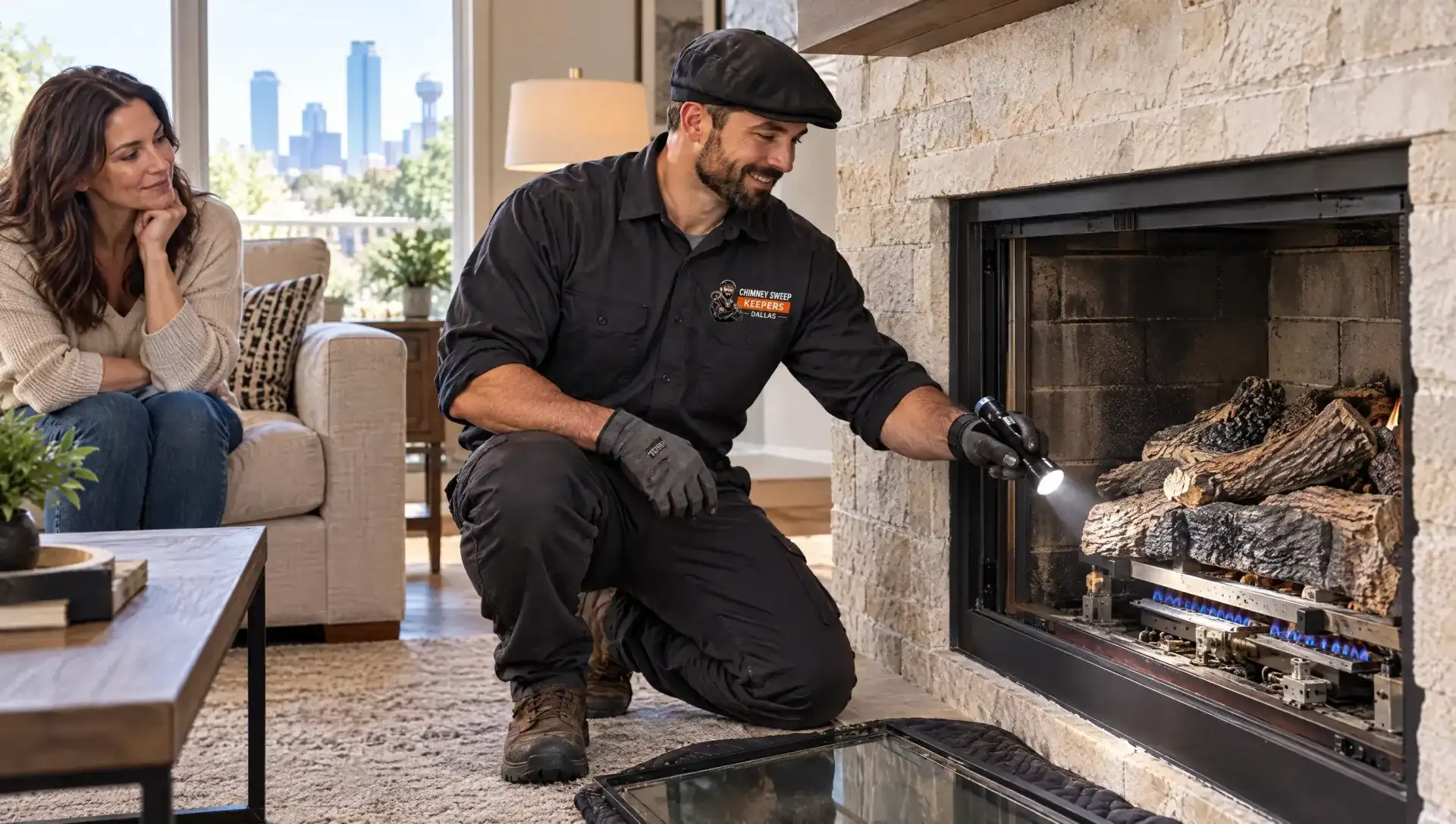
A fireplace inspection checks the firebox, damper, hearth and clearances before you light another fire.
How We Repair a Firebox
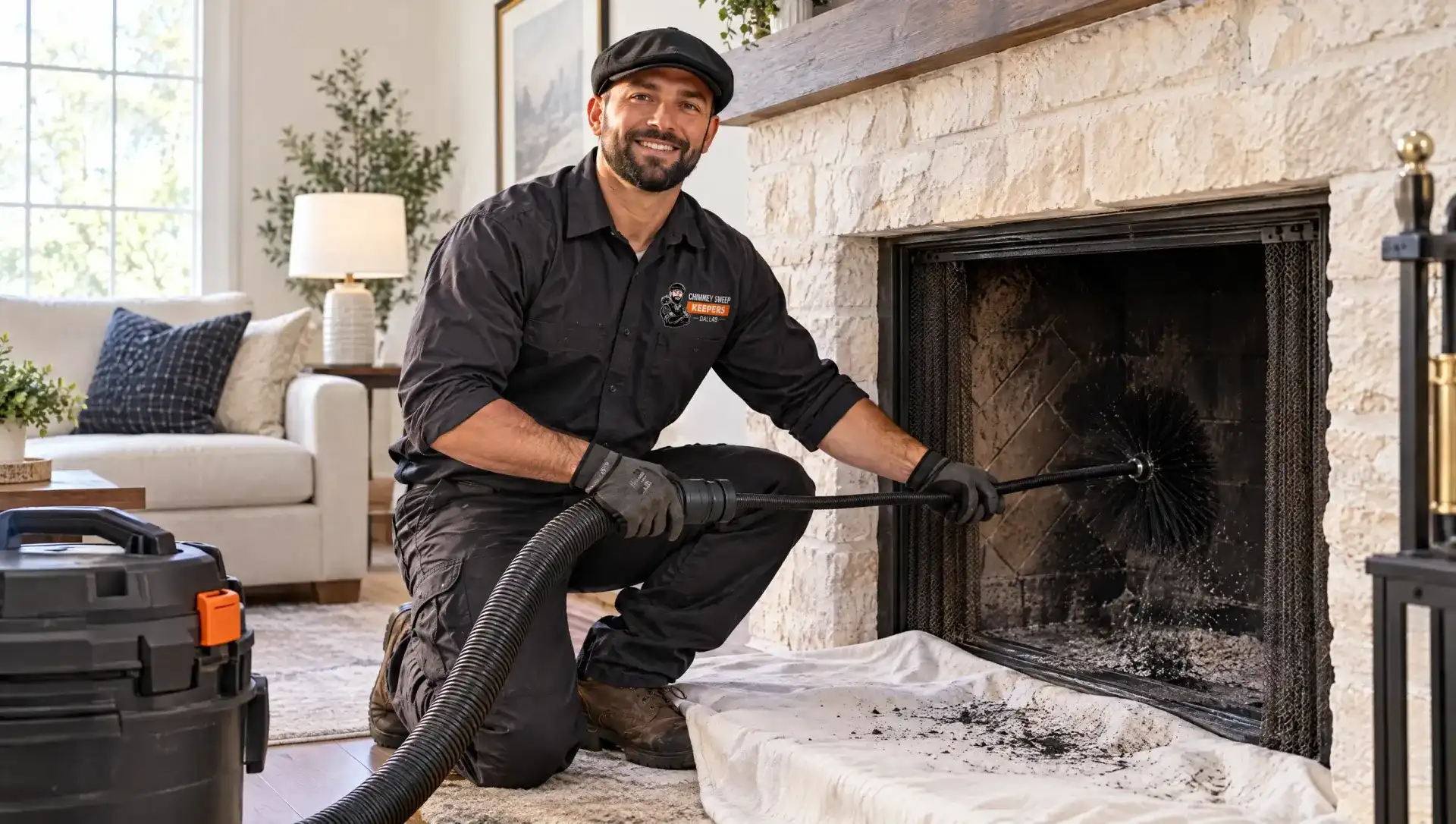
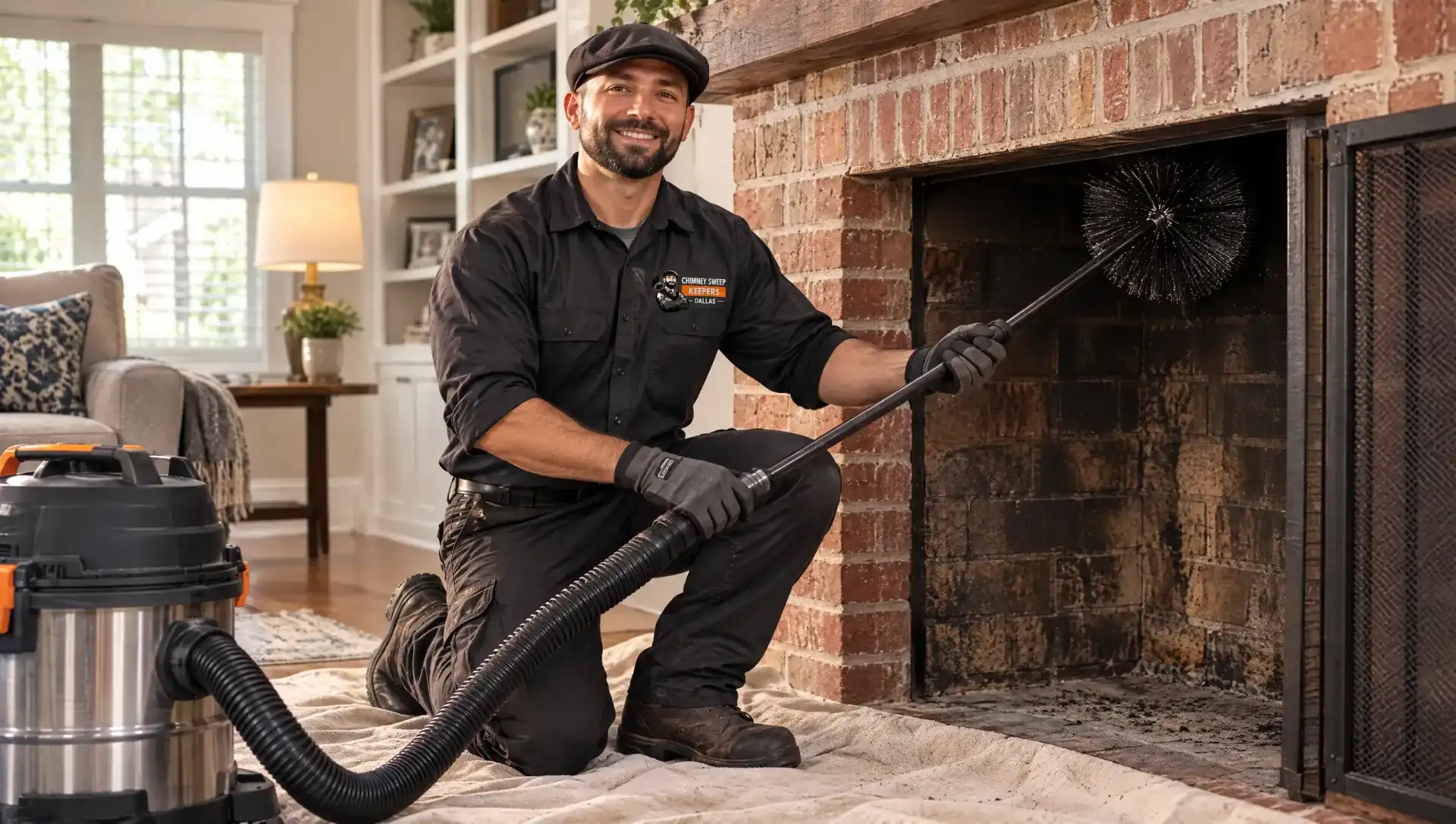
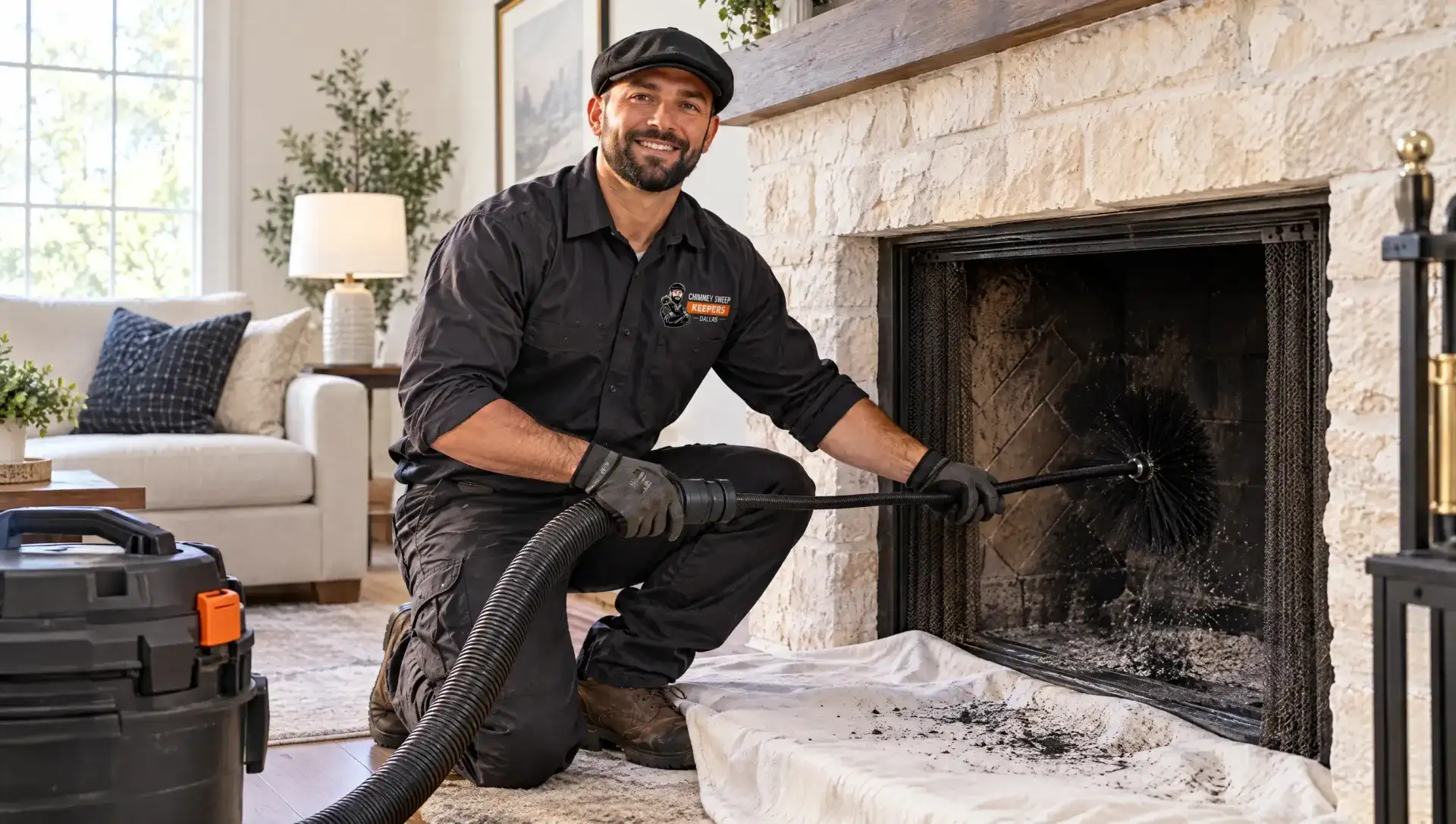
- Clean. We clean out ash and soot so we can see the brick and joints. Many firebox repairs start with fireplace cleaning.
- Inspect. We check the brick, joints, back wall and the damper above it.
- Estimate. You get a free written estimate with photos.
- Repair. Repoint, replace brick, rebuild, or install the listed panels.
- Cure. We tell you how long to wait and how to burn small fires at first.
After a repair, start with two or three small fires before you build a full one. That lets the refractory mortar dry out slowly. Burn dry, seasoned wood and keep the fire on the grate, not against the back wall.
Firebox damage often comes with other problems. A rusted damper sits right above it, and the smoke chamber above that collects the heaviest creosote. See chimney damper repair, smoke chamber cleaning and our main fireplace repair page.
Book Firebox Repair in Dallas
Chimney Sweep Keepers Dallas is a veteran-owned, family-run company at 6041 Village Bend Dr, near White Rock Lake. We answer 7 days a week from 7 AM to 11 PM. Call (469) 206-2085 and we will inspect your firebox and give you a free written estimate.