How Chimney Flashing Repair in Dallas Works
Your roof and your chimney move differently. The roof flexes with heat, and the brick stays put. Flashing is the metal seal that bridges that joint and keeps rain out. When it fails, water runs down the outside of the chimney and into your attic, ceiling or wall.
Flashing leaks are hard to spot from the ground. Often the first sign is a brown stain on the ceiling next to the fireplace after a spring storm.
Step Flashing and Counter Flashing
Good chimney flashing has two layers that work together.
- Step flashing is a set of L-shaped metal pieces woven in with the shingles along the sides of the chimney. Each piece overlaps the one below it, like shingles.
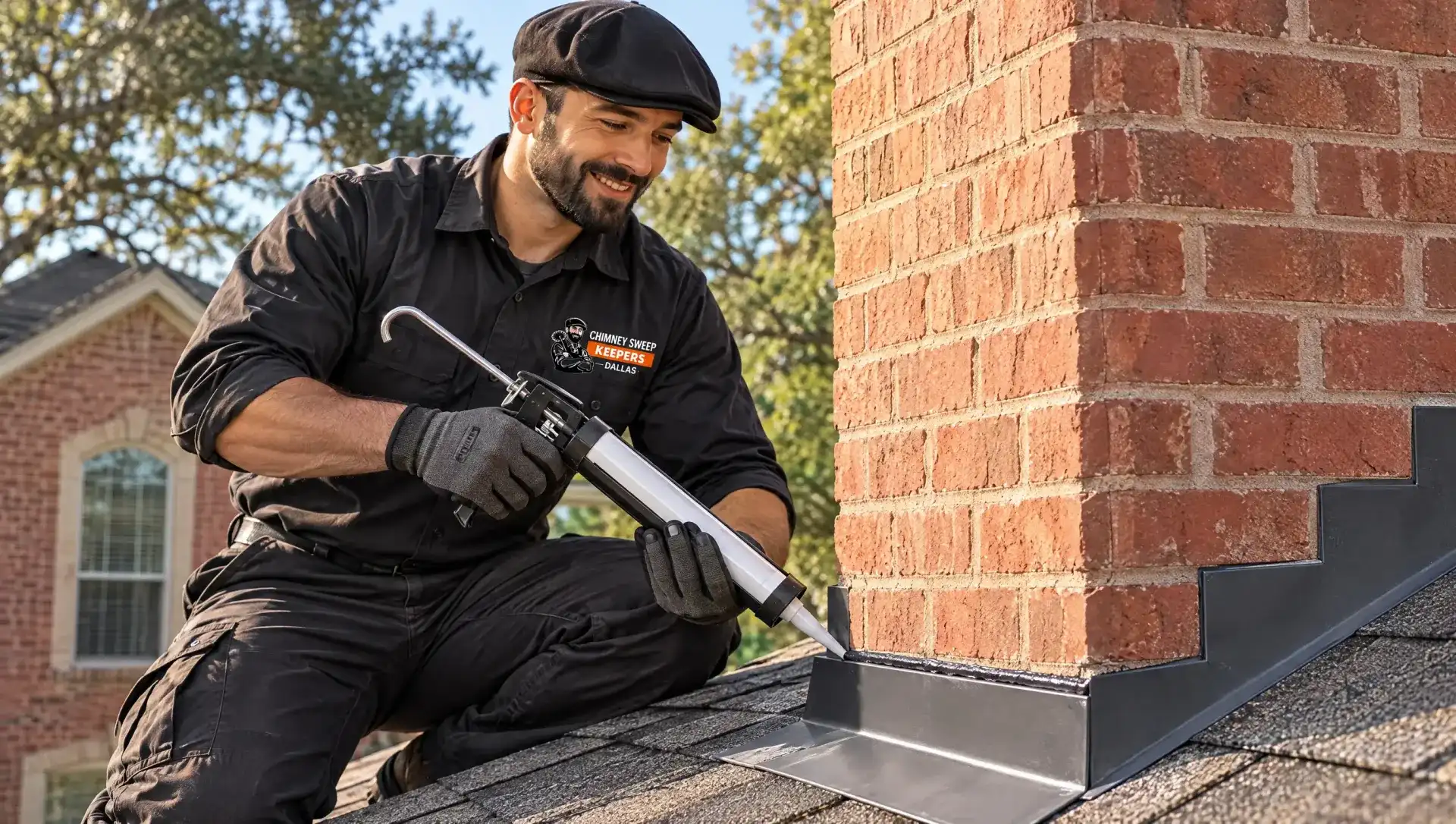
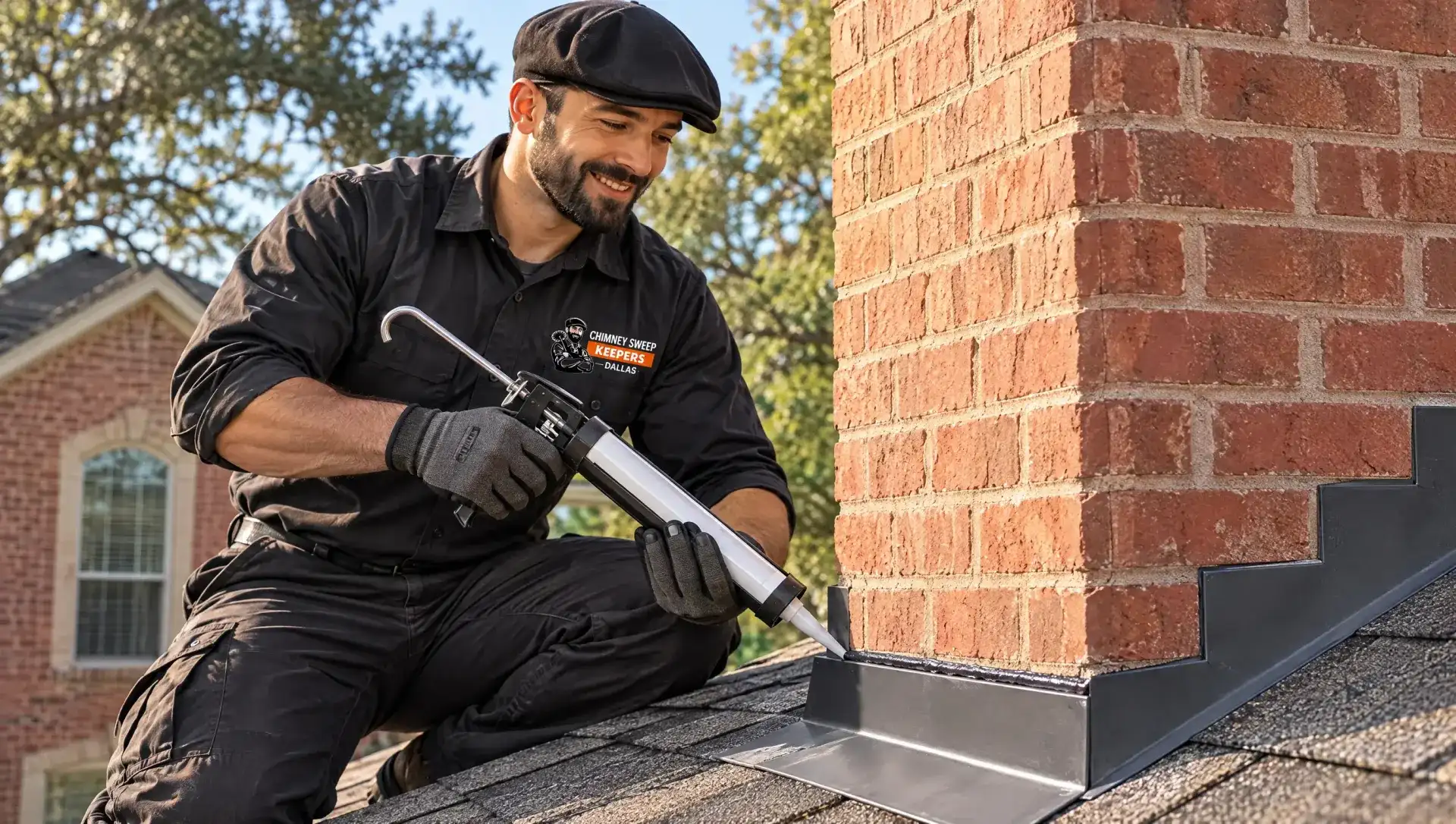
- Counter flashing is the top layer. It is set into a cut in the chimney’s mortar joint and bends down over the step flashing. Water that runs down the brick lands on the counter flashing and is carried onto the roof.
The front of the chimney gets an apron piece. The back, on the uphill side, gets a back pan or a cricket.
A cricket, also called a saddle, is a small peaked roof built behind the chimney. Without one, rain, leaves and live oak debris pile up against the back of a wide chimney and sit there after every storm. The residential building code calls for a cricket on any chimney wider than 30 inches. Many older Dallas chimneys were built without one, and that back corner is one of the most common leak spots we find.
| Part | Where it sits | What usually fails |
|---|---|---|
| Step flashing | Sides of the chimney, under the shingles | Rust, holes, pieces missing after a reroof |
| Counter flashing | Cut into the mortar joint over the step flashing | Pulls out of the joint, sealant cracks |
| Apron | Front, downhill side | Lifts in wind, sealant gaps |
| Back pan or cricket | Back, uphill side | Water and leaves pool, rust through |
Signs You Need Chimney Flashing Repair
- Water stains on the ceiling or wall beside the chimney
- Damp or dark wood around the chimney in the attic
- Metal that is lifted, bent, rusted or has holes
- Thick tar or caulk smeared over the flashing
- Gaps where the counter flashing meets the brick
- Leaks only during wind-driven rain
Sealant vs. Flashing Replacement
Not every flashing problem needs new metal.
- Reseal. If the metal is solid and only the sealant has cracked, we clean the joint and reseal it with a flexible sealant made for masonry and metal.
- Reset the counter flashing. If the counter flashing has pulled out of the mortar joint, we grind a clean cut, set the flashing back into it and seal it.
- Replace. If the metal is rusted through, bent by hail, missing pieces or was installed with only face-nailed metal and tar, we replace it with new step and counter flashing.
We avoid the quick fix of smearing roof tar over everything. It looks sealed for a season, then cracks in the heat and traps water behind it.
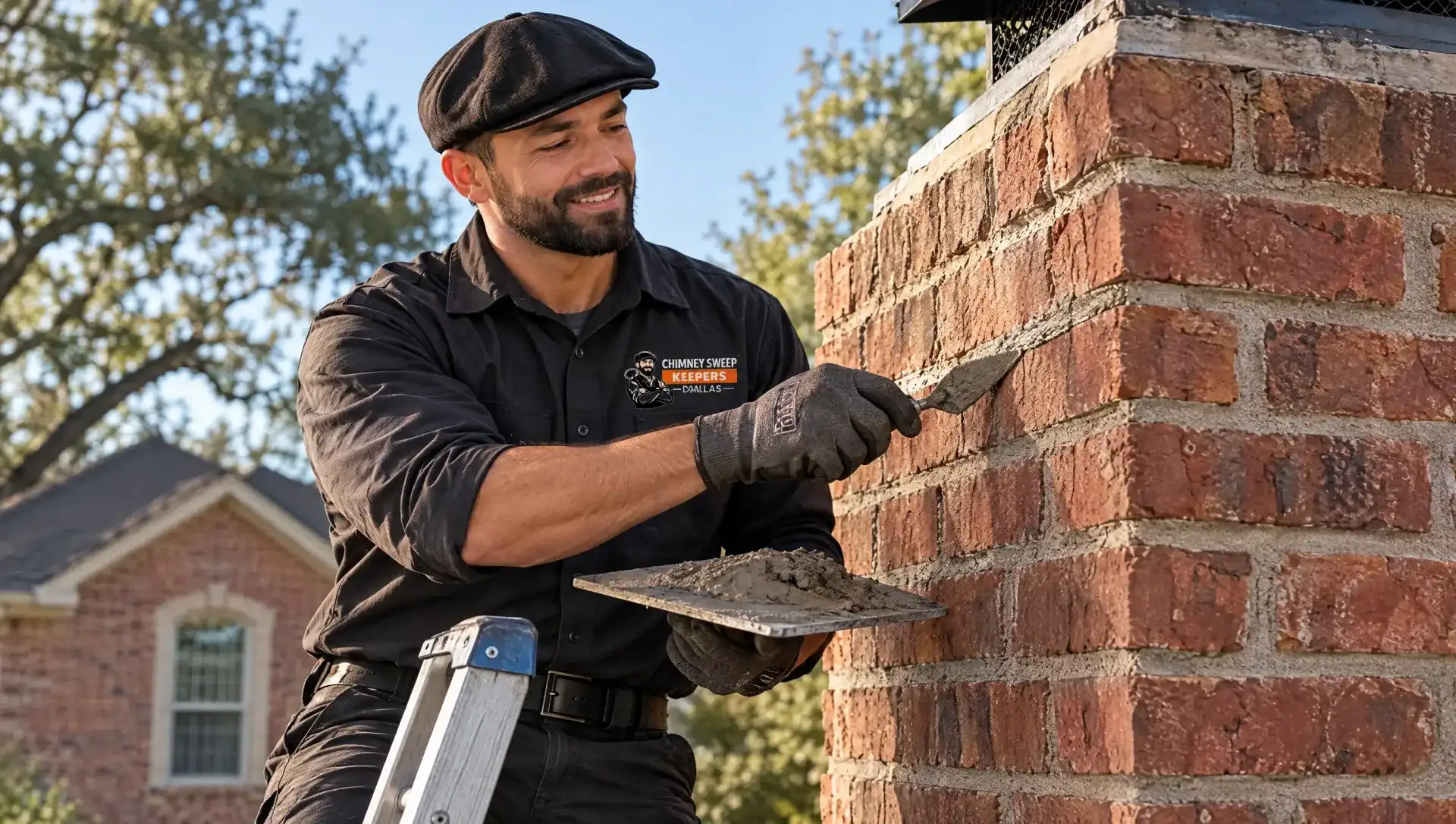
On every flashing job we also check the brick just above the counter flashing. If the mortar there is soft, the new flashing has nothing solid to grip, so we repair those joints first. You get before and after photos of each side of the chimney.
Chimney Flashing Repair After Hail
North Texas gets frequent spring hailstorms. After a storm, check your chimney along with your roof. Hail dents flashing, cracks sealant and can knock counter flashing loose from the brick. The Texas Department of Insurance storm resource page explains how to file a claim and avoid storm-chasing contractors. Our photo report shows the flashing damage close up, which helps with your claim.
Roofer vs. Chimney Pro
Flashing sits between two trades. A roofer handles shingles and the roof deck. A chimney company handles the brick and the mortar joint that holds the counter flashing. We repair and replace chimney flashing and the masonry around it. We do not replace roofs. If the shingles or decking near the chimney are damaged, we tell you so, and you can have a roofer handle that part. When a roof is replaced, ask the roofer to put in new step flashing and to leave the counter flashing for us to reset.
Chimney Leak Repair
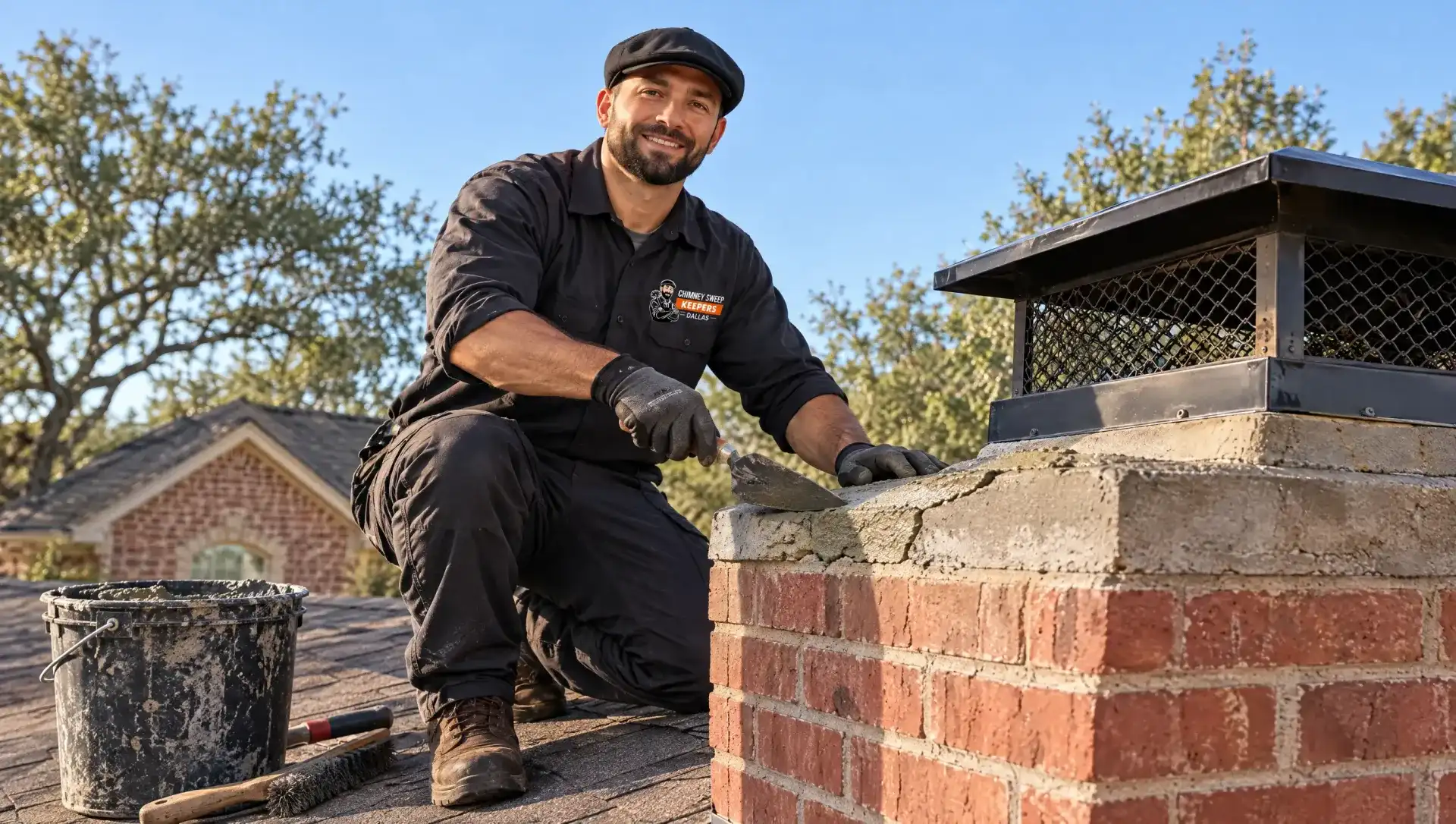
Flashing is one of several places a chimney can leak. A cracked chimney crown, a missing cap or soaked brick can look the same from inside the house. Before we change any flashing, we check the whole chimney so you pay for the right fix. Read more about finding and fixing chimney leaks. If the mortar around the flashing is soft or cracked, tuckpointing the chimney gives the counter flashing a solid joint to sit in, and breathable waterproofing can help keep the brick dry.
Book Chimney Flashing Repair in Dallas
Chimney Sweep Keepers Dallas is a veteran-owned, family-run company at 6041 Village Bend Dr, near White Rock Lake. We are licensed, bonded and insured, and we answer 7 days a week from 7 AM to 11 PM. Call (469) 206-2085 and we will check your flashing and give you a free written estimate. For other problems, see our Dallas chimney repair services.