What Chimney Tuckpointing in Dallas Involves
A brick chimney is two materials working together. The bricks carry the weight, and the mortar joints hold them in place and seal out water. Mortar is meant to be the weaker of the two. It wears out first, so it can be replaced without harming the brick.
When the joints crack or wash out, rain gets into the wall. The bricks start to loosen, the inside of the chimney stays wet, and the damage speeds up. Tuckpointing fixes the joints before that happens.
Signs Your Chimney Needs Tuckpointing
- Mortar that is cracked, crumbly or sandy when you scratch it
- Joints that have worn back from the brick face
- Gaps or holes where mortar is missing
- Loose bricks near the top of the chimney
- White salt stains (efflorescence) on the brick
- Brick faces that are flaking or popping off (spalling)
- Water stains inside near the chimney
How We Tuckpoint a Chimney
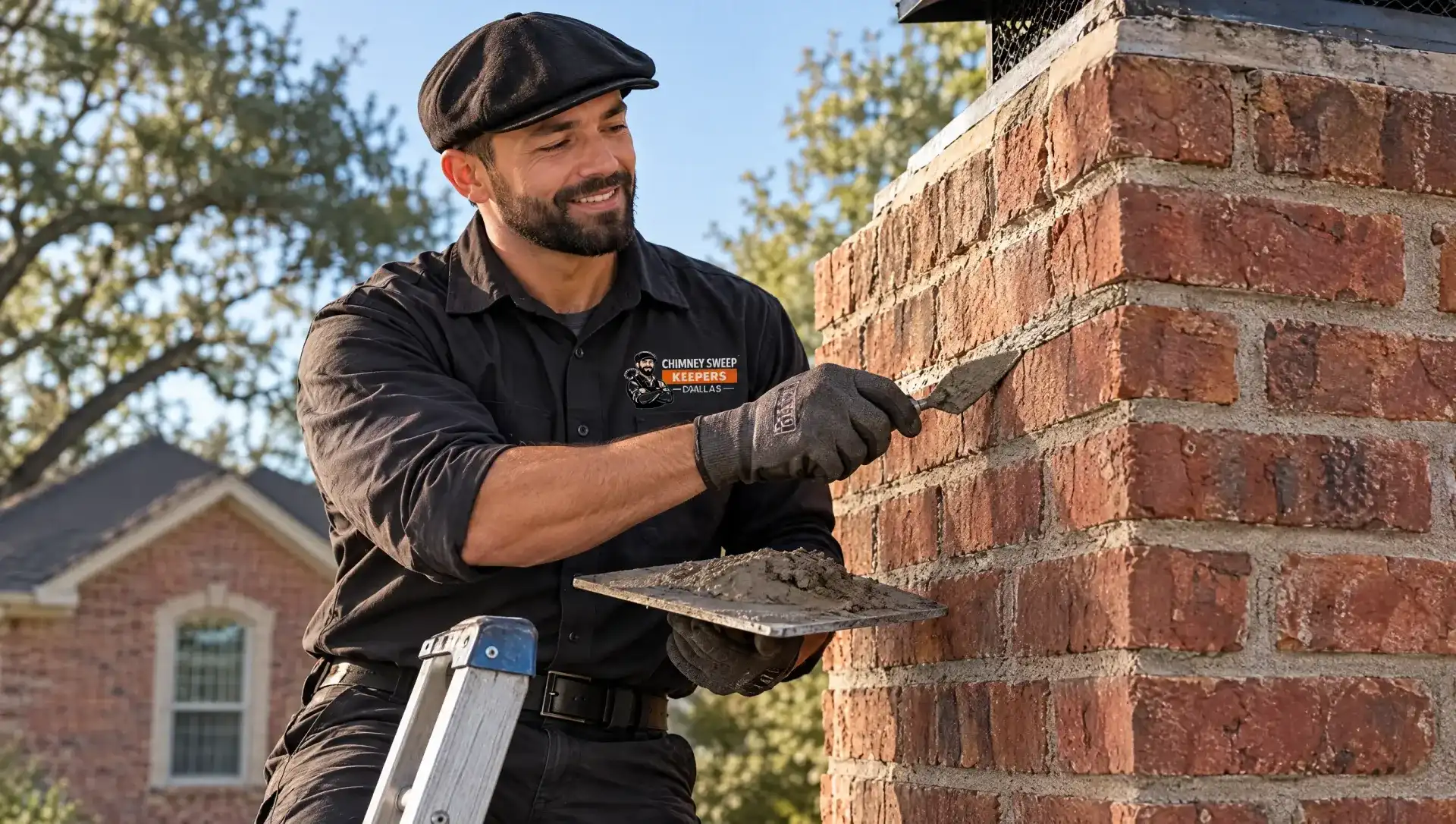
- Inspect and photograph. We check every side of the chimney from the roof and mark the joints that need work.
- Match the mortar. We pick a mix and color that fit your brick.
- Cut out the old mortar. We grind or rake the joints back to sound mortar. The National Park Service’s guide to repointing masonry calls for a depth of about 2 to 2.5 times the joint width.
- Clean the joints. Dust and loose bits come out so the new mortar bonds.
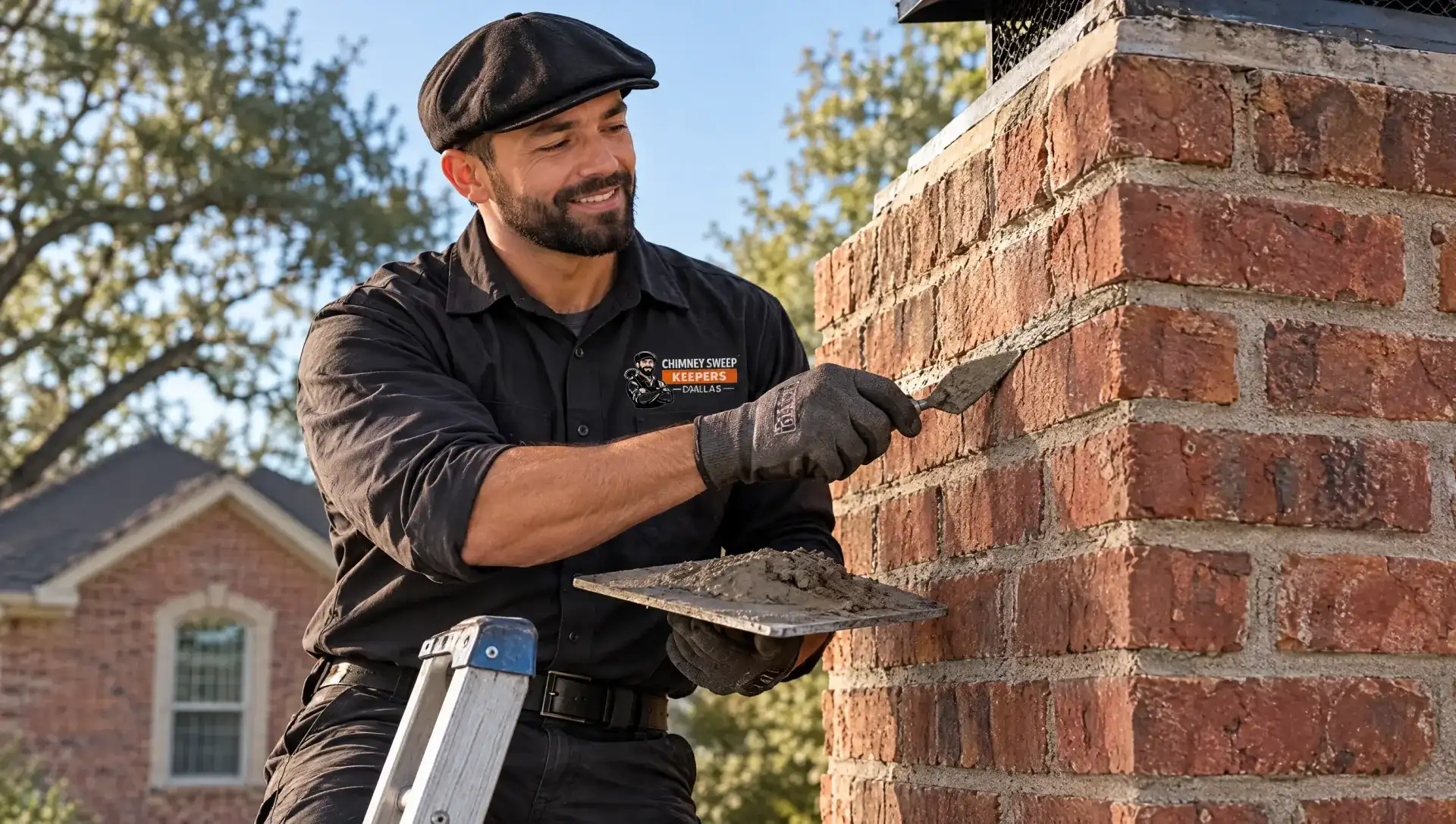
- Pack in new mortar. We fill deep joints in layers and press each one tight.
- Tool the joints. We shape the surface to match the joints around it, so water runs off.
- Clean up. We protect your roof and remove mortar dust and debris.
Matching Mortar Color and Strength
A patch that looks wrong is easy to spot from the street. Color comes mostly from the sand and the cement, so we match those first and test the color on a sample before the main work.
Strength matters even more. Mortar must be softer than the brick around it. When it is too hard, the brick takes the stress instead of the mortar, and the brick edges crack and spall.
| Mortar type | Strength | Where it fits |
|---|---|---|
| Type O or lime-rich | Lowest | Very old, very soft brick |
| Type N | Medium, about 750 psi | Most older chimneys above the roof |
| Type S | Higher, about 1,800 psi | Harder modern brick, some structural work |
| Type M | Highest | Below grade, not for old chimney brick |
Many Dallas homes from the 1940s to the 1970s, in neighborhoods like Lakewood, Kessler Park and the M Streets, have softer brick. For those chimneys we usually use Type N or a softer lime mix, not a high-strength Type S.
We also watch the joint profile. Most older Dallas chimneys have concave joints, a shallow curve pressed in with a jointing tool. That shape packs the mortar tight and sheds water well. Some homes have raked or flush joints instead. We match whatever your chimney already has, so the repaired areas blend in with the rest of the brick.
Weather affects the work as well. Mortar cures slowly and needs some moisture to gain strength. On a 100°F Dallas afternoon, fresh joints can dry out too fast and turn weak and powdery. In summer we work early in the day and mist the joints as they cure.
Why Mortar Wears Out in Dallas
Hard freezes are rare here, so freeze-thaw cycles, the main cause of mortar damage up north, are not our biggest problem. Dallas chimneys lose mortar to other things:
- Rain. Heavy spring storms soak the joints, often from the side.
- Heat. Summer sun bakes the chimney every day, and the joints expand and shrink.
- Salts. As wet brick dries, salts come to the surface and leave white stains. Over years, salt crystals break down weak mortar.
- Soft old mortar. Original mortar in older homes was often lime-rich and wears away after decades of weather.
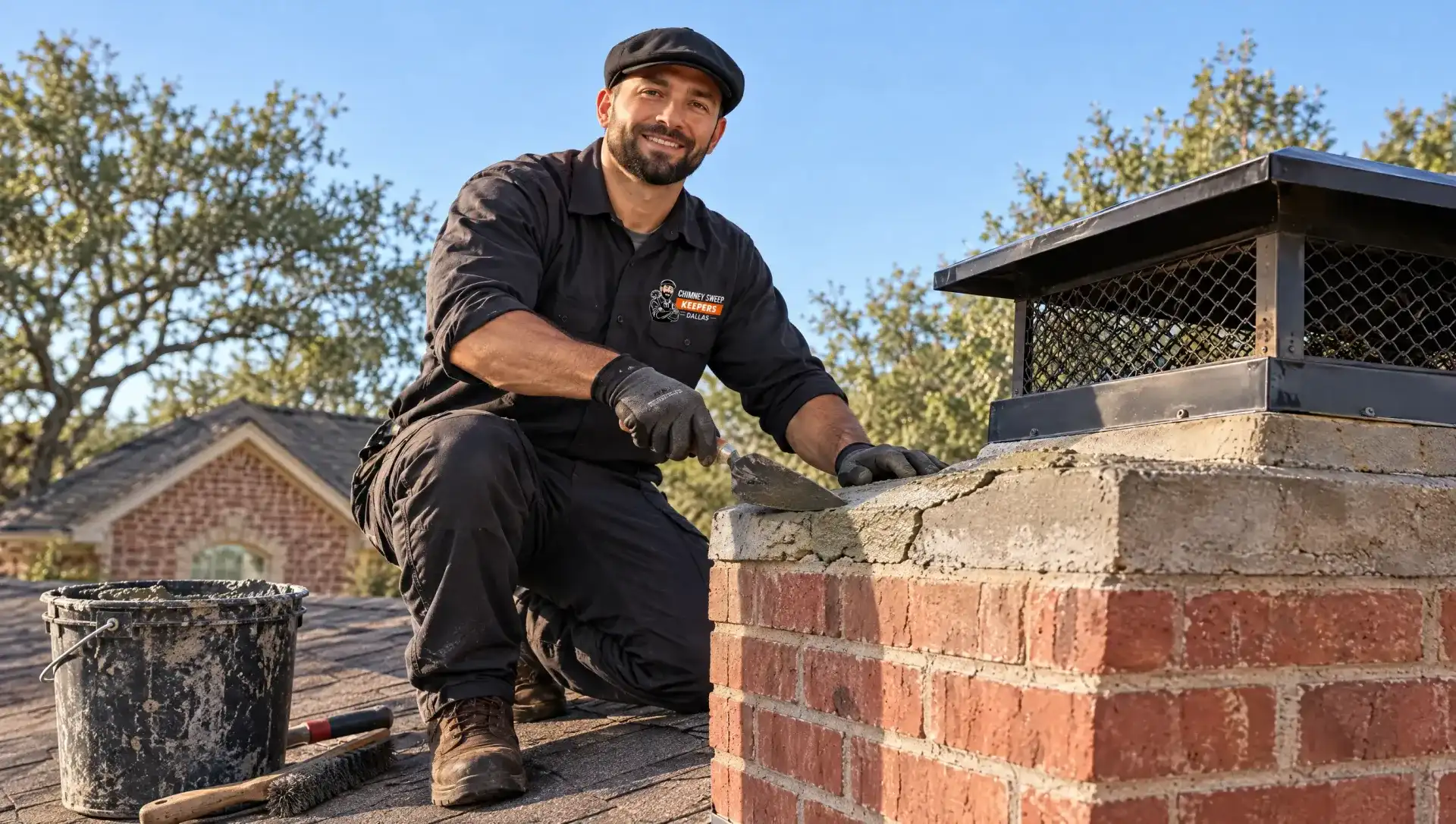
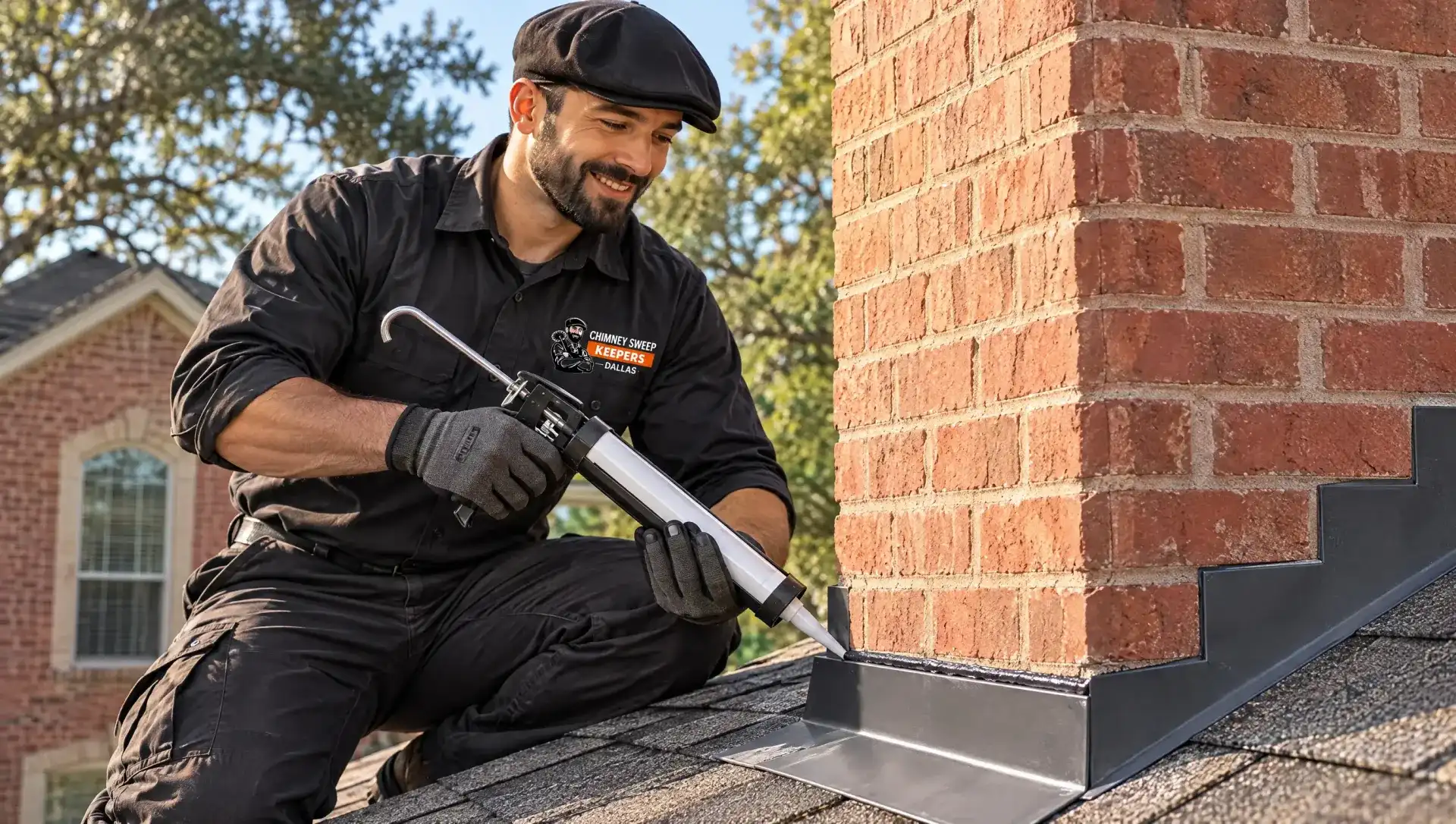
- Water from above. A cracked crown or bad flashing sends water down the joints. We check both, since chimney crown repair or flashing repair may be part of the fix.
Chimney Rebuild
Tuckpointing works when the bricks are still solid and in place. When many bricks are loose, the top of the chimney leans, or the brick itself is crumbling, new mortar will not save it. Then a partial or full chimney rebuild is the right repair. We will show you photos and explain which one your chimney needs.
Chimney Waterproofing After Tuckpointing
Once fresh mortar has fully cured, a breathable water repellent can help the chimney shed rain. Never use paint or a film sealer on brick, since they trap moisture. Learn more about chimney waterproofing. If you have an active leak, start with chimney leak repair.
Book Chimney Tuckpointing in Dallas
Chimney Sweep Keepers Dallas is a veteran-owned, family-run company at 6041 Village Bend Dr, near White Rock Lake. We are licensed, bonded and insured, and we answer 7 days a week from 7 AM to 11 PM. Call (469) 206-2085 and we will check your mortar joints and give you a free written estimate. For other problems, see our chimney repair services.