Chimney Liner Installation for Dallas Homes
A chimney liner is the inside wall of the flue. It carries smoke and gases out of the house and keeps heat away from the brick and the wood framing around it. The national chimney standard, NFPA 211, calls for a liner in every chimney that serves a fireplace or heating appliance.
Most older Dallas homes, like the 1940s through 1970s brick houses in Lakewood, Lake Highlands and the M Streets, have clay tile liners. Clay works well when it is whole. Once it cracks or loses the mortar between tiles, smoke and heat can reach places they should not.
Signs You Need Chimney Relining
You usually cannot see a liner problem from the hearth. These are the signs we look for:
- Cracked, shifted or missing clay tiles on a camera inspection
- Gaps or missing mortar between flue tiles
- Pieces of tile falling into the firebox or onto the smoke shelf
- A chimney fire, even a small one you heard but did not see
- A new fireplace insert, wood stove or gas appliance going into the chimney
- Smoke or odor in the house when the fireplace or furnace runs
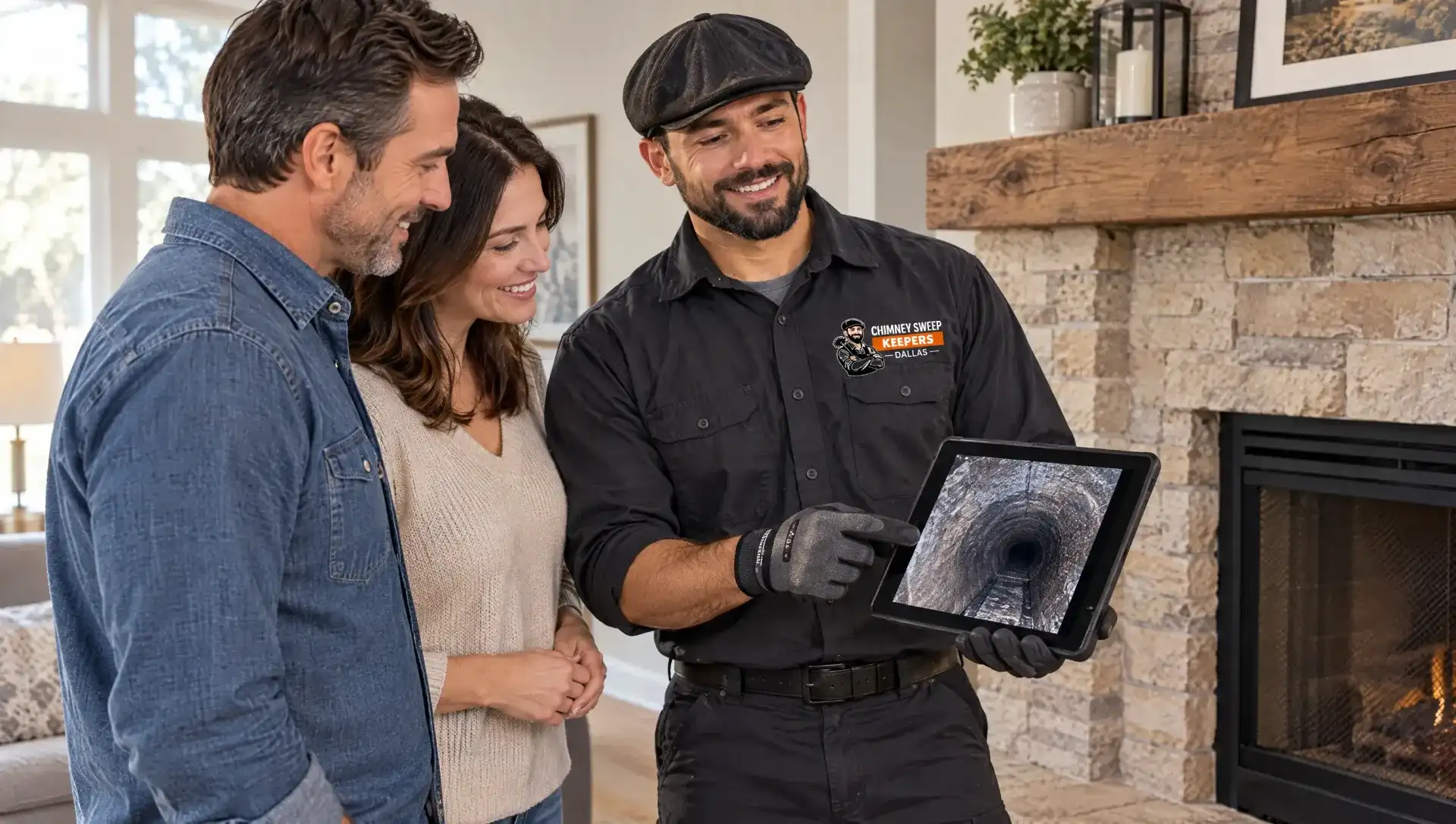
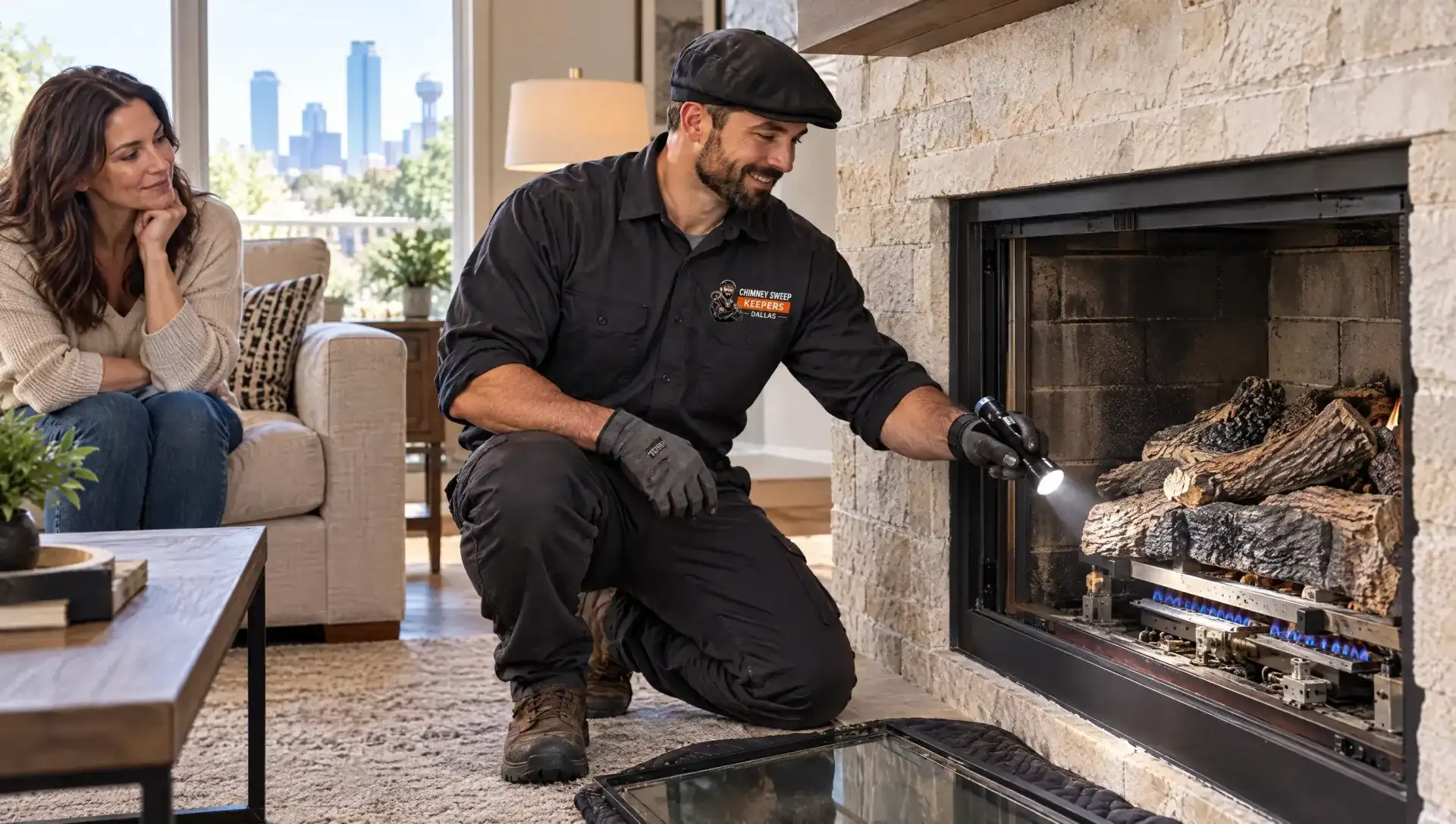
A Level 2 chimney inspection with a full video scan is the most reliable way to know. It is also the check NFPA 211 calls for after a chimney fire or a change of appliance.
Chimney Relining Options
There is more than one way to reline a chimney. The right choice depends on the chimney, the fuel and the appliance.
Stainless Steel Chimney Liners
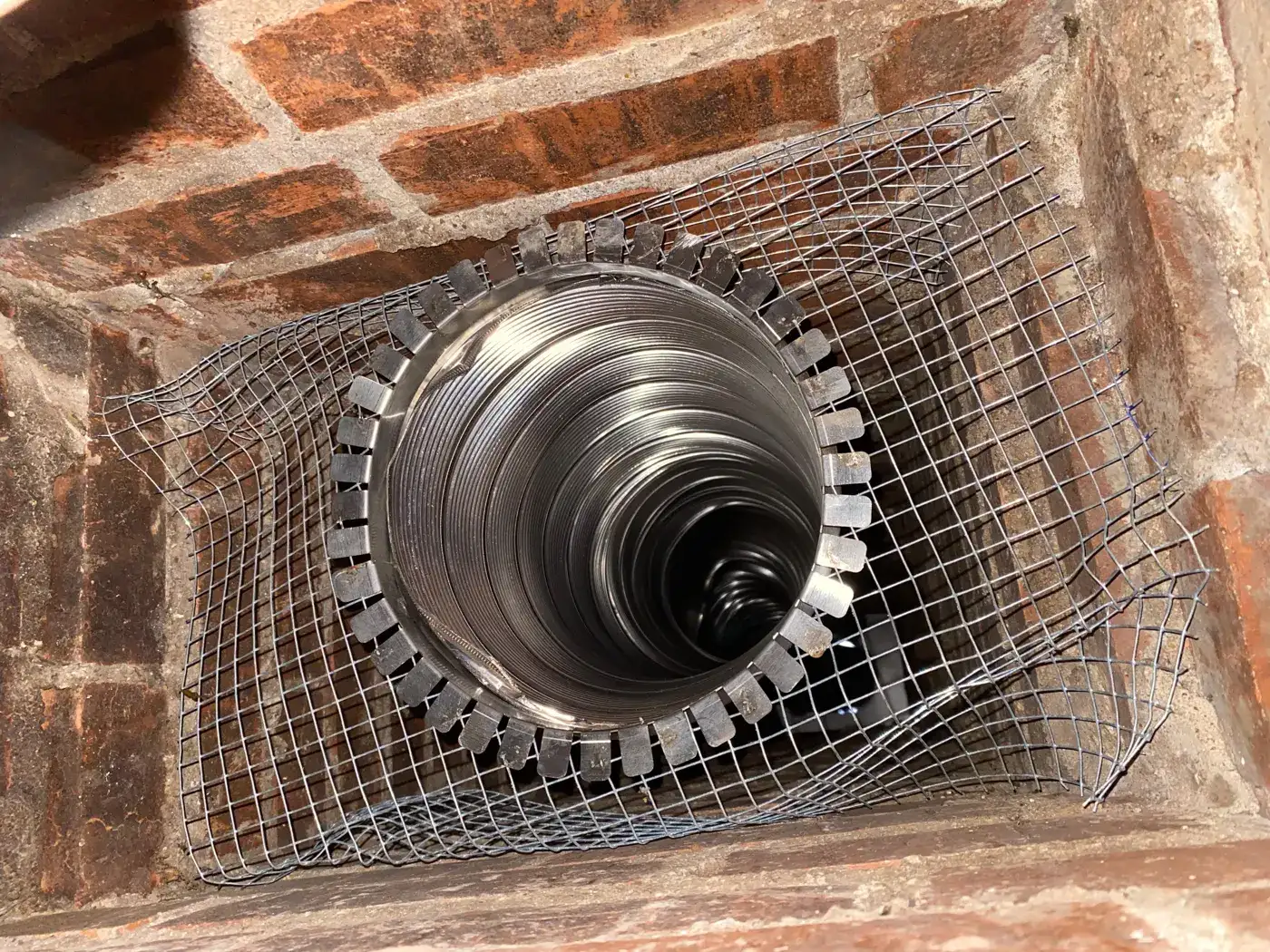
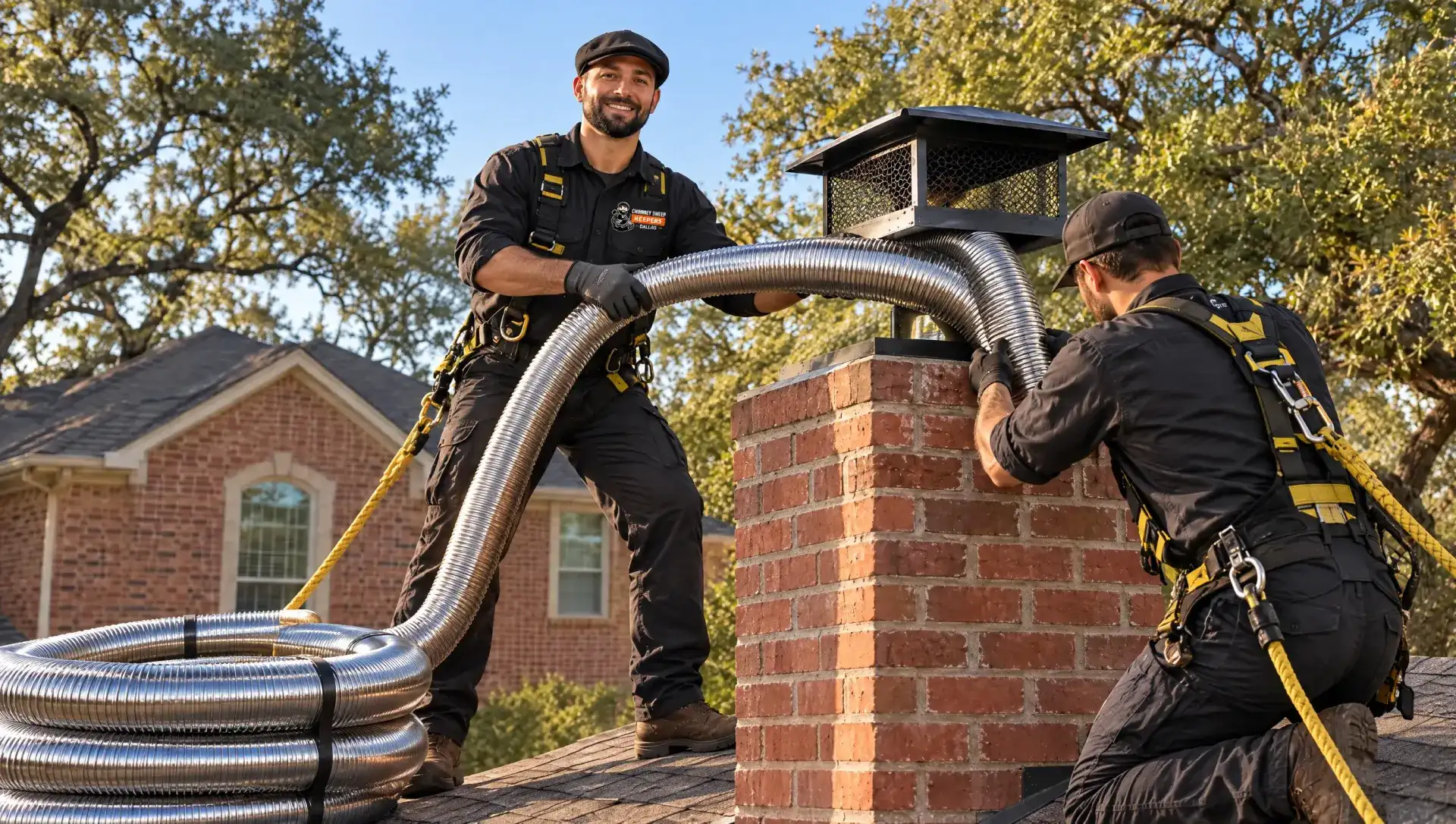
Most of the liners we install are stainless steel. They are made in rigid sections or as a flexible pipe that can follow a chimney with offsets.
- Alloy matters. Different grades of stainless steel hold up to different fuels. Wood smoke and gas exhaust attack metal in different ways, so we match the alloy to the fuel.
- Insulation matters. Many liners need an insulation wrap or poured insulation around them to meet clearance rules and keep the flue warm so it drafts well.
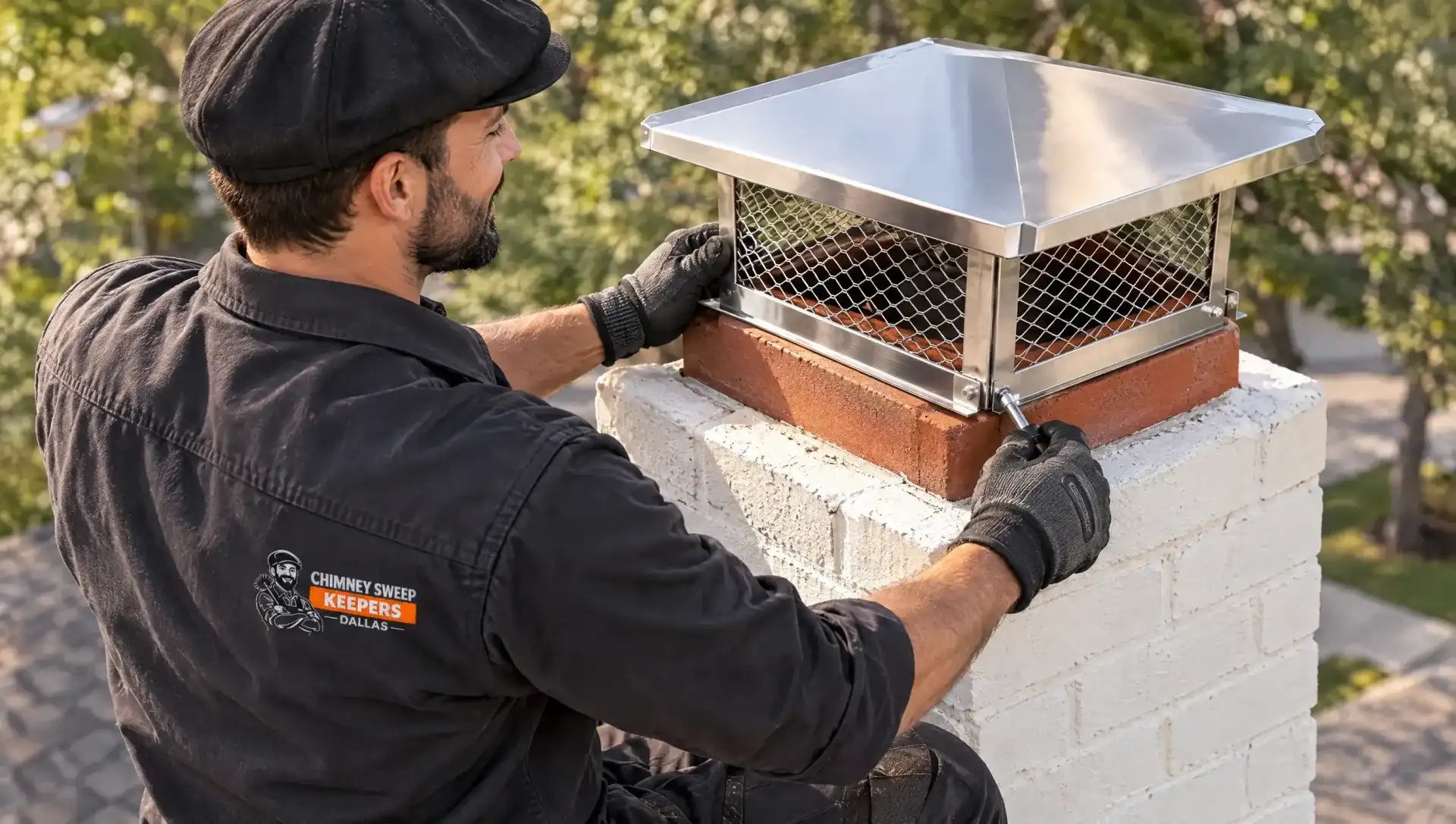
- A cap on top. Every liner gets a top plate and a chimney cap to keep out rain, leaves and animals.
We install liners listed to UL 1777, the safety standard for chimney liners, and we follow the liner maker’s instructions for the fuel you burn.
Cast-In-Place Liners and Clay Tile Replacement
We also install cast-in-place liners. A cast-in-place liner is a cement-like mix poured around a form inside the chimney. It can strengthen an old chimney and fill gaps. Clay tile replacement means removing the old tiles and setting new ones, which usually takes opening up the chimney.
Cast-in-place and clay tile cost more and take longer than stainless steel. For most Dallas homes, a stainless liner is the practical choice, but a cast-in-place liner can be the better fit for an old chimney with weak or gapped masonry. We explain which option fits your chimney in the written estimate.
When a Chimney Liner Is Required
These are the jobs where a new liner is usually needed:
| Situation | Why a liner is needed |
|---|---|
| Cracked or broken clay tiles | Heat and smoke can reach the brick and the framing around it |
| New fireplace insert | The insert vents through a liner matched to its flue collar |
| New wood stove | Stoves need a sealed, correctly sized flue to draft and stay clean |
| Gas appliance conversion | Gas exhaust carries water vapor that damages clay tile and mortar |
| After a chimney fire | Fire often cracks tiles and breaks the mortar joints |
| Oversized flue | A flue that is too big stays cold, drafts poorly and builds creosote |
Many older Dallas homes also have a gas furnace or water heater venting into a flue next to the fireplace. When that appliance is replaced with a new, more efficient model, the old flue is often too big for it, and the new exhaust can condense inside the chimney. A correctly sized liner fixes that.
If you are adding a stove or insert, see wood stove installation and fireplace installation.
Flue Sizing: Why the Right Diameter Matters
A liner has to fit the appliance, not just the chimney. A flue that is too small cannot carry all the smoke, so it spills into the room. A flue that is too big lets the gases cool and slow down, which causes creosote in wood flues and condensation in gas flues.
For stoves, inserts and gas appliances, the maker lists the flue size in the manual. For open fireplaces, building codes tie the flue size to the size of the fireplace opening. We measure the opening and the appliance and size the liner to match.
How We Install a Chimney Liner
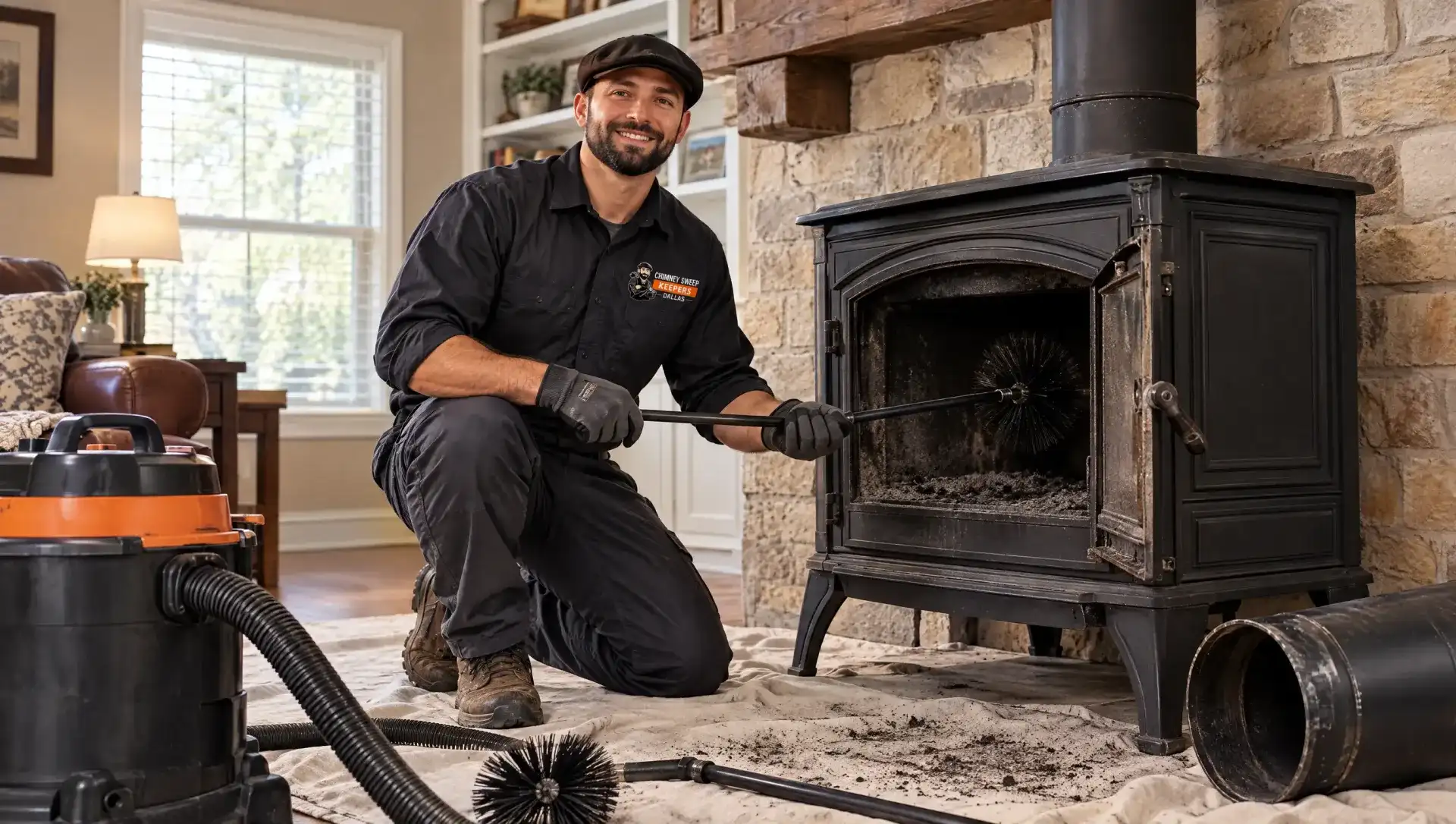
- Inspect. We sweep the flue and run a camera from bottom to top.
- Measure. We record the chimney height, any offsets and the appliance size.
- Estimate. You get a free written estimate with photos and the liner type.
- Prepare. We remove broken tile if needed so the liner fits.
- Install. We lower the liner, insulate it where needed and connect it at the bottom.
- Cap it. We seal the top and install a cap, then show you before and after photos.
Chimney Repair Before Relining
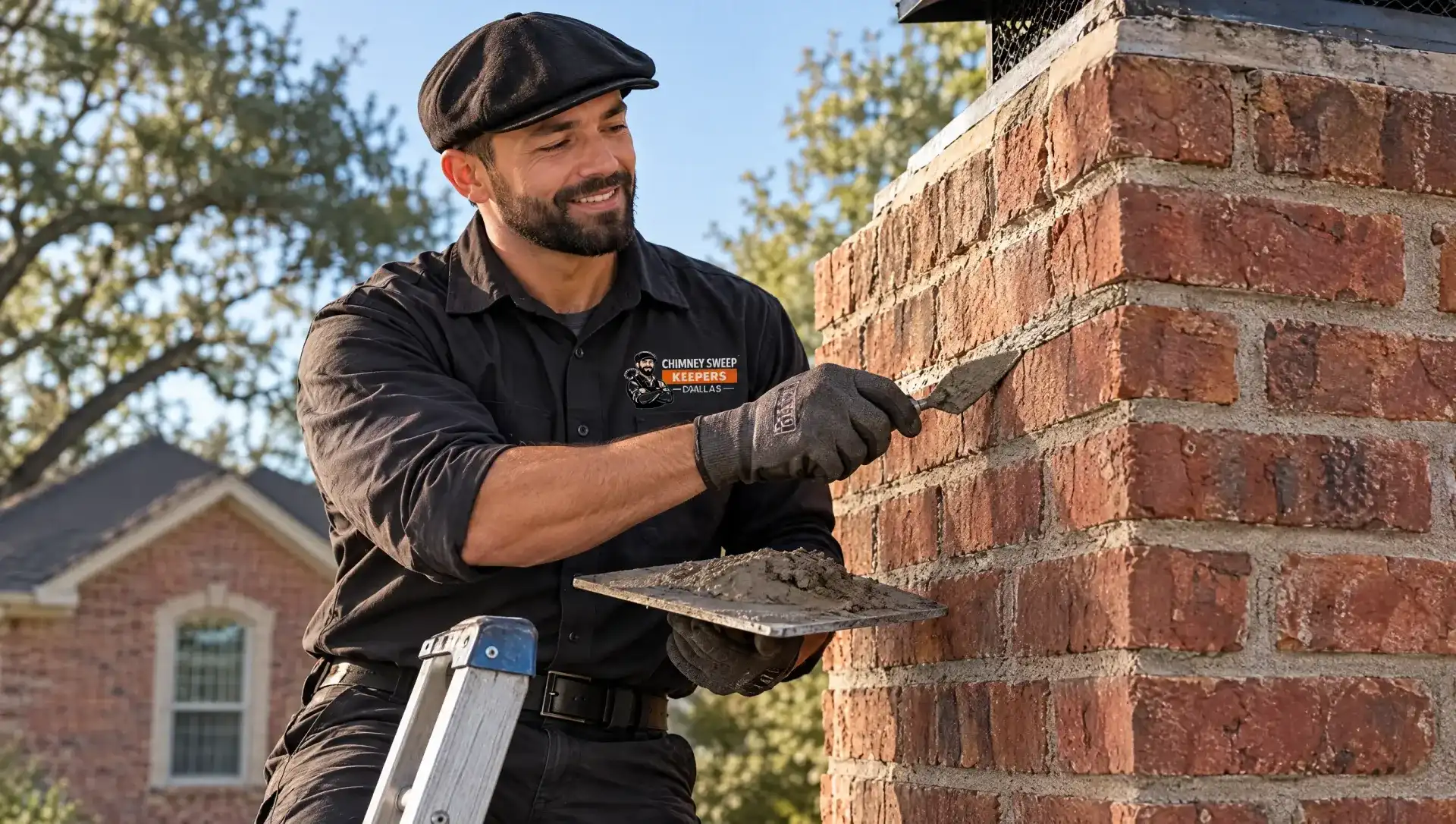
A new liner does not fix a cracked crown, loose brick or bad flashing. We check those from the roof on the same visit and list anything that needs work. If chimney swifts are nesting in the flue, which happens in Dallas from about May to September, we schedule the liner after they leave, since the birds are protected by federal law. See chimney repair for the other jobs we do.
Book Chimney Liner Installation in Dallas
Chimney Sweep Keepers Dallas is a veteran-owned, family-run company at 6041 Village Bend Dr, near White Rock Lake. We answer 7 days a week from 7 AM to 11 PM. Call (469) 206-2085 and we will set up an inspection and a free written estimate for your chimney liner.