Chimney Fire Prevention Starts With Creosote
Creosote is the black, sticky residue wood smoke leaves inside your chimney. It is the main fuel for chimney fires. As smoke rises and cools, creosote sticks to the flue walls. Layer by layer it builds up, and if a hot fire or a spark reaches it, it can ignite inside the flue.
The U.S. Fire Administration reports that heating was the second leading cause of home fires in 2021, with an estimated 32,200 fires. Its first tip is to have chimneys cleaned and inspected each year by a professional.
Creosote comes in three stages:
| Stage | What it looks like | Fire risk |
|---|---|---|
| Stage 1 | Dry, black soot that brushes off | Low, removed with a normal sweep |
| Stage 2 | Crunchy, flaky black chunks | Higher, past time to clean |
| Stage 3 | Shiny, hard tar glaze on the flue walls | Highest, burns very hot and needs special removal |
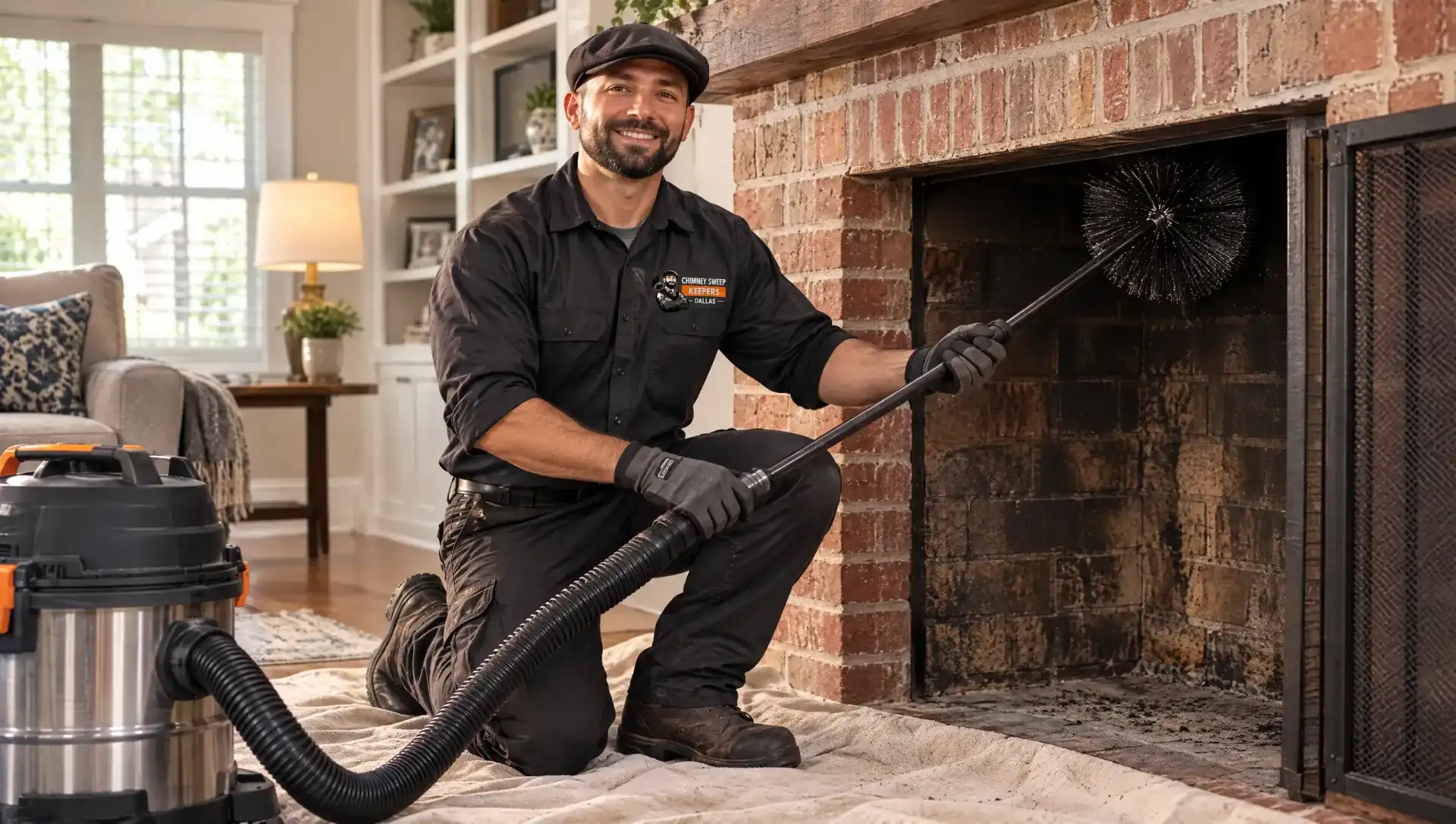
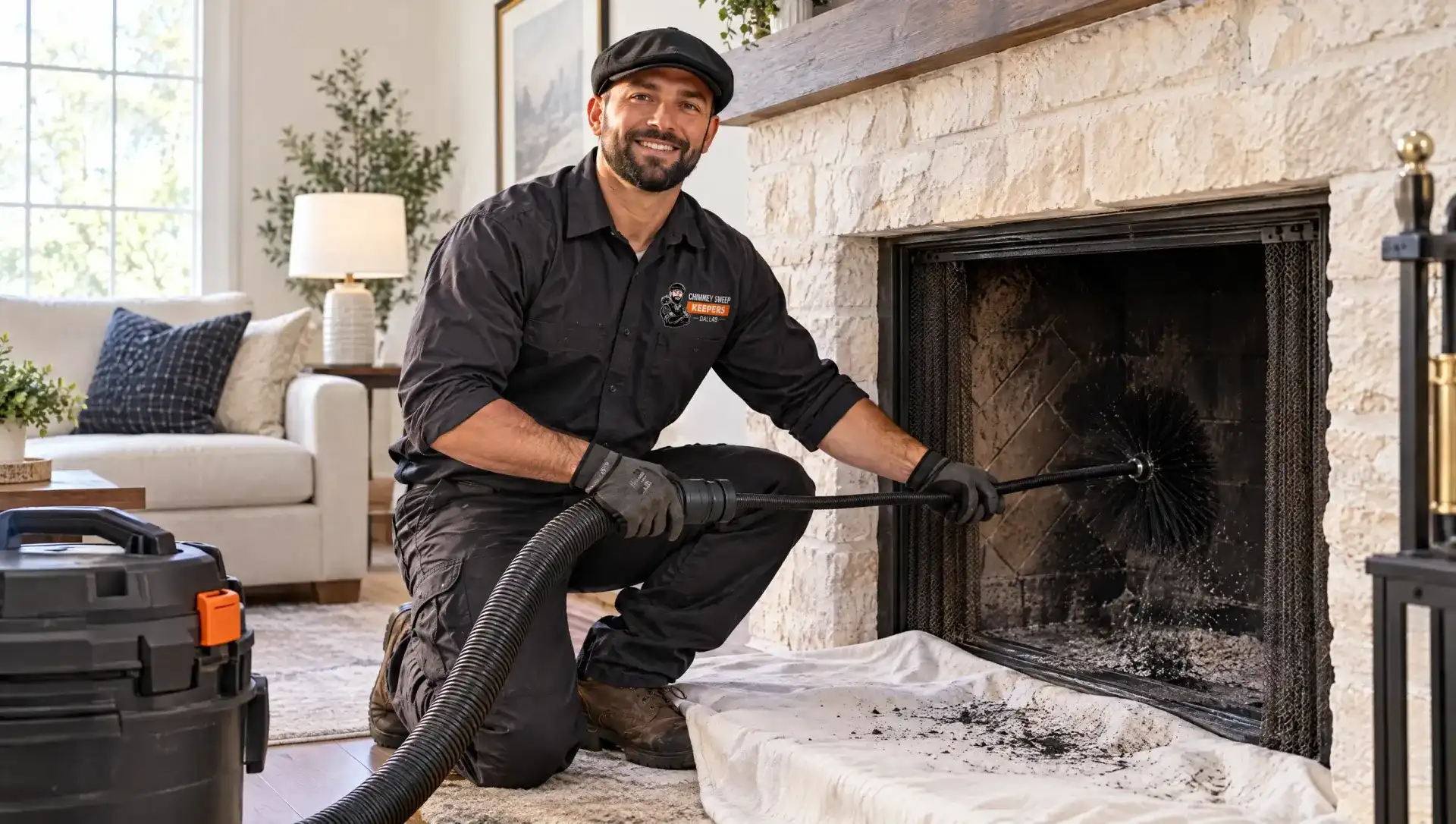
Our sweep removes Stage 1 and most Stage 2 creosote. Glazed Stage 3 creosote needs our deeper chimney cleaning service, priced before we start.
How to Stop Creosote From Building Up
You control a lot of this with how you burn:
- Burn dry wood. The EPA says firewood should be under 20 percent moisture and seasoned for at least six months. Fresh-cut wood from a downed live oak needs time to dry.
- Burn hot, not slow. Small, hot fires make less smoke than large, smoldering ones.
- Open the damper all the way. A half-closed damper traps smoke in the flue.
- Never burn trash, cardboard, pallets or painted wood. They burn too hot or leave toxic residue.
- Get the chimney swept. Sweep when there is about 1/8 inch of buildup, per CSIA guidance.
Clearances and the Area Around Your Fireplace
A chimney fire is not the only risk. Many house fires start in front of the fireplace. The U.S. Fire Administration says to keep anything that can burn at least 3 feet from the fireplace. That includes rugs, furniture, stockings, holiday decorations and the firewood stack.
Other checks we make during the inspection:
- A hearth extension in front of the firebox, with no gaps
- A spark screen or glass doors on wood-burning fireplaces
- Mantels and trim that are not too close to the opening
- Signs of heat damage, like scorched wood or cracked firebrick
Ashes stay hot for days. Put them in a metal container with a tight lid, and keep it outside, away from the house and the garage.
Smoke and Carbon Monoxide Alarms
Working alarms are your last line of defense. Fire safety groups including the NFPA recommend smoke alarms on every level of the home and outside sleeping areas, tested once a month. The CPSC warns that carbon monoxide has no color and no smell, so a CO alarm is the only way to know it is there.
Our Winter Safety Package ($149, regular $318, ends February 28, 2027) includes a smoke and CO alarm test, along with the basic sweep, basic Level 1 inspection and dryer vent cleaning. A clogged dryer vent is a fire risk too, which is why it is in the package.
Chimney Cap Installation
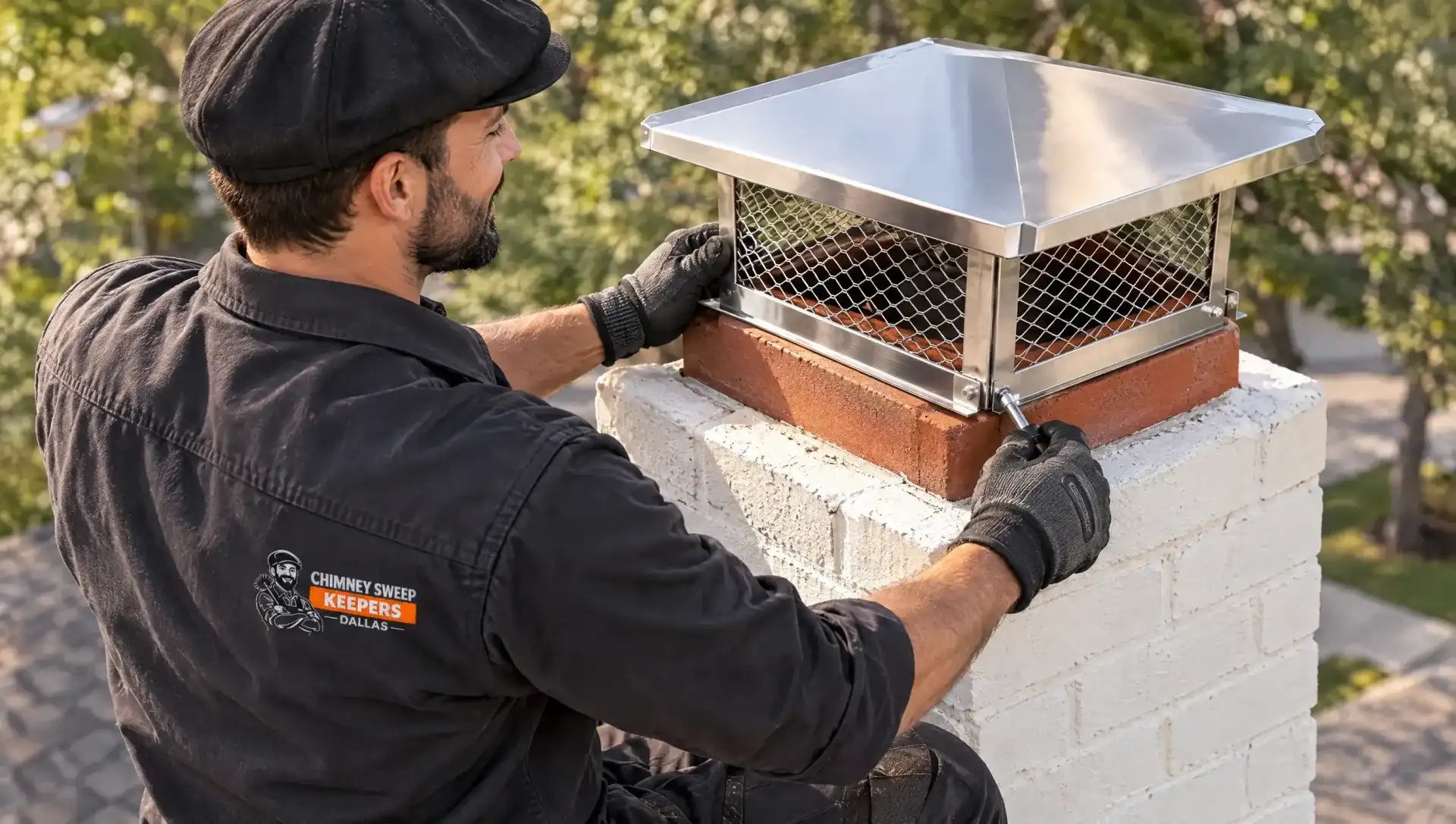
A cap with a spark arrestor mesh stops burning embers from landing on your roof or in dry leaves and live oak debris in the gutters. It also keeps out rain and animals. Nests in an uncapped flue are fuel, and they block the smoke. If your chimney has no cap, or the mesh is rusted through, see chimney cap installation.
Signs of Chimney Fire Risk
Call for an inspection if you notice any of these:
- Black flakes or crunchy chunks falling into the firebox
- A strong tar smell, worse on hot, humid days
- Smoke that rolls into the room
- Shiny, tar-like deposits on the damper
- Cracked or missing flue tiles in your last photo report
- Birds or nesting sounds in the chimney
- A loud roaring sound while a fire was burning
Chimney Inspection for Fire Safety
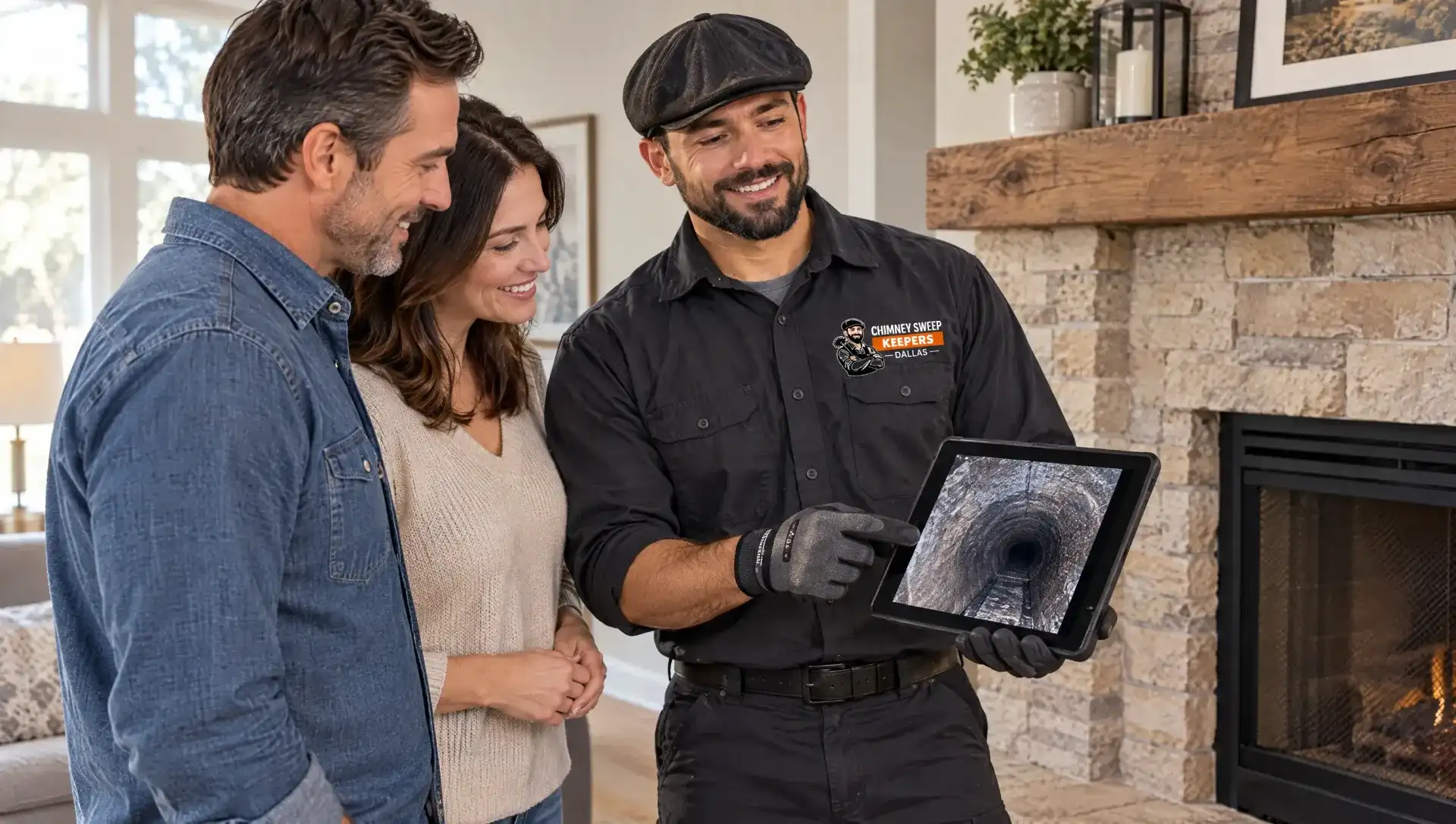
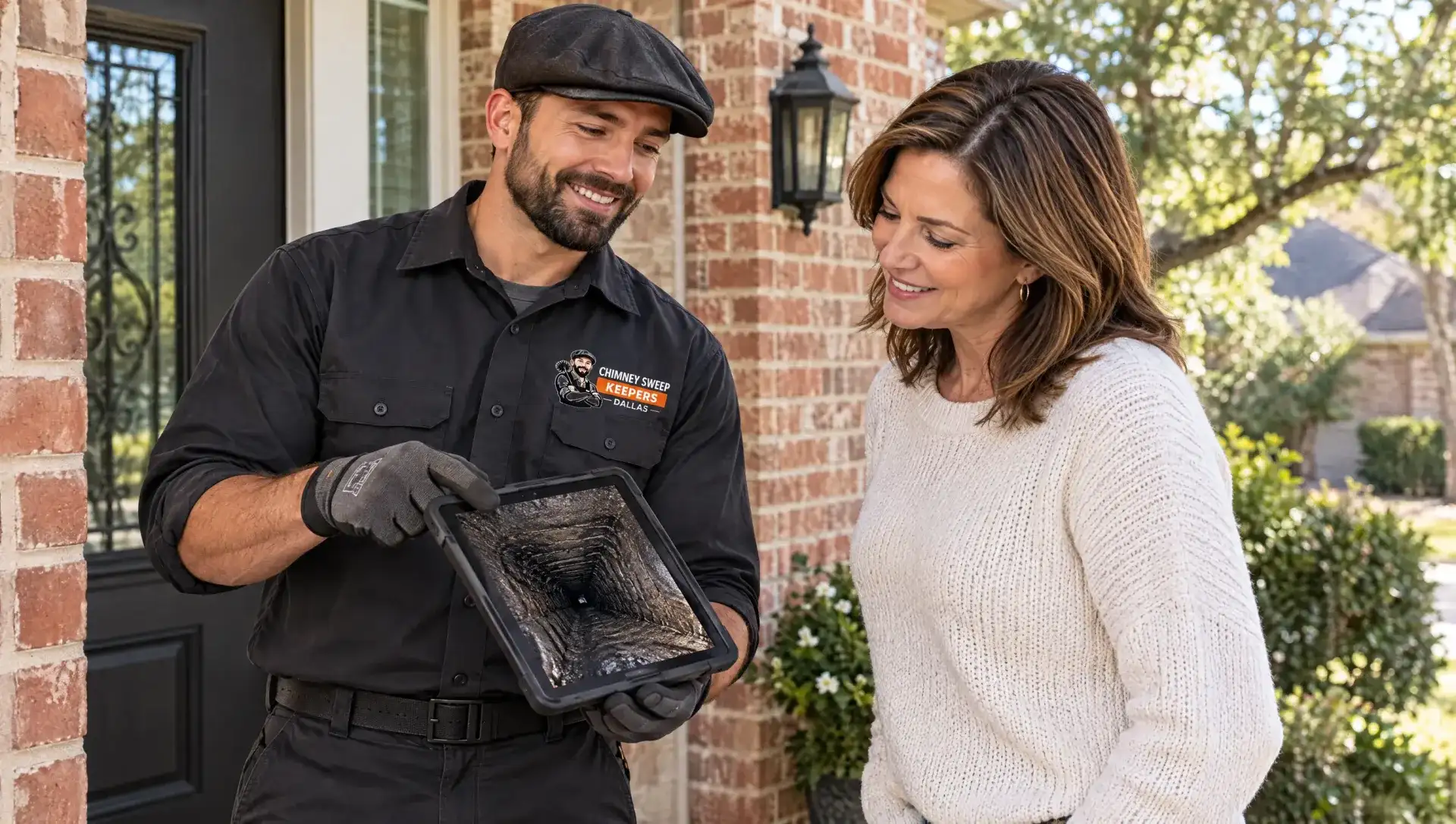
A sweep removes the fuel. An inspection finds the damage that lets a fire spread. Our $99 sweep includes a Level 1 chimney inspection and a camera check of the flue. We look for:
- Cracked, shifted or missing clay flue tiles
- Gaps in the mortar between tiles
- A damper that will not open all the way
- Creosote stage and how much is left after the sweep
- A missing cap or broken spark arrestor
- Heat damage near the mantel or framing
You get a photo report with what we found and a written price for anything that needs work. If nothing needs work, we tell you that too.
After a Chimney Fire
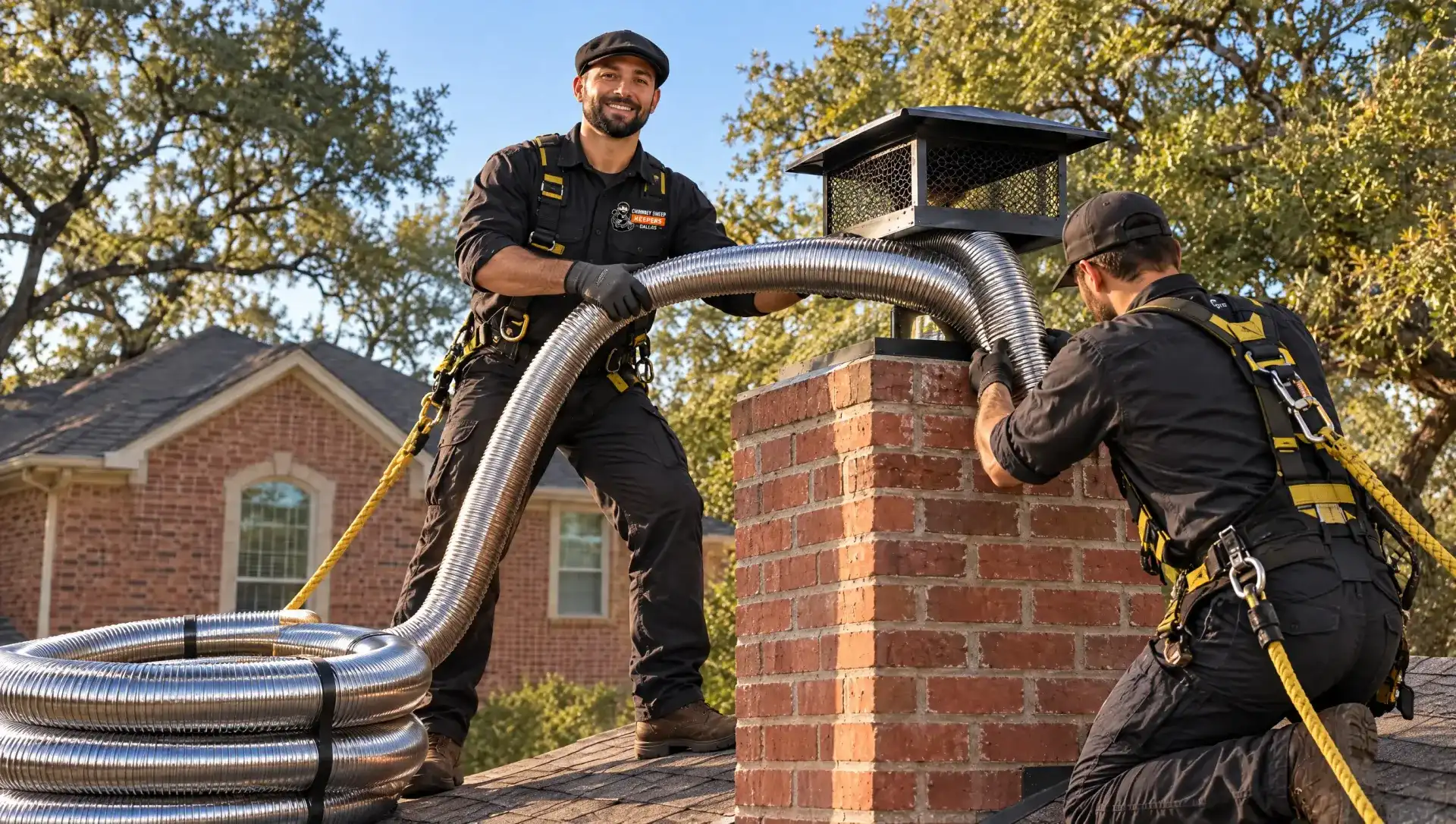
A chimney fire can crack clay flue tiles and damage the mortar between them. Those gaps let heat and sparks reach the wood framing around the chimney, and the next fire can spread into the walls. NFPA 211 calls for a Level 2 chimney inspection after an event like a chimney fire, with a full video scan of the flue.
If the tiles are damaged, the flue usually needs a new stainless steel liner before it is safe to use. See chimney relining for how that works.
Book Chimney Fire Prevention in Dallas
Chimney Sweep Keepers Dallas is a veteran-owned, family-run company at 6041 Village Bend Dr, near White Rock Lake. We answer 7 days a week from 7 AM to 11 PM and often have same-day visits. Call (469) 206-2085 or send the form to book a chimney sweep and inspection or the Winter Safety Package. If you think you had a chimney fire, stop using the fireplace and call us for an inspection.