Why Rain Makes a Fireplace Smell
A chimney is a tall brick or metal tube with an open top. Over years of fires, the inside gets coated with soot and creosote. Creosote is a natural byproduct of burning wood. It is dark, sticky and porous, a bit like a sponge.
When rain gets into the chimney, that sponge gets wet. Wet creosote and soot release a smell that many Dallas homeowners describe as a campfire, wet ashes, tar or an old barbecue pit. Wet brick and mortar add a musty, damp-basement odor on top of that.
So the smell is really a water problem. If the chimney stayed dry, most of the odor would stay put.
How Water Gets Into Your Chimney
Water usually enters at the top of the chimney or where the chimney meets the roof. These are the places we check first:
- No chimney cap. Without a cap, rain falls straight down the flue. Heavy spring storms in Dallas can push a lot of water into an open flue in a short time.
- A cracked chimney crown. The crown is the concrete slab on top of the brick. Cracks let water run into the masonry and down the inside.
- Worn or loose flashing. Flashing is the metal seal where the roof and chimney meet. When it pulls away, water runs behind the brick.
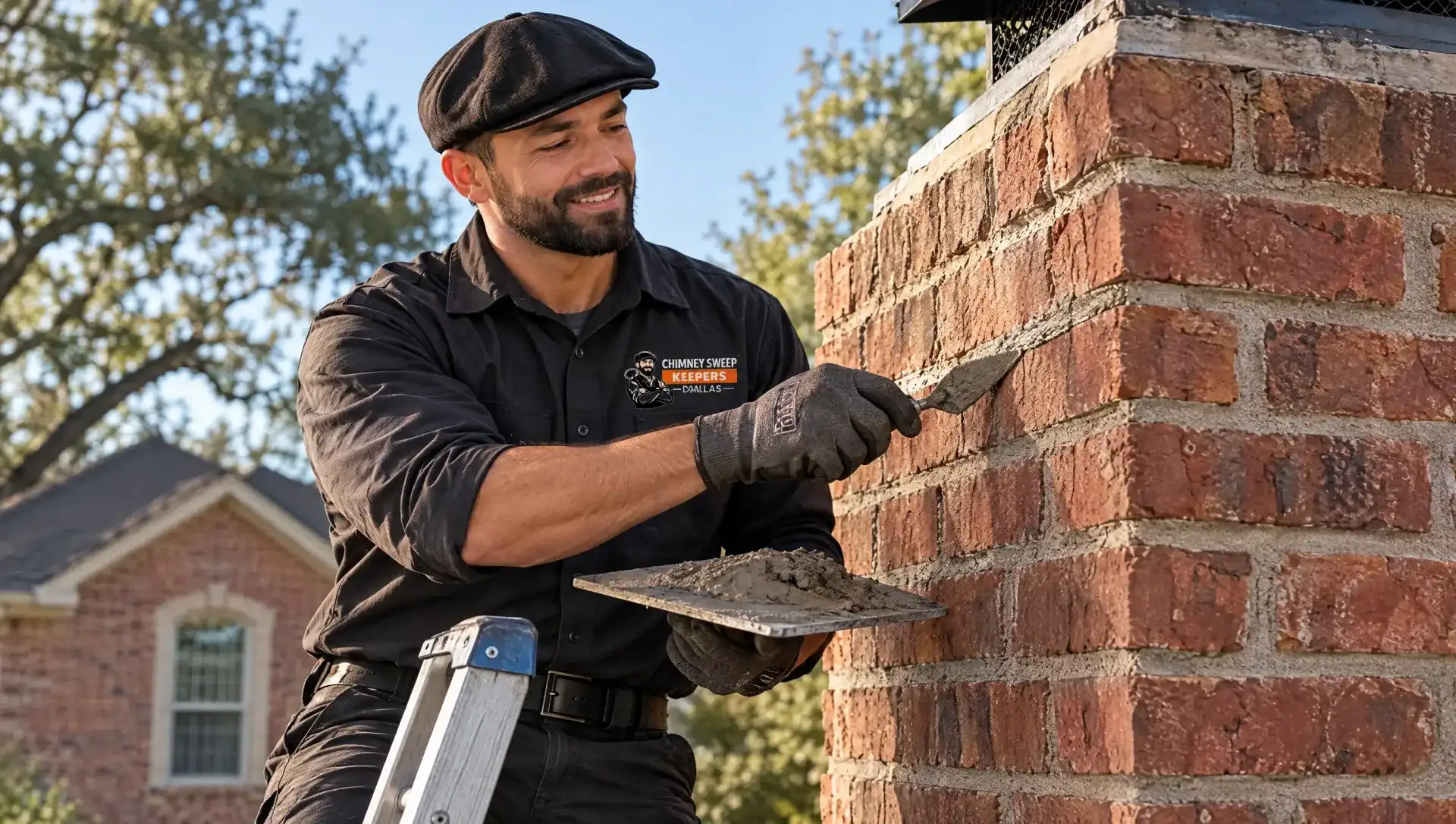
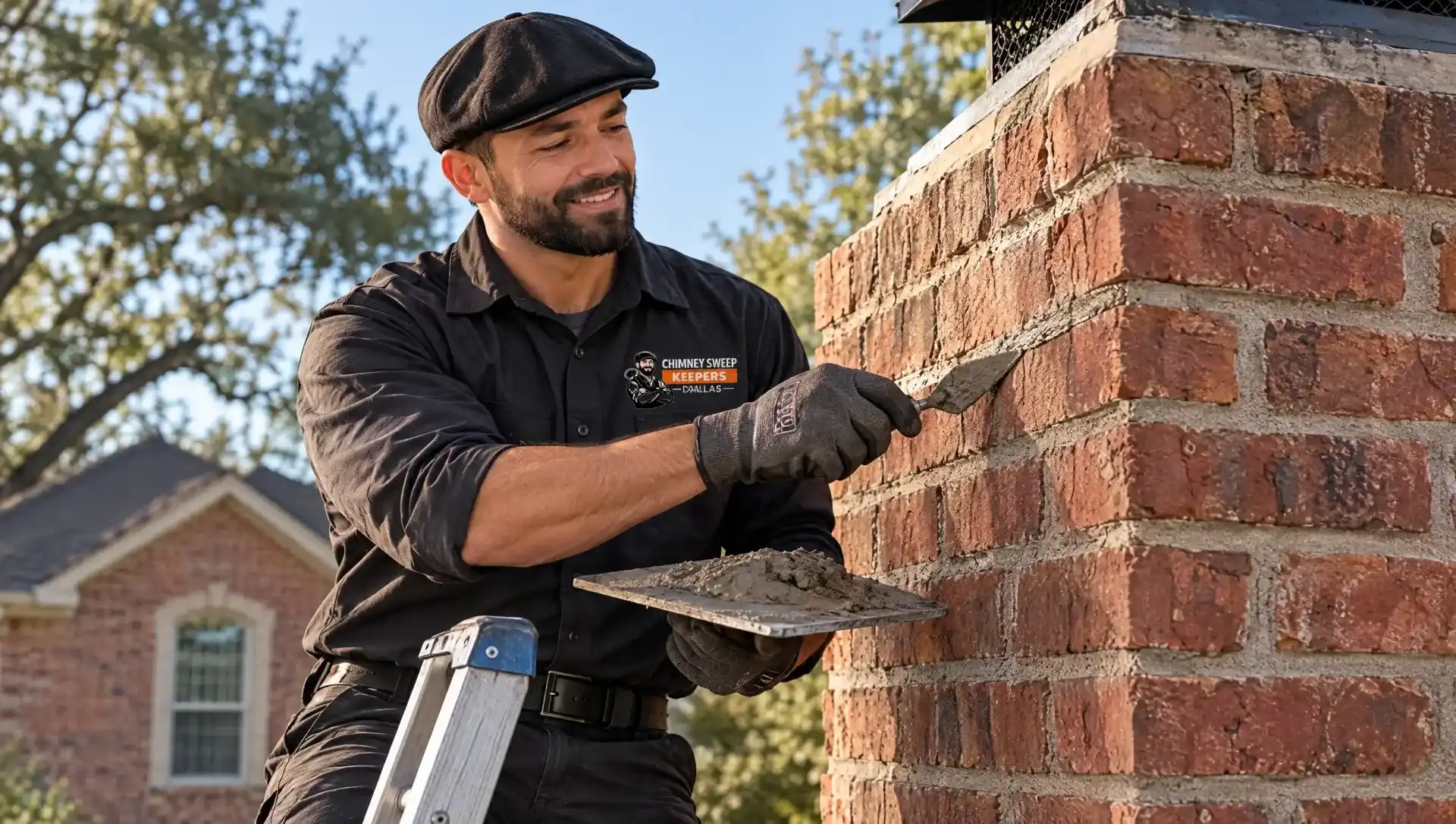
- Porous brick and mortar. Older brick and worn mortar joints soak up rain from the sides, especially when wind drives it sideways.
- A rusted chase cover. On factory-built chimneys in newer North Dallas homes, a flat or rusted metal cover lets water drip down inside the wood chase.
Our chimney leak repair page walks through each of these in more detail, including how we trace a leak that shows up far from its source.
Why the Smell Comes Into the Room
Even with the fireplace off, air moves through the chimney. A house is always trading air with the outside. When the air conditioner, a kitchen hood, a bathroom fan or the dryer pulls air out of the house, the home can end up at negative pressure. Replacement air has to come in from somewhere, and the chimney is an easy path.
That air passes over the wet creosote on its way down. It carries the odor through the damper and into your living space. This is why the smell often gets worse a day after a storm, when the AC kicks on again.
The Chimney Safety Institute of America notes that creosote odor is usually worse in summer, when humidity is high and the air conditioner is running. In Dallas, a humid week after a spring thunderstorm brings both at once.
Other Causes of a Musty Fireplace Smell
Water is the most common cause, but not the only one. We also find:
- Nests and debris. Leaves, sticks and nests hold water and start to rot. Chimney swifts nest in Dallas chimneys from about May to September.
- An animal in the flue. A bird or squirrel that died in the chimney gives off a sour, rotten smell that is different from creosote.
- A damper that does not seal. Old throat dampers rust and warp, so they let air and odor through even when closed.
- Old ashes. Ashes left in the firebox soak up humidity and smell stale.
| What you smell | Likely cause |
|---|---|
| Campfire, tar or barbecue | Wet creosote and soot in the flue |
| Musty or damp basement | Wet brick, mortar or a damp smoke chamber |
| Sour or rotten | Nest debris or a dead animal |
| Stale ashes | Ashes left in the firebox |
How to Stop the Smell for Good
Air fresheners and baking soda only cover the odor. A lasting fix has two parts: stop the water, then remove what holds the smell.
- Book a free inspection. We check the cap, crown and flashing from the roof, run a camera up the flue and give you photos of what we find.
- Fix the entry point. That may mean a new cap, crown sealing or flashing repair. Every repair starts with a free written estimate.
- Clean the flue. A chimney cleaning brushes out the creosote and soot that hold the odor, with drop cloths and a HEPA vacuum inside the house.
- Protect the brick. If the masonry itself soaks up rain, a breathable water repellent helps it shed water.
- Seal the top. A cap with mesh sides, or a top-sealing damper, keeps rain, animals and outside air out when the fireplace is not in use.
Chimney Cap Installation
If your chimney has no cap, this is usually the fastest and least expensive change you can make. A stainless chimney cap installation keeps rain from falling straight down the flue and keeps birds and squirrels from nesting inside. Open flues are common on older brick homes in Lakewood, Lake Highlands and the M Streets.
Chimney Waterproofing for Brick That Soaks Up Rain
Brick and mortar are porous. On many 1940s to 1970s Dallas homes, the brick is softer and the mortar is worn, so the whole chimney soaks up water like a hard sponge. Then the inside of the chimney stays damp for days after a storm.
Chimney waterproofing in Dallas uses a clear, breathable water repellent. Rain beads off the outside, while moisture inside the masonry can still dry out. We only apply it after the crown, cap, flashing and mortar are sound, because a repellent does not fix cracks or gaps. We never use paint or glossy sealers on brick, since they trap moisture and can make the brick face flake off.
What You Can Do Before We Arrive
- Keep the damper closed when the fireplace is not in use.
- Scoop out old ashes and wipe the firebox.
- Set a bowl of baking soda or activated charcoal in the firebox to absorb some odor.
- Note when the smell is worst, such as after rain or when the AC runs. It helps us find the cause faster.
- Look for water stains on the ceiling or wall near the chimney, and take photos.
Do not try to seal the chimney yourself with paint or hardware-store sealer. It can trap water and make the problem worse.
Book a Chimney Inspection in Dallas
Chimney Sweep Keepers Dallas is a veteran-owned, family-run company at 6041 Village Bend Dr #606, near White Rock Lake. We are CSIA certified, licensed, bonded and insured. Call (469) 206-2085, 7 days a week from 7 AM to 11 PM, to book a free chimney inspection and written estimate.