How Chimney Repair Lowers Fire Risk
A chimney has one job when it comes to fire: keep the heat and smoke inside a sealed path from the firebox to the sky. A house fire starts when that path has a gap. Heat leaks through a crack, an ember lands on dry wood, or a spark lands on the roof.
The NFPA reports that fires involving fireplaces or chimneys make up fewer than one in ten home heating equipment fires, but about one-fifth of the direct property damage. They are not the most common heating fire, but they are some of the most costly. NFPA’s advice is to have chimneys cleaned and inspected every year by a qualified professional.
Below are the chimney repairs in Dallas that close those gaps, starting with the most serious.
Cracked Flue Tiles Let Heat Reach the Framing
Most older Dallas chimneys, especially in 1940s to 1970s homes in Lakewood, Lake Highlands, Preston Hollow and Oak Cliff, have clay tile flues. The tiles are the inner wall that keeps fire heat away from the brick and the wood framing next to it.
Clay tiles crack from age, from settling foundations in our clay soil, and from chimney fires. A cracked tile lets heat, smoke and carbon monoxide escape into the chimney walls. Over time, that heat can char nearby wood until it catches.
A cracked flue usually cannot be patched from the inside. The common fix is a stainless steel liner that runs the full height of the chimney and gives the fire a new sealed path. Our chimney relining page explains how it is sized and installed.
Gaps in the Firebox
The firebox is the brick box where the fire burns. It is built with firebrick and a special heat-resistant mortar. Years of heat cause the mortar joints to crack and fall out, and firebricks can crack or break.
Those open joints let flames and heat reach the outer brick and, in some fireplaces, the wood frame behind it. In factory-built fireplaces, cracked refractory panels do the same thing to the metal box. Firebox repair replaces the damaged firebrick or panels and re-points the joints with heat-rated mortar.
Missing Mortar and Loose Brick
On the outside, mortar holds the chimney together and keeps it sealed. When joints wear out, water gets in, which leads to more cracking. Over time, gaps can open all the way through the brick. Loose brick near the roof line can also let embers or heat reach the roof deck.
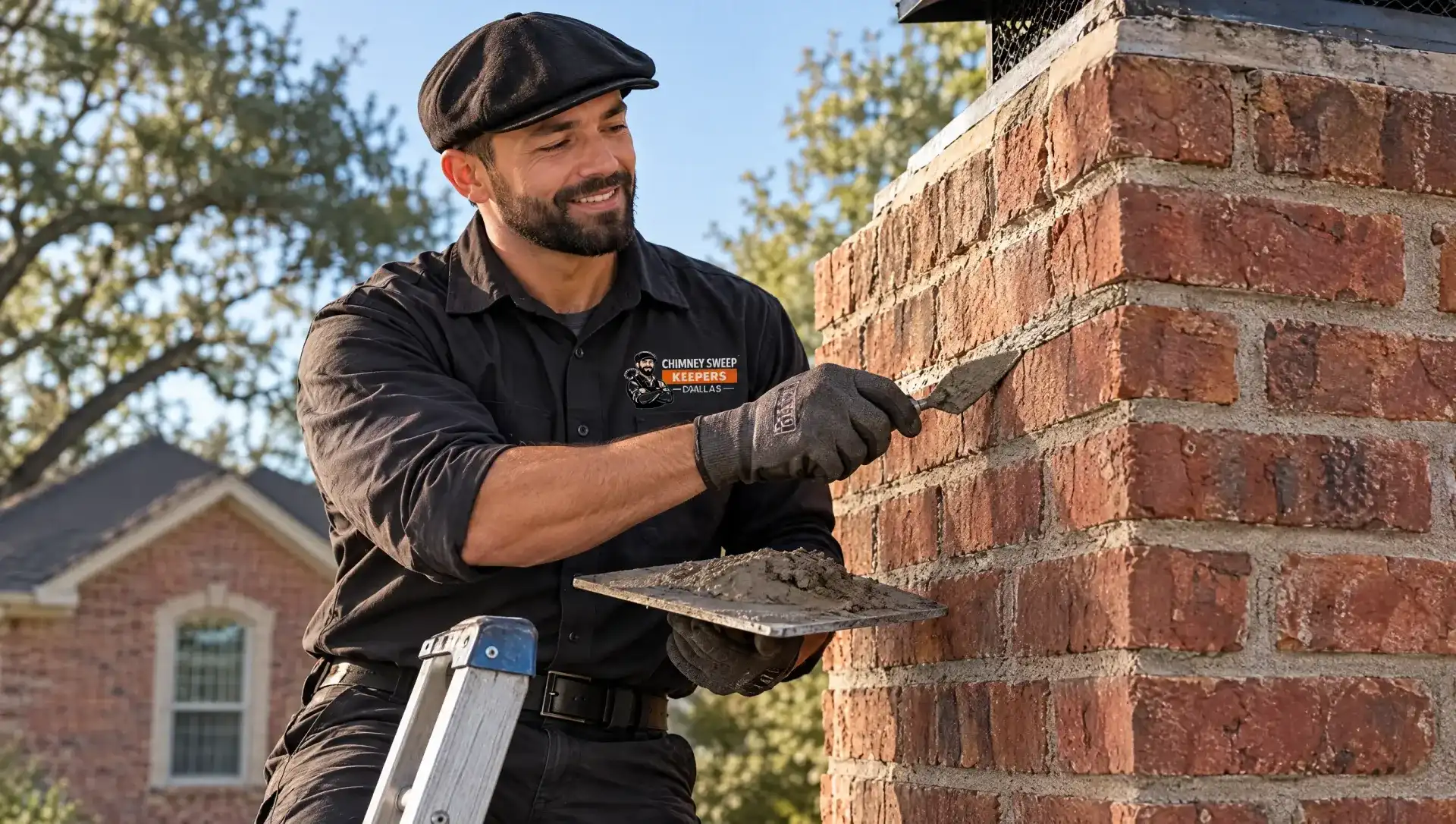
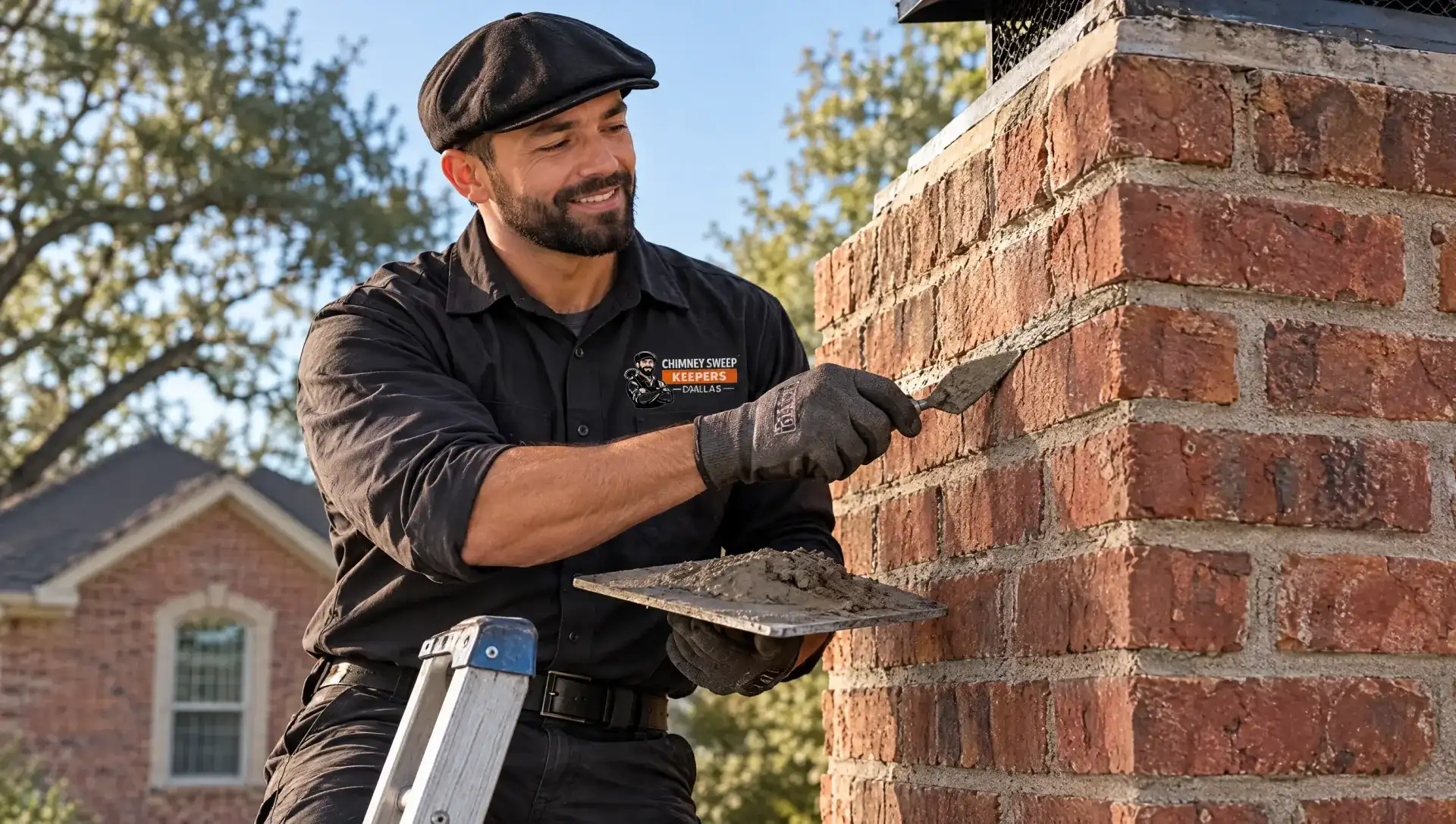
Repointing, or chimney tuckpointing, grinds out the old mortar and packs in new mortar. It is one of the most common repairs on older Dallas brick chimneys, where decades of summer heat and storm cycles have worn the joints down.
A Spark Screen Stops Embers on the Roof
A chimney cap with mesh sides is also a spark screen. Without one, embers from a wood fire can float out of the flue and land on the roof, in gutters full of dry leaves, or in a nearby live oak. On a dry, windy winter day in North Texas, that is a real risk.
A cap also keeps out nests. Birds and squirrels pack sticks and leaves into open flues, and that material catches fire easily. A cap replacement is a small job with a large safety benefit.
Repairs and the Fire Hazard Each One Fixes
| Problem | Fire hazard | Repair |
|---|---|---|
| Cracked clay flue tiles | Heat reaches the wood framing | Stainless steel relining |
| Open firebox joints or cracked firebrick | Flames reach outer brick or framing | Firebox repair |
| Worn mortar joints | Gaps through the chimney wall | Tuckpointing |
| Missing cap or torn mesh | Embers on the roof, nests in the flue | New cap with spark screen |
| Damper stuck or broken | Smoke and heat spill into the room | Damper repair or top-sealing damper |
| Glazed creosote | Very hot chimney fire | Deep chimney cleaning |
Every repair starts with a free written estimate and photos of the problem.
After a Chimney Fire, Repair Comes Before the Next Fire
Not every chimney fire is loud. Many burn slowly and quietly, and the owner never knows. The signs show up later: puffy, honeycombed creosote, cracked or missing flue tiles, warped damper parts, or heat stains on the outside of the chimney.
NFPA 211 calls for a Level 2 inspection after a chimney fire. A Level 2 includes a full video scan of the flue, so we can see every tile. Do not use the fireplace again until the damage has been repaired.
Signs Your Chimney Needs Repair
- Cracks or gaps in the firebox
- Pieces of clay tile in the fireplace
- Crumbling or missing mortar on the outside brick
- A cap that is bent, rusted or missing
- Smoke or a burning smell in rooms next to the chimney
- Water stains near the fireplace (water damage often leads to the cracks above)
Get a Chimney Repair Estimate in Dallas
Chimney Sweep Keepers Dallas is a veteran-owned, family-run company near White Rock Lake, licensed, bonded and insured. We inspect first, show you photos, and give you a free written estimate before any repair. Call (469) 206-2085, 7 days a week from 7 AM to 11 PM.