The Short Answer: Inspect Every Year, Sweep at 1/8 Inch
There are two separate questions here: how often to inspect and how often to clean.
Inspection is easy. NFPA 211, the national fireplace and chimney standard, says chimneys, fireplaces and vents should be inspected at least once a year. That applies to every chimney, even one you rarely use.
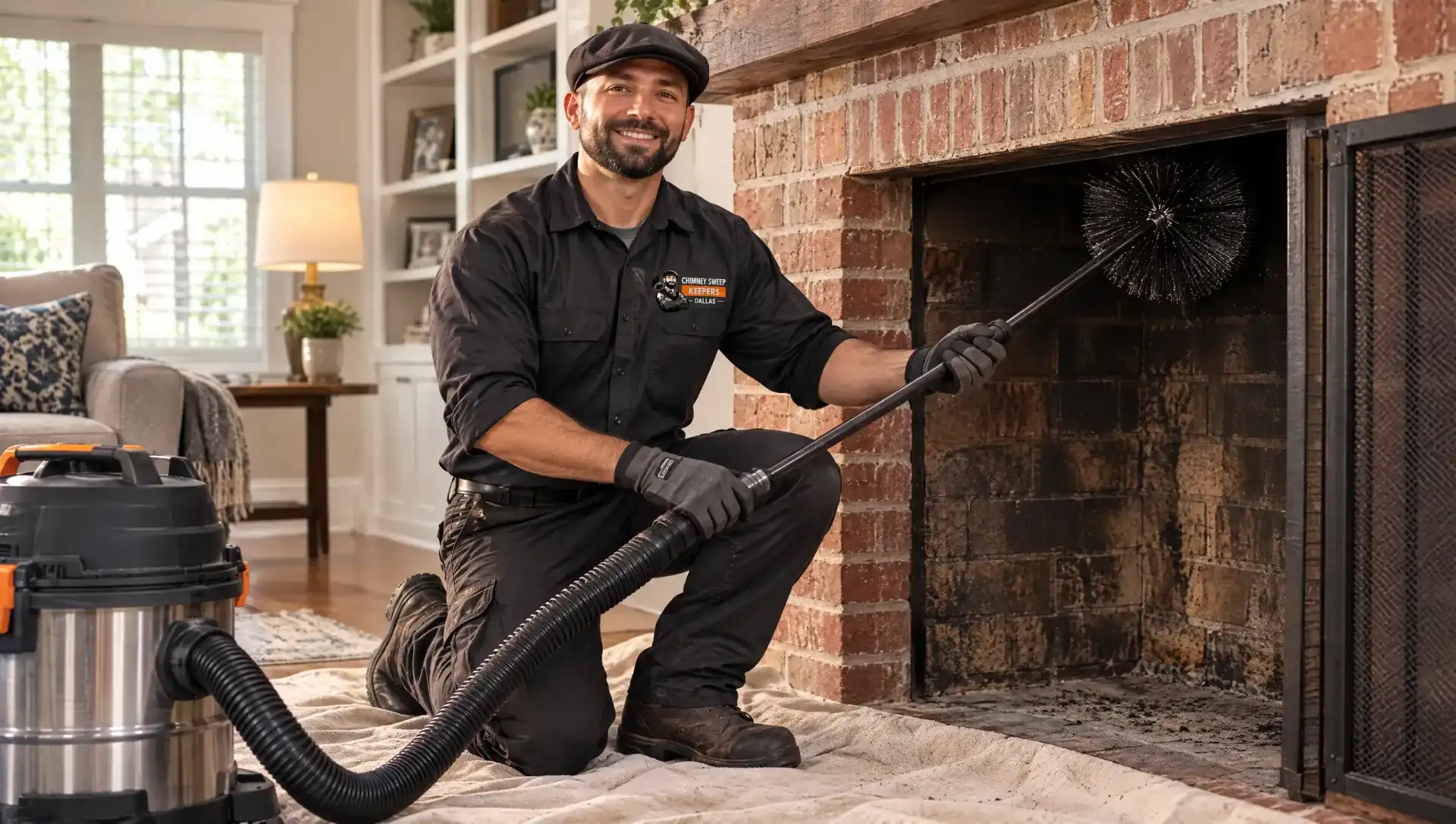
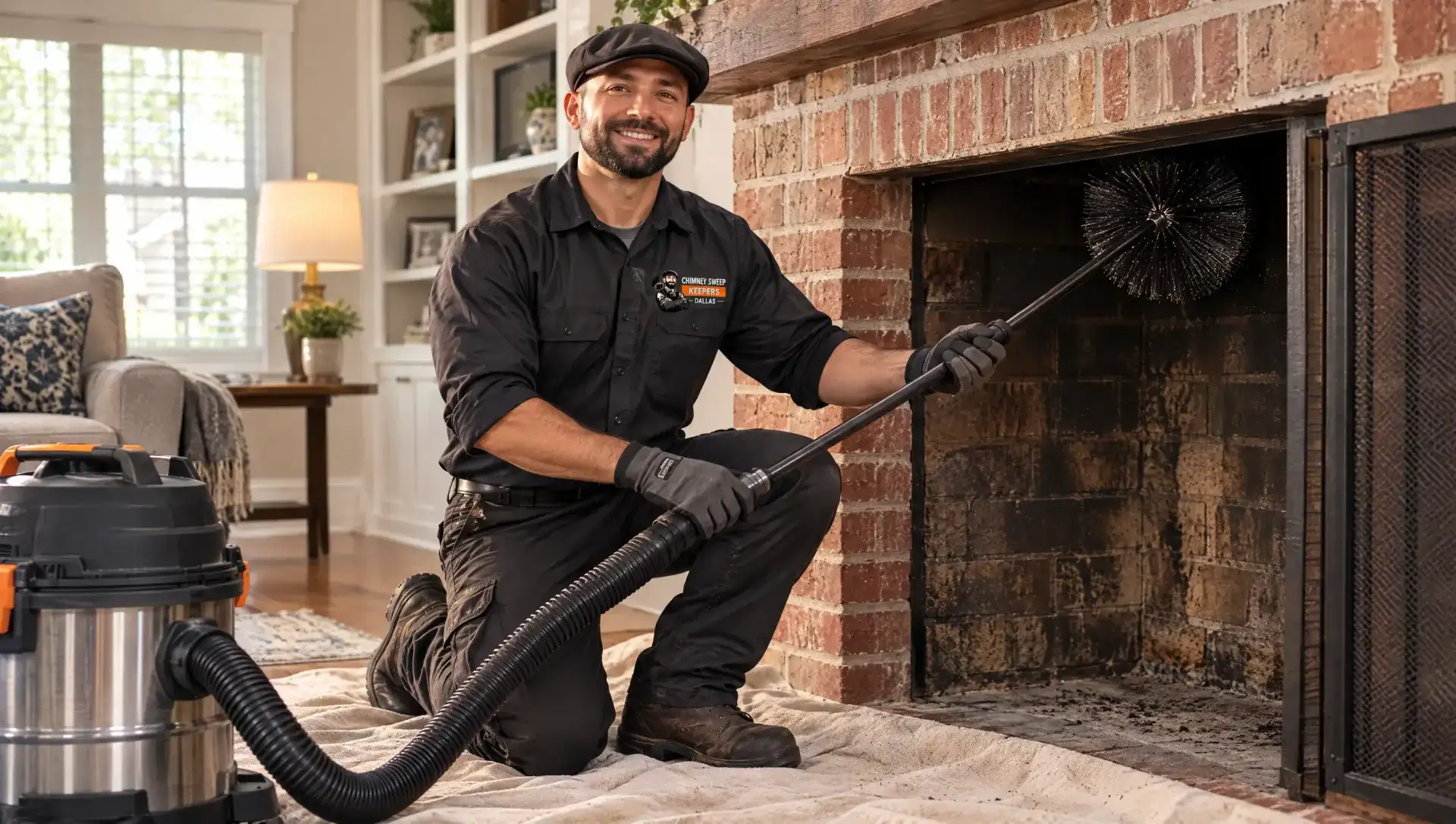
Cleaning depends on what the inspection finds. The Chimney Safety Institute of America recommends sweeping a masonry fireplace at 1/8 inch of sooty buildup, and sooner if any glaze is present. Our Dallas chimney sweep includes the inspection, so one visit answers both questions.
What the 1/8 Inch Rule Means
One eighth of an inch sounds tiny. It is about the thickness of two stacked pennies. But spread across the inside of a flue that runs 20 or 30 feet, it adds up to a lot of fuel. The CSIA considers that amount enough to cause a chimney fire that can damage the chimney or spread to the home.
Creosote also changes as it builds:
- Stage one: dry, flaky soot. Easy to brush off.
- Stage two: crunchy, tar-like flakes. Takes more work to remove.
- Stage three: glazed creosote. A hard, shiny coating that looks like dripped tar. It burns very hot and may need special tools or chemical treatment to remove.
The CSIA says to sweep sooner if any glaze is present, no matter how thin the layer is.
How Often to Sweep a Wood-Burning Fireplace in Dallas
Dallas has a short burn season. Most families light fires from about Thanksgiving through February. How fast creosote builds depends mostly on how often you burn and what you burn.
| How you use the fireplace | Typical sweep schedule | Inspection |
|---|---|---|
| A few fires a year, holidays only | Every 2 years, if the inspection shows light buildup | Every year |
| Most weekends in winter | Every year | Every year |
| Several fires a week, or as a main heat source | Every year, sometimes twice | Every year |
| Wood stove or insert burned daily | Every year at least, often mid-season too | Every year |
| Burns wet, green or soft wood | More often than the rows above | Every year |
These are typical patterns, not rules. The 1/8 inch measurement at your yearly inspection is what decides it.
Short, cool fires build creosote faster than long, hot ones. A fireplace used for a few hours on a 50-degree evening often gets dirtier per fire than one burned all day in a real cold snap.
How Often to Clean a Gas Fireplace
Gas burns much cleaner than wood. It leaves little creosote, so the flue rarely needs a full sweep. But the CSIA is clear that gas chimneys still need a yearly inspection, because bird nests and debris can block the flue.
What builds up on a gas unit is mostly on the logs, burner and glass. Soot there causes yellow, lazy flames and black marks on the brick. Gas fireplaces are very common in Dallas homes, and many are in newer North Dallas, Plano and Richardson houses with metal flues. A fireplace cleaning every one to three years handles the logs and burner, with the vent checked every year.
Factory-Built Fireplaces Need Sweeping Sooner
Many newer Dallas homes have factory-built, or prefab, fireplaces with a metal flue inside a wood-framed chase. The CSIA recommends sweeping these when any appreciable buildup appears, not waiting for 1/8 inch.
The reason is corrosion. The CSIA notes that the deposit is quite acidic and can shorten the life of the metal parts. Replacing a factory-built firebox or flue is a much bigger job than keeping it clean.
Wood Stoves Have Their Own Schedule
A wood stove burns hotter and longer than an open fireplace, and many owners use it as real heat. That means more fuel through the flue each season. Stove pipes and liners can also build creosote fast if the stove is turned down to smolder overnight. Plan on a yearly wood stove cleaning at least, and a mid-season check if you burn every day.
When to Call Sooner Than Your Usual Schedule
Do not wait for the yearly visit if you notice any of these:
- Loud popping, a roaring sound, or dense smoke from the chimney top (call 911 first if you suspect a chimney fire)
- Black flakes or crumbs falling into the firebox
- Smoke rolling into the room
- A strong tar or campfire smell, worse on humid days
- Birds, scratching or chirping in the chimney
- A hailstorm or high winds that may have damaged the cap or crown
- You just bought the house and do not know its history
Why Chemical Logs Are Not a Substitute
Creosote sweeping logs are sold at most hardware stores. The CSIA says these products are not an adequate substitute for mechanical cleaning and inspection. Even when they loosen creosote, the debris lands on the smoke shelf or damper and still has to be removed. And they do nothing to find cracked tiles, nests or water damage.
Book a Chimney Sweep in Dallas
Chimney Sweep Keepers Dallas is a veteran-owned, family-run company near White Rock Lake. Our sweep with a Level 1 inspection is $99 for one flue (regular $229), and we measure your buildup so you know when the next sweep is due. Call (469) 206-2085, 7 days a week from 7 AM to 11 PM.