Chimney Maintenance in Dallas Starts in the Fall
Dallas has a short fireplace season. Most families light their first fire around Thanksgiving and their last one in February. That leaves the chimney sitting unused for seven or eight months of heat, humidity and storms.
A chimney that sits that long does not stay the same. Things move in, things crack, and old creosote soaks up moisture. The first fire of the year is the moment all of that gets tested at once. That is why pre-season chimney maintenance in Dallas makes the most sense in October and November, not after the first cold snap.
The February 2021 winter storm is a good reminder. Many Dallas homes lost power for days, and people lit fireplaces that had not been checked in years. A chimney you trust before the cold arrives is one less thing to worry about when you need it.
What Changes in Your Chimney Between March and October
Here is what we find most often on fall visits around Lakewood, Lake Highlands and the M Streets:
- Nests and debris. Squirrels, birds and raccoons like an open flue in spring. Chimney swifts nest in Dallas chimneys from about May to September and are protected by federal law, so their nests can only come out after they leave.
- Storm damage. Spring hail and high winds crack chimney crowns and knock caps loose. Water then gets into the brick and down the flue.
- Summer odors. The CSIA notes that creosote smells worse when humidity is high and the air conditioner is running, because air gets pulled down the chimney.
- Rust. Dampers and metal caps rust when rain gets in, and a rusted damper may not open all the way.
None of these are rare. They are the normal result of a Texas summer.
An October and November Chimney Checklist
Some of this you can do yourself. The rest needs someone on the roof and a camera in the flue.
- Look up the flue with a flashlight. Open the damper and check for daylight at the top. Leaves, sticks or a dark blockage mean the flue needs attention.
- Work the damper. It should open and close smoothly and stay fully open.
- Clear three feet around the hearth. The U.S. Fire Administration says to keep anything that can burn at least 3 feet from fireplaces and other heat sources.
- Test your smoke and CO alarms. Replace batteries if they chirp or if you cannot remember the last change.
- Stack your firewood outside. Keep it off the ground and away from the house.
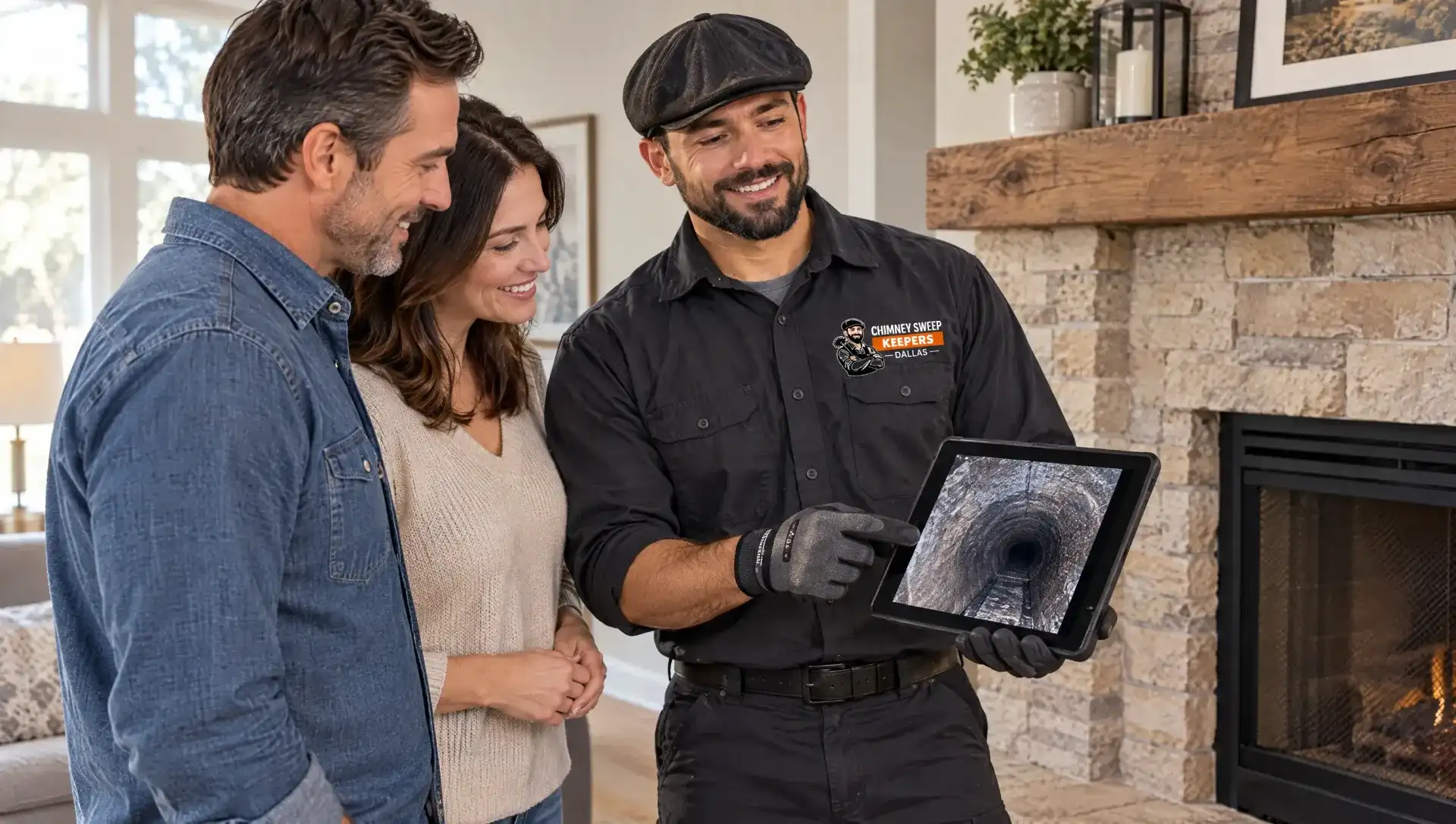
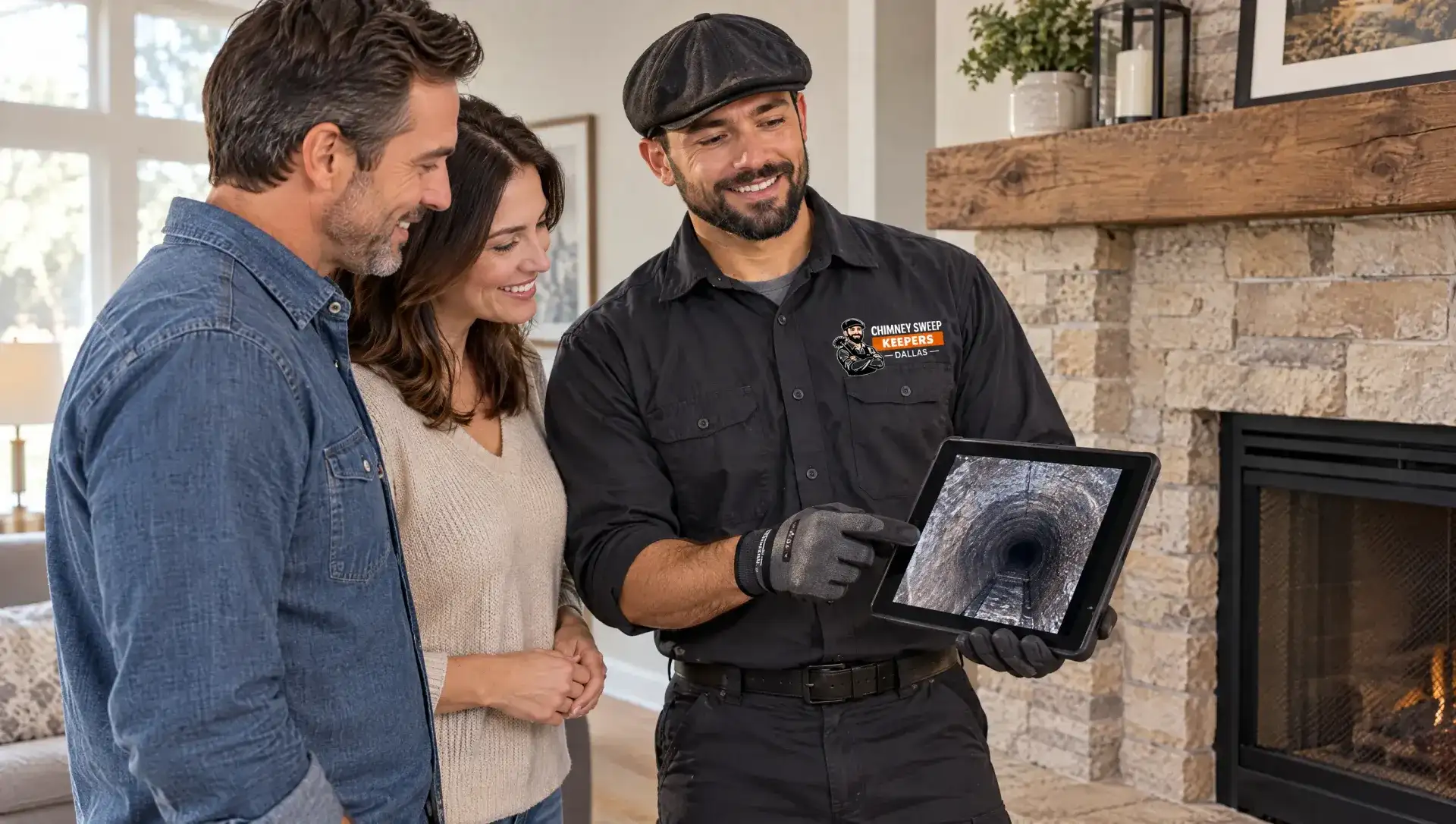
- Book a sweep and Level 1 inspection. We brush the flue, run a camera up it, and check the cap, crown and flashing from the roof.
- Fix what the inspection finds before you burn. Small repairs are faster and cheaper in October than in a January rush.
The U.S. Fire Administration lists heating as the second leading cause of home fires in 2021, with an estimated 32,200 home heating fires that year. Its first piece of advice for fireplaces is a yearly cleaning and inspection by a professional.
What the Winter Safety Package Covers
We built the Winter Safety Package around that checklist. It puts the fall jobs into one visit.
| What the visit covers | In the package |
|---|---|
| Basic chimney sweep, one flue | Included |
| Basic Level 1 safety inspection | Included |
| Basic dryer vent cleaning (runs up to 15 ft) | Included |
| Smoke and CO alarm test | Included |
| Package price | $149 (regular $318) |
The package ends February 28, 2027. If you only want the chimney, our standard chimney sweep with a Level 1 inspection is $99 for one flue (regular $229).
Why Dryer Vents and Alarms Belong in a Winter Visit
Winter is when your home is shut tight. Windows stay closed, the furnace runs, and the dryer runs more often with heavy clothes and bedding. A clogged dryer vent pushes hot, damp, lint-filled air back toward the house. Our dryer vent cleaning clears runs up to 15 feet and is $89 on its own.
Alarms matter for the same reason. The U.S. Fire Administration advises a CO alarm outside each sleeping area and on every level of the home. We test the ones you have during the package visit and tell you if one is missing or past its date.
Gas Fireplaces Need a Fall Check Too
Gas fireplaces are very common in Dallas, especially in newer homes in North Dallas, Richardson and Plano. Gas burns cleaner than wood, but the vent can still fill with nests and leaves over the summer. A blocked gas vent can push carbon monoxide into the room instead of outside.
In the fall we check the vent, the burner, the pilot and the logs. If the pilot will not stay lit or the flame looks wrong, our gas fireplace repair page explains the common causes. Repairs always start with a free written estimate.
Storm Damage Is Easier to Fix Before Winter
A cracked crown or a bent cap is a small job in October. After a few winter rains, the same crack can mean wet brick, a rusted damper and a stained ceiling. If the roof check shows a missing or damaged cap, a new chimney cap keeps rain and animals out through the winter and the next swift season.
Book Pre-Winter Chimney Maintenance in Dallas
Chimney Sweep Keepers Dallas is a veteran-owned, family-run company at 6041 Village Bend Dr #606, near White Rock Lake. We answer 7 days a week from 7 AM to 11 PM and often have same-day visits. Call (469) 206-2085 to book the Winter Safety Package or a $99 sweep, and get your price in writing before any work starts.