What the Flue and Damper Do
The flue is the open channel inside the chimney that carries smoke and gases up and out. In older Dallas homes it is usually a stack of clay tiles set in mortar. In many newer homes it is a round metal pipe inside a wood-framed box, called a chase.
The damper is the metal plate that opens and closes the flue. Open, it lets the fire breathe and the smoke escape. Closed, it keeps cold air, hot summer air, bugs and rain out of the room.
When either part fails, the fireplace stops working the way it should. That is why every chimney inspection we do in Dallas starts at the damper and ends at the top of the flue.
Why the Flue Needs a Camera, Not Just a Flashlight
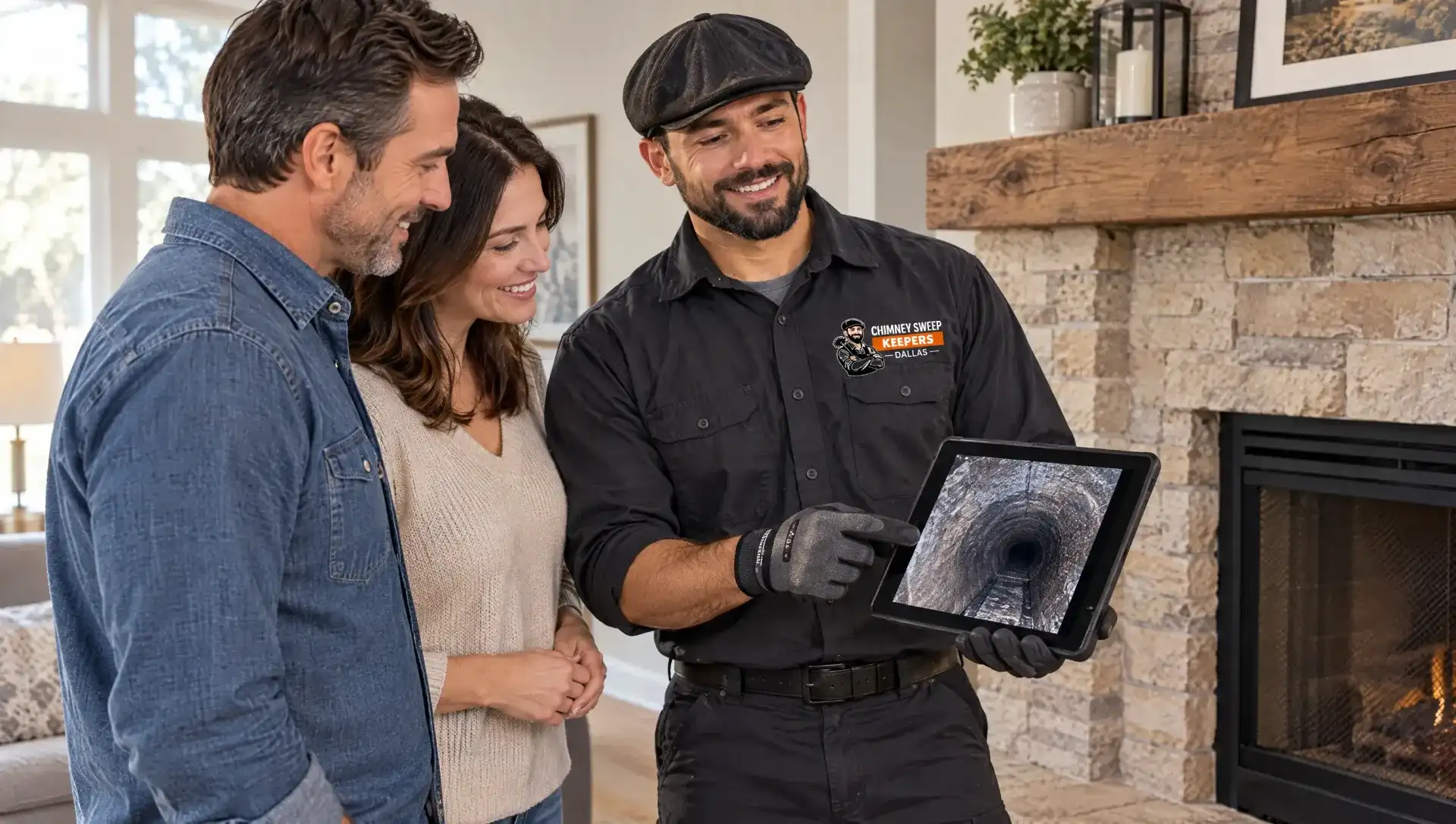
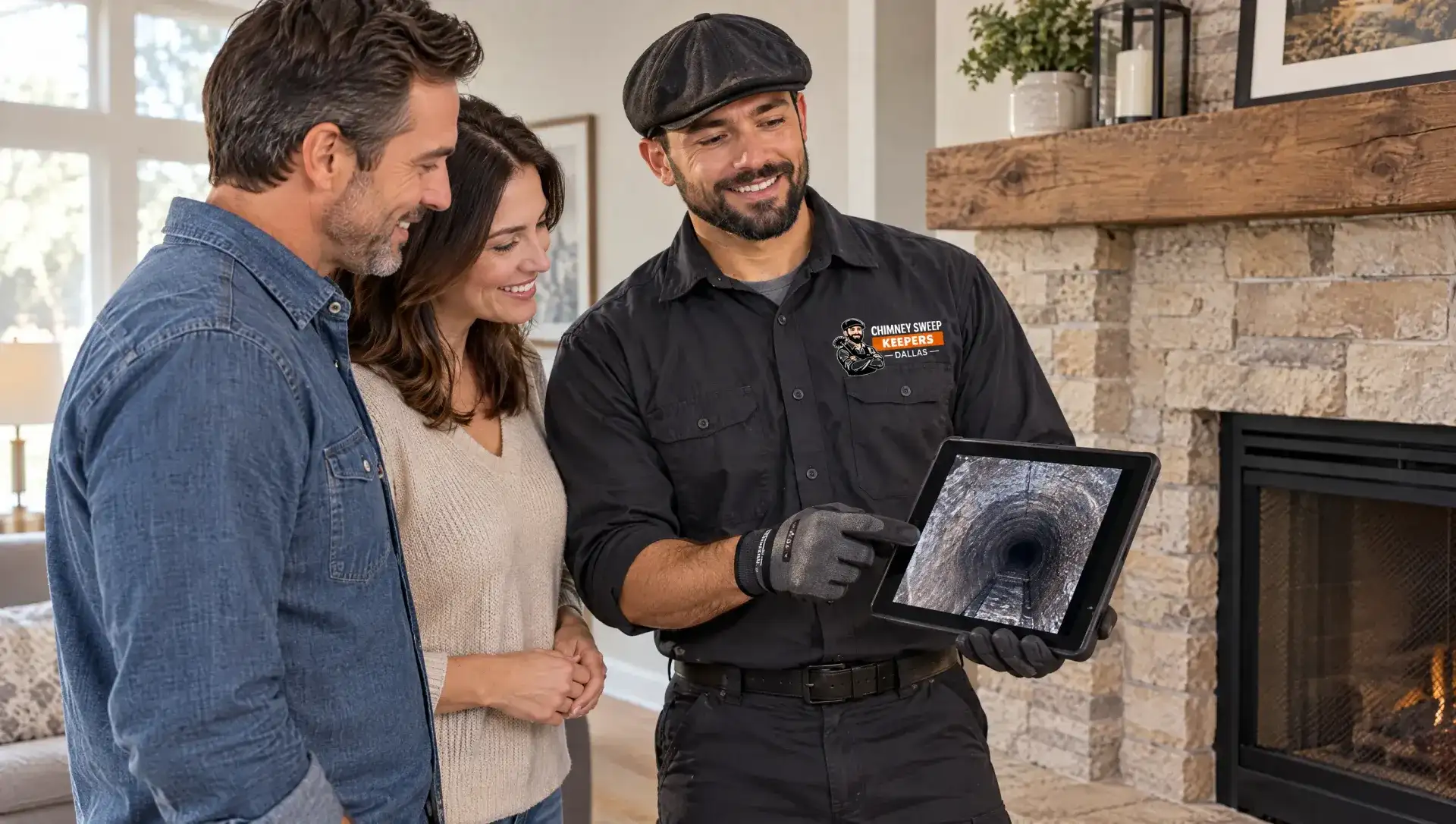
From the hearth you can see a few feet up the flue. That is not much of a chimney. Most problems are higher up, where tiles meet, at bends, and near the top where weather hits hardest.
Here is what a camera check finds that a flashlight misses:
- Cracked or shifted clay tiles. Common in 1940s to 1970s homes around Lakewood, Lake Highlands and the M Streets. Settling foundations and years of heat cycles crack them.
- Gaps in the mortar joints between tiles. Smoke and heat can escape through these gaps into the brick.
- Glazed creosote. A hard, shiny layer that is difficult to brush off and burns very hot.
- Blockages. Nests, leaves and fallen tile pieces sitting on the smoke shelf or partway up.
- Damage to metal flues. Dents, separated joints and rust in factory-built chimneys.
The EPA lists a flue that is “blocked or disconnected” and a leaking chimney among the sources of carbon monoxide in homes. A camera is how we see those problems before they affect the air inside.
What We Check on the Damper
Dampers wear out quietly. Heat warps them, and rain that gets past a missing cap rusts them. Here is what we look at:
- Does it open all the way? A damper that only opens halfway chokes the fire and sends smoke into the room.
- Does it stay open? A loose handle or broken spring can let it drift shut during a fire.
- Does it seal when closed? Gaps let your air conditioning escape up the chimney all summer. In a Dallas July, that is real money.
- Is it rusted or warped? Rust flakes in the firebox are a sign the damper, and possibly the cap, need attention.
- On gas log fireplaces, is it clamped open? A damper that can close fully over a gas log set is a carbon monoxide risk.
The CSIA advises opening the damper fully and checking it with a flashlight before you light any fire, because it is much harder to open safely once the fire is going.
Flue and Damper Problems and What They Cause
| Problem found | What it causes | Usual fix |
|---|---|---|
| Damper stuck partly closed | Smoke in the room, weak fire | Damper repair or replacement |
| Damper will not seal | Drafts, summer odors, higher cooling bills | Top-sealing damper |
| Cracked flue tile | Heat and gases escaping into the structure | Flue repair or relining |
| Open mortar joints in the flue | Same as a cracked tile | Repair or relining |
| Nest or debris in the flue | Blocked draft, carbon monoxide risk | Removal and a chimney cap |
| Heavy or glazed creosote | Chimney fire risk | Sweep or deep cleaning |
Signs Your Flue or Damper Needs a Closer Look
Call for an inspection if you notice any of these:
- Smoke rolling out of the fireplace instead of going up
- A tar or campfire smell, worse on hot, humid days
- Rust flakes or pieces of tile in the firebox
- A damper handle that is loose, stuck or hard to move
- Cold drafts or warm air coming from the fireplace when it is off
- A fire that is hard to start or dies down fast
Repair Options After a Flue or Damper Check
Most flue and damper problems have a clear fix, and we explain each one with photos before you decide.
A rusted or warped throat damper can often be repaired or replaced. Many Dallas homeowners choose a top-sealing damper instead, which sits at the top of the flue and seals tight with a rubber gasket. It also keeps rain and animals out. Our chimney damper repair page covers both types.
A flue with cracked tiles usually needs a new liner before it is safe to use. A stainless steel liner runs the full height of the chimney and gives smoke a smooth, sealed path. See chimney relining for how that works.
If the flue and damper check out but the fireplace still smokes, the cause may be the size of the opening, the height of the chimney, or air pressure in the house. Our smoke problem correction service looks at those causes.
All repairs start with a free written estimate.
Book a Flue and Damper Inspection in Dallas
Chimney Sweep Keepers Dallas is a veteran-owned, family-run company near White Rock Lake. Our $99 sweep includes a Level 1 inspection with a camera check of the flue and a full damper check. We answer 7 days a week from 7 AM to 11 PM. Call (469) 206-2085 to book.